Gold and silver prices have rebounded slightly, but analysts remain cautious about their long-term prospects amid rising economic tensions.
Gold and silver prices have rebounded slightly, but analysts remain cautious about their long-term prospects amid rising economic tensions.
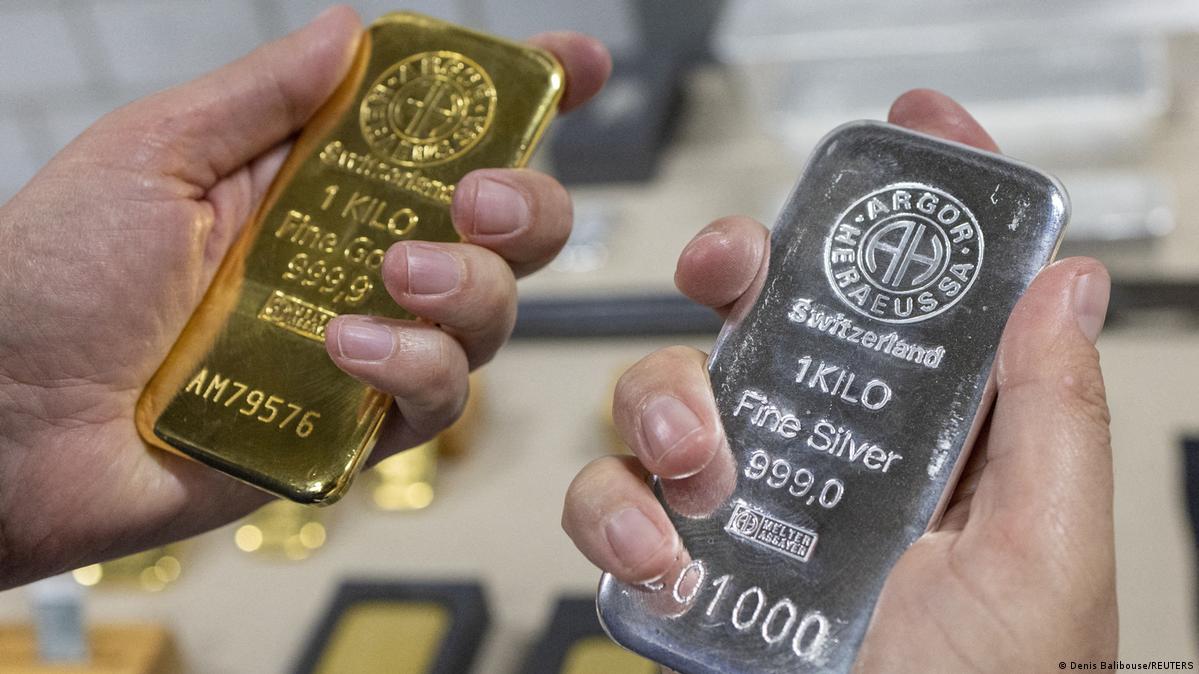
Gold and silver prices have shown signs of recovery in recent days after a prolonged period of selling. Despite this rebound, analysts are cautious, expressing doubts about whether these precious metals can return to their all-time highs from earlier this year.
Spot silver prices rose to $59.47 an ounce during early trading on Wednesday, marking a 6.3% increase from the previous week’s closing price of $55.90. Meanwhile, spot gold climbed approximately 2.4%, trading at $4,119.04 an ounce.
Analysts from ING, Warren Patterson and Ewa Manthey, attributed the recent gains to “bargain hunting after recent weakness” rather than any significant shift in the broader geopolitical or macroeconomic landscape.
Both metals currently stand well below their peak prices, which were reached in late January, when spot gold was valued at $5,589.38 per ounce and silver hit $121.67. The sharp increase in interest rates and a stronger U.S. dollar have dampened the appeal of these assets. The ongoing conflict in the Middle East, particularly the Iran war, has also altered market dynamics.
Patterson and Manthey noted, “While tensions in the Middle East remain supportive for precious metals, markets are balancing softer U.S. economic data against inflationary pressures resulting from rising energy costs.” They added that gold’s performance is likely to be sensitive to developments in energy markets and U.S. monetary policy. Conversely, silver might outperform if there is sustained strength in industrial metals alongside safe-haven demand.
The dual nature of silver as both a monetary and industrial metal makes its performance particularly interesting. As noted by the ING analysts, silver’s appeal stems from improving sentiment within the industrial metals space, especially copper.
However, analysts at Bank of America are less optimistic, offering a warning about potential further declines in gold prices. They reported that gold experienced its worst quarterly performance in 13 years in the three months leading up to June. The analysts pointed out that indicators such as a “death cross” signal — where a short-term moving average drops below a long-term average — raises concerns about a longer and deeper correction.
UBS has also expressed skepticism regarding a silver recovery, cautioning investors against building positions in the metal. The Swiss bank reduced its attractive entry price target for silver from approximately $55 an ounce to a range of $48 to $50.
UBS strategist Dominic Schnider warned that near-term challenges for silver are likely to endure, stating, “We believe near-term headwinds for silver are likely to persist as escalating Middle East tensions, higher opportunity costs, and a firm U.S. dollar continue to weigh on investor sentiment. With investment demand patchy, silver prices have yet to find a solid floor.”
Contradicting this cautious outlook, Diane Garrett, the executive chair and CEO of U.S.-based gold and silver developer Hycroft Mining, commented that the recent price declines represent a typical market correction. She said, “This is not a broken bull market.” She noted that fundamental factors for commodities remain robust, highlighting gold’s position as the top asset class over U.S. Treasuries and the ongoing trend of central bank purchasing—17 consecutive months—supporting this view.
Garrett emphasized the importance of both metals in the evolving technological landscape, particularly for silver, which plays a vital role in advancements like AI and supercomputing, citing that there is no substitute for its applications.
Keep in touch with our news & offers
Subscribe to Our Newsletter
Thank you for subscribing to the newsletter.
Oops. Something went wrong. Please try again later.