
The European Central Bank maintains a 2.25% deposit rate while forecasting future rate hikes, amid economic growth and inflation concerns.
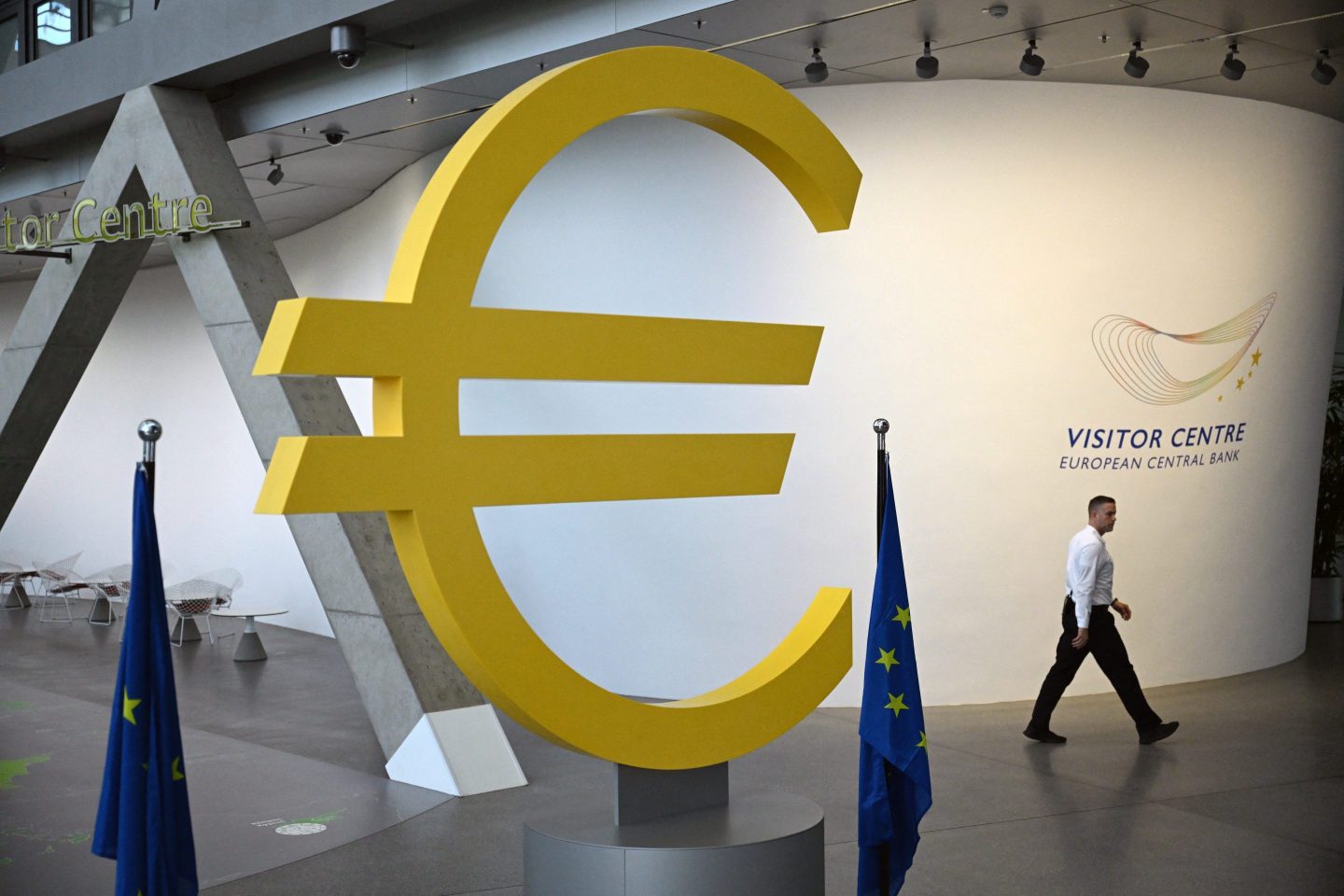
The European Central Bank maintains a 2.25% deposit rate while forecasting future rate hikes, amid economic growth and inflation concerns.
The European Central Bank (ECB) has opted to keep its deposit rate steady at 2.25%, but has hinted at further tightening measures in the near future. Nordea strategists, including Jan von Gerich, Tuuli Koivu, and Anders Svendsen, expect that the ECB will proceed with three more 25 basis points (bp) increases, projecting a rise to 3% by March 2027.
Despite pausing on rate hikes for now, the ECB’s communications reflect an openness to consider raising the rates again as early as its next meeting in September. “The ECB left the deposit rate unchanged at 2.25% today, as expected, but the tone of the press release and the press conference both leave the door wide open for another 25 bp rate hike at the next meeting in September, which is also our expectation,” the Nordea team noted.
While a recent peace agreement and declines in oil prices, as well as softer inflation data for June, have eased immediate pressures, the outlook remains uncertain. According to the analysts, broader inflation pressures and a resilient euro-area economy are likely to maintain the ECB’s tightening trajectory going forward.
“Even though the tentative peace agreement and the sizable falls seen in oil prices reduced the immediate pressure for the ECB to raise rates at a faster pace, we still think that we are amidst a hiking cycle rather than one or two isolated rate moves,” they stated. “Our new ECB baseline assumes 25 bp rate hikes in September, December, and March 2027, bringing the deposit rate to 3%, in line with our previous forecast.”
The analysts also highlighted potential geopolitical risks, noting that an accelerated peace in the Middle East might lessen the ECB’s need to hike rates. In contrast, prolonged conflict could increase rate expectations more swiftly.
This ongoing economic scenario emphasizes the challenges ahead as the ECB navigates inflationary pressures while trying to support growth in the Eurozone.
Keep in touch with our news & offers
Subscribe to Our Newsletter
Thank you for subscribing to the newsletter.
Oops. Something went wrong. Please try again later.