Uganda’s judiciary rejects the lawyers’ association’s call to abandon colonial courtroom titles and customs, emphasizing decorum in legal settings.
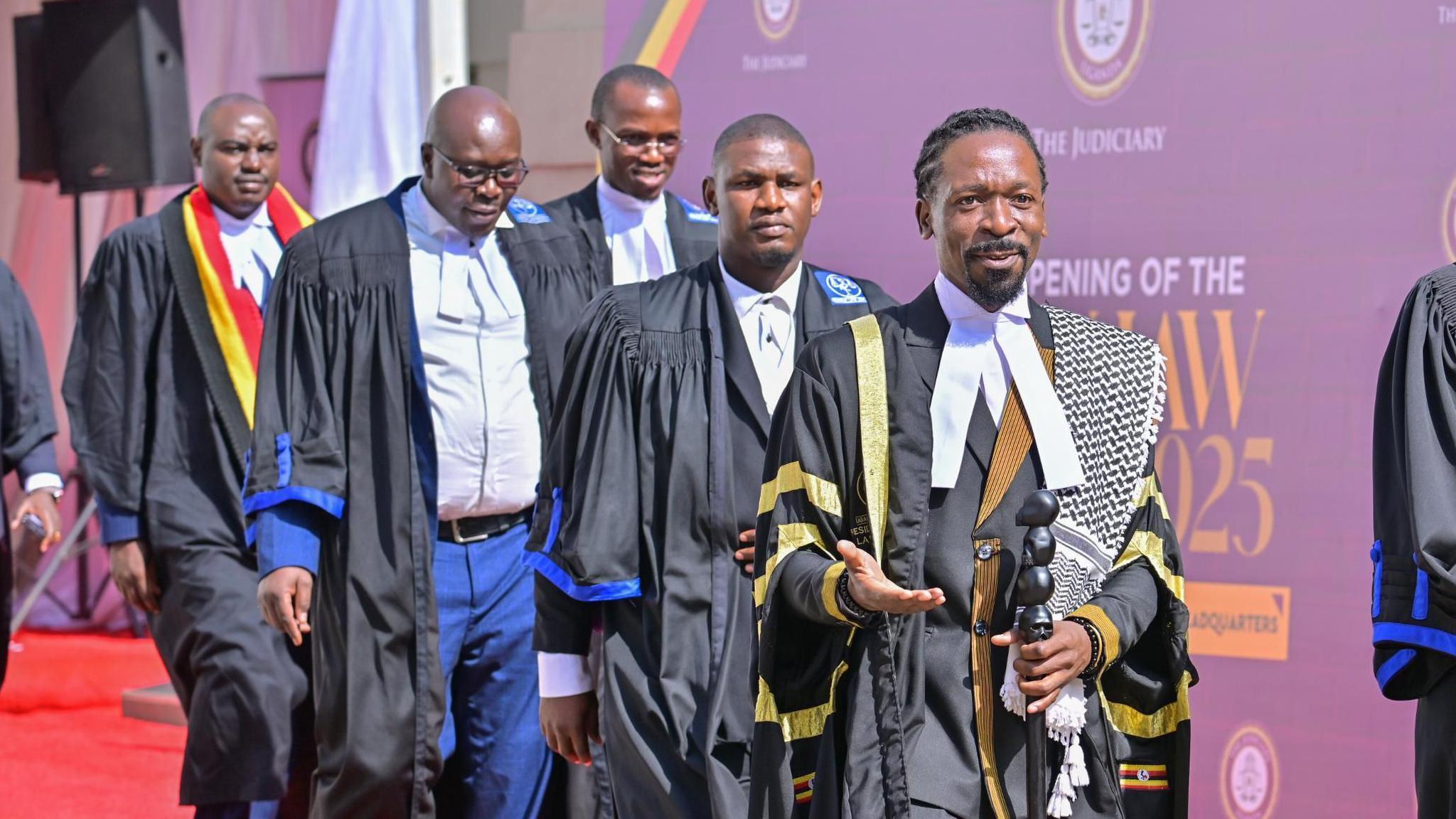
Uganda’s judiciary rejects the lawyers’ association’s call to abandon colonial courtroom titles and customs, emphasizing decorum in legal settings.
The judiciary in Uganda has firmly opposed a recent initiative by the Uganda Law Society (ULS), which requested lawyers to stop addressing judges as “My Lord” or “My Lady”. The ULS also advocated for the discontinuation of the long-standing tradition of bowing before judges in the courtroom.
According to the ULS, these outdated practices perpetuate a feudal and colonial system that elevates judges above the citizens they serve. They argue that the current titles create a disconnect between the judiciary and the public, who are, in reality, the employers of judicial officers.
Spokesperson for the judiciary, James Ereemye, stated that the ULS does not have the authority to dictate terms to the courts and emphasized that judges will continue to expect decorum from attorneys. “Judges are not to be instructed by any outside body,” he noted while reinforcing the need for respect within the court system.
The ULS accused the colonial court structure of contributing to systemic failures within Uganda’s judicial system. By abolishing what they term as “humiliating” practices, they aim to initiate a process of decolonizing justice and restoring dignity to Ugandans.
The ULS proposed that lawyers should instead address judges and magistrates using more straightforward titles like “Mr Justice”, “Madam Justice”, “Mr Judge” or by using their surnames when appropriate. Additionally, they stated that all lawyers and litigants must stand upright and engage as free citizens during court proceedings.
Ereemye criticized the ULS’s directive, referring to it as the opinion of a section of the young legal fraternity that may not fully grasp the established principles of management and court etiquette. He stated that if grievances exist, they should be discussed through the proper channels instead of making unilateral demands.
This discourse on courtroom traditions is not unique to Uganda. Across Africa, similar discussions are active as legal practitioners evaluate whether colonial-era customs—including wigs, robes, and formal salutations—should still be maintained. In Kenya, for instance, former Chief Justice Willy Mutunga openly opposed traditional judicial attire, choosing to take his oath in a suit in 2011.
As sentiments on courtroom practices evolve, criticisms of colonial-era customs have emerged in several countries, including Zimbabwe, Malawi, and Ghana, where calls for modernization prompt reevaluation of institutionally entrenched decorum.
Keep in touch with our news & offers
Subscribe to Our Newsletter
Thank you for subscribing to the newsletter.
Oops. Something went wrong. Please try again later.