
UK politics did not appear fully formed. It has been shaped over centuries by conflict, reform, and shifting power between monarchs, Parliament, and the public.


UK politics did not appear fully formed. It has been shaped over centuries by conflict, reform, and shifting power between monarchs, Parliament, and the public.
The political system in the United Kingdom did not begin with democracy as people understand it today. For centuries, power sat almost entirely with the monarchy. Kings and queens ruled with authority that was rarely questioned, and decisions were often made without input from ordinary people. That began to change slowly, and not without resistance.
One of the earliest turning points came in 1215 with the Magna Carta. It forced King John to accept that his power had limits, at least in theory. While it did not create democracy, it planted the idea that rulers could be held accountable. Over time, this tension between the monarchy and those seeking more control grew stronger. By the 17th century, it reached a breaking point. The English Civil War saw Parliament challenge the authority of the king, leading to the execution of Charles I. It was a moment that reshaped the balance of power and showed that even a monarch could be removed.
The political system in the United Kingdom has developed over centuries, shifting power from the monarchy to Parliament and the public. What exists today is the result of long periods of conflict, reform, and gradual expansion of rights.
The modern UK political system reflects a long history of change, shaped by pressure from both leaders and the public.
After years of instability, the Glorious Revolution in 1688 marked another key shift. The monarchy remained, but its power was limited in a more permanent way. Parliament became the central force in governing the country, and the foundations of a constitutional monarchy were established. From this point on, the idea that laws and decisions should be shaped through Parliament rather than by a single ruler became more accepted.
However, this system was far from democratic by modern standards. Voting rights were limited to a small portion of the population, mostly wealthy men. It took nearly two centuries of pressure and reform to expand political participation. The Reform Acts of the 19th century gradually increased the number of people who could vote, and by the early 20th century, most adult men and women had gained that right. These changes were not simply handed over. They came through protests, campaigns, and in some cases, serious unrest. The system evolved because people pushed it to.
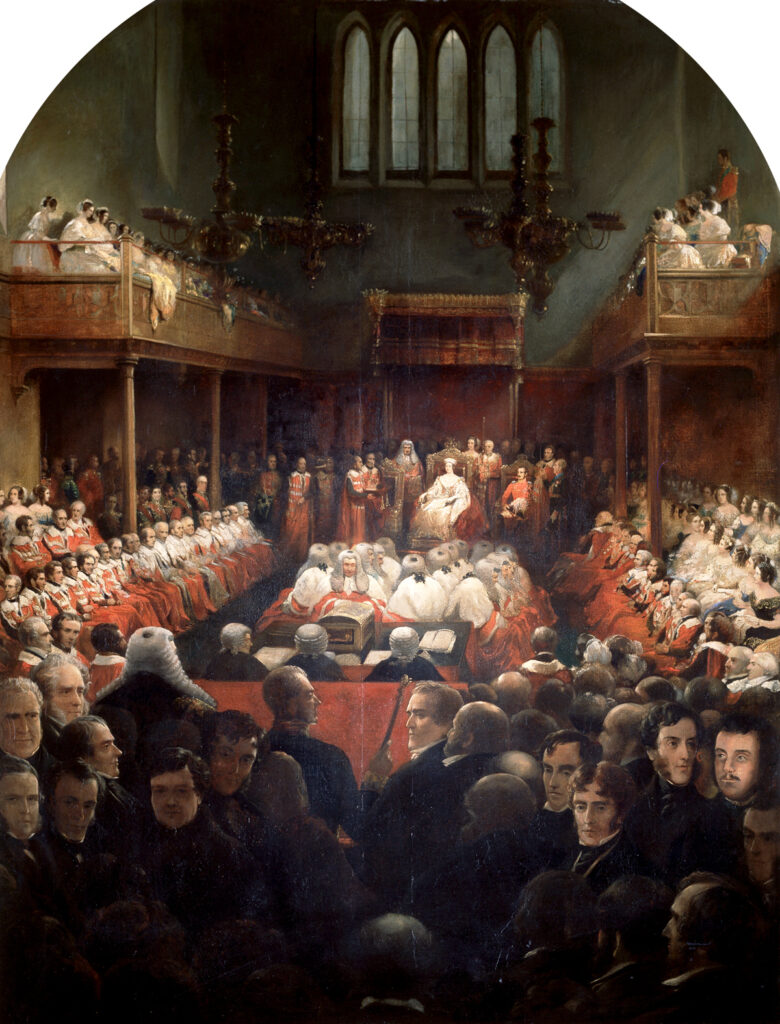
Today, UK politics is built on those historical foundations. Parliament holds the main power, the monarchy plays a symbolic role, and elections decide who governs. On the surface, it is a stable system that has lasted for generations. Yet there is a growing sense that it does not always work as smoothly as it appears.
Public trust in politics has been tested in recent years. Debates around issues like Brexit exposed deep divisions across the country and within political parties themselves. There is also ongoing frustration about representation, with some voters feeling disconnected from those in power. While the system has adapted many times in the past, it now faces a different kind of pressure. Not from kings or revolutions, but from a public that expects more transparency and accountability.
The history of UK politics shows that change rarely happens quickly. It builds over time, often through tension and challenge. The system seen today is not fixed. Like the centuries before it, it is still evolving, shaped by the same forces that first pushed power away from the crown and toward the people.
Thank you for subscribing to the newsletter.
Oops. Something went wrong. Please try again later.