Miami’s rising cost of living is driving residents away, hurting the local economy as residents opt for more affordable cities.
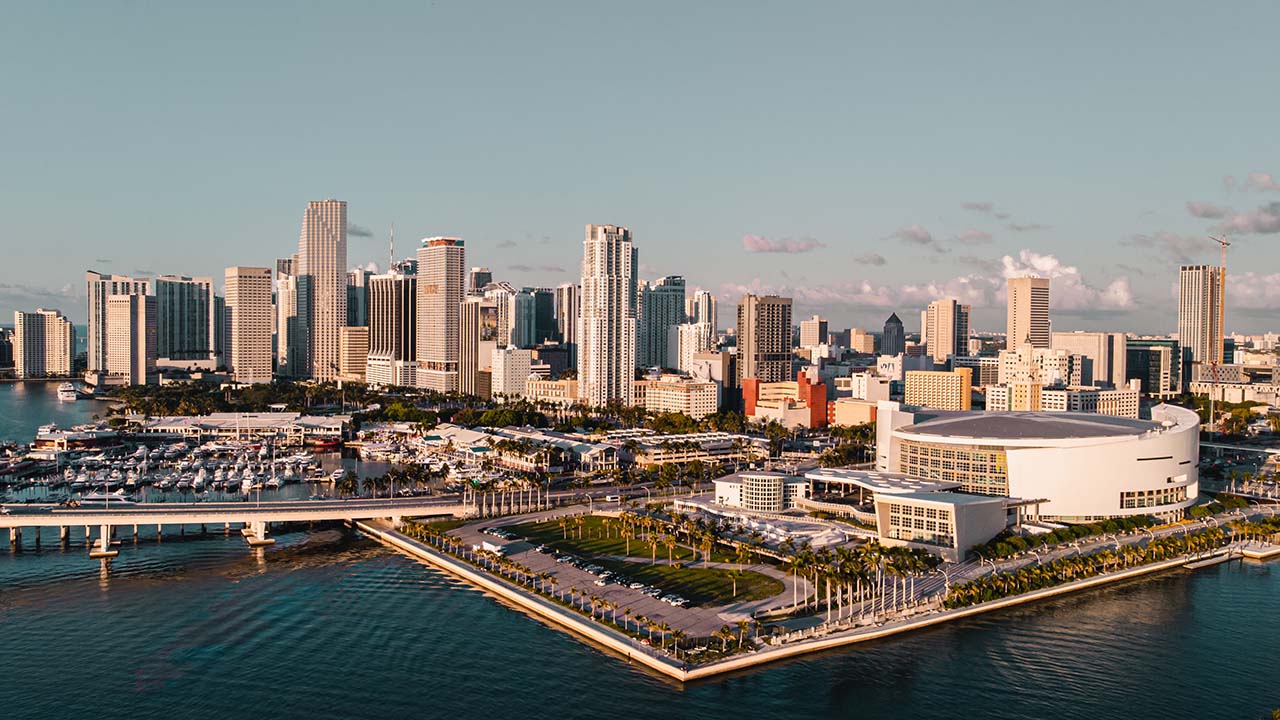
Miami’s rising cost of living is driving residents away, hurting the local economy as residents opt for more affordable cities.
Elhanan Harel and his wife found themselves navigating a challenging landscape in New York City, where their tiny one-bedroom apartment cost $1,770 per month. The rent burden was particularly heavy for Harel, whose lice-treatment business suffered due to pandemic disruptions. In 2020, they made a significant decision to relocate to Miami, attracted by the hope that their dollar would stretch further in a new environment.
The initial phase in Miami was promising. Harel secured a position managing a COVID-19 lab, and the couple rented a spacious two-bedroom condo for $2,000 a month. They discovered they were spending considerably less on groceries and car insurance compared to their previous life in NYC.
However, by 2022, with two children to raise, the couple faced a troubling reality as their rent escalated by $800. This mounting financial strain forced them to reconsider their choices, ultimately leading them back to New York City. “The cost of Miami became a major issue,” Harel mentioned. “By the time we left in 2023, the cost of living had increased so dramatically that the financial advantage had almost entirely evaporated.”
This trend is not isolated. As Miami becomes increasingly unaffordable, many residents are opting to move to less expensive regions, creating challenges for employers struggling to fill open positions. Such departures could have serious implications for Miami’s economy.
Data reveals that Miami’s cost of living has long hovered above the national average, yet startlingly, in 2024, it surpassed New York City’s for the first time according to the Bureau of Economic Analysis. Once a magnet for newcomers attracted by its affordable housing and favorable tax environment, Florida is now losing some of that allure as home prices and rents soar.
In the year spanning from July 1, 2024, to June 30, 2025, more individuals left the Miami metro area than chose to move there, signaling a troubling trend for local businesses. Ned Murray, an associate director at the Jorge M. Pérez Metropolitan Center, emphasized the growing concern about resident out-migration. “The biggest concern, for everyone here, including our major industries, is a continuation of domestic out-migration among our workers, so the labor force shortage we have right now is only going to worsen,” he explained. “I don’t see how that can get better, given all the other indicators, whether it be housing costs, transportation costs, insurance, health costs.”
Miami’s job market has also shown signs of stagnation. Recent data revealed minimal job growth, with employment numbers aligning closely with the previous year. Ken Sejour, who launched Chef Creole in Miami back in 1992, noted the drastic shifts observed post-pandemic. “After COVID, people in New York and California were like, ‘Oh my God, how did we not see this diamond in the rough?”
Yet, the local restaurant industry’s struggles tell a different story. Sejour indicated the challenges of retaining staff, as many employees are now priced out of nearby neighborhoods. “People who work for me right now, it takes them two hours to get to their job,” he said. “So they literally waste four hours just in transportation because you can’t afford to stay in Miami. There’s no way in the world you’re going to stay in Miami — a studio in Miami is running about $1,500 to $1,800.”
Analyzing data from the Shimberg Center for Housing Studies shows a concerning trend: the median rent for a one-bedroom apartment in Miami-Dade County surged from $1,095 to $1,482 between 2019 and 2026.
While affluent figures like Larry Page and Mark Zuckerberg invest heavily in Miami’s real estate market, the average residents are grappling with an ever-increasing cost burden. Ana Bozovic of Analytics Miami remarked on the drastic changes in housing availability, stating that homes priced below $500,000 are virtually disappearing. In Miami-Dade County, the supply of those homes dropped by 30% from June 2025 and a staggering 82% since June 2019, making affordable housing increasingly elusive.
Keep in touch with our news & offers
Subscribe to Our Newsletter
Thank you for subscribing to the newsletter.
Oops. Something went wrong. Please try again later.