Residents in Canada are taking wildfire control into their own hands, implementing strategies to protect their communities amid rising fire threats.
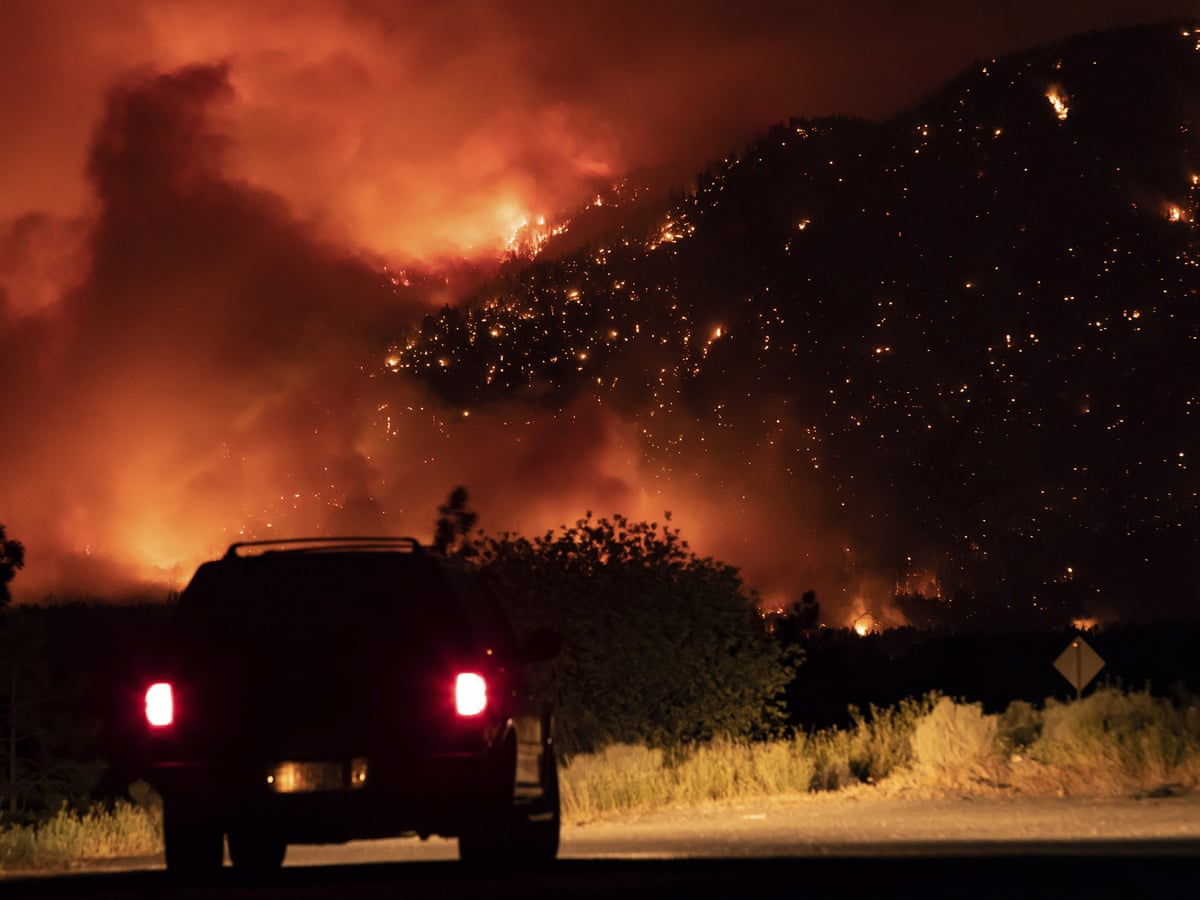
When a wildfire erupted near his First Nation community in northern Ontario, Hubert Wigwas made the decision to stay. He set up sprinklers on his roof to extinguish any falling embers, checked on the elders in his community who also opted to remain, and fueled up four boats on the lake for a potential quick escape.
“This is everything I’ve built in my 58 years,” said Wigwas, a councillor from Gull Bay First Nation. “I’m just not going to run away and let it burn.” Canada is grappling with some of its worst fire seasons to date, experiencing its most destructive year on record in 2023, with wildfires consuming forest land roughly the size of Syria. By August, over 750 wildfires were actively burning across the country.
The consequences reach as far as the U.S. Midwest, where smoke has filled the air in several cities, prompting responses even from political leaders. President Donald Trump expressed his concerns about “filthy, polluted” air drifting south from Canada, suggesting potential tariffs.

The escalating wildfire situation has initiated a nationwide dialogue about whether there are sufficient firefighters to manage these increasingly severe fire seasons. Questions arise about the risks when resources are stretched too thin, particularly in remote communities located near Canada’s extensive boreal forests.
Wigwas pondered these issues when he chose to remain behind, even with the possibility of facing a fine of around C$800 (approximately $570; £425) for violating evacuation orders. Officials from the Gull Bay First Nation have been advising residents to vacate since mid-July, as over 150 wildfires were reported burning in Ontario’s northwest.
The chief of Wigwas’ community penned a letter on July 29 that urged residents to leave immediately, stating that Ontario firefighters cannot effectively do their jobs if people remain in danger. Despite a wildfire burning just 24 kilometers from his community, Wigwas remarked that he had yet to observe any fire personnel arriving from outside to assist in fireproofing properties or checking on vulnerable residents.
Recognizing a gap in emergency response capabilities, Wigwas concluded that his community would benefit from establishing its own wildfire response system and educating residents on safeguarding their homes. “Everybody talks about climate change, but nobody is doing something to unite the (First Nations) reserves and have a system like that set up,” he stated.
In British Columbia, which has long been the focal point of Canada’s wildfire management efforts, some communities are already pioneering the self-education approach that Wigwas envisions. Efforts are underway to train residents in rural and remote areas on how to safely respond to wildfires before outside help can arrive.
Sonja Leverkus, a wildfire researcher and specialist, reported that she has trained over 400 individuals around Fort Nelson through her initiative, the Northeast BC Rural Incident Management Team. Leverkus noted that her motivation stems from the recognition that Canada’s methods of combating wildfires need to evolve due to the increasing frequency and intensity directly linked to climate change.
“There are not enough human beings in Canada,” she remarked, regarding the trained personnel required to tackle the current scale of wildfires. As remote areas often fall lower on the priority list for firefighting crews when more populated regions are threatened, the onus falls more heavily on local communities.
Her group, primarily composed of indigenous members, has conducted prescribed burns—controlled fires set to eliminate excessive vegetative fuel—and has managed to extinguish smaller fires before they escalate. Often arriving ahead of official provincial fire crews, they extend their assistance once the official teams are on the scene.
When a significant wildfire struck Fort Nelson in 2024, Leverkus mentioned that she and 40 other team members remained in the area and were contracted by the province to mitigate flammable materials and support firefighting activities.
Leverkus also facilitated training for locals on how to safeguard structures from embers, which can easily ignite major blazes that endanger entire towns. “We have mechanics, we have carpenters, we have real good problem solvers,” she expressed. “We’re all not afraid to stay.” Another resident, 70-year-old Cam Allen, a former helicopter pilot who has battled fires in the past, took Leverkus’ course to learn ground-level fire suppression techniques and how to react if fire reaches his town.
He reflected on a viral incident involving a California man who defended his home during the Palisades fire using only a garden hose: “It makes you wonder, if 100 people had stayed or 1,000 people had stayed behind and actually did what he did, how much more could have been saved?” Allen questioned.
However, the dangers of this mindset are clear. Last week, a man in the Village of Clinton had to be rescued by wildfire crews while his home was engulfed, after he had chosen to ignore evacuation orders.
Officials, including BC’s Minister responsible for emergency management, have consistently reiterated the importance of adhering to evacuation orders. “We may not be able to get back to you if an emergency happens,” Minister Kelly Greene cautioned, explaining that such orders exist as a last resort to protect the safety of individuals and communities.
Paul Kovacs, a researcher at the University of Western Ontario, noted that Canada’s approach to evacuations has contributed to a lower fatality rate from wildfires, despite their rising frequency. He emphasized that preserving life must remain the foremost priority in managing wildfires, stating that the stay-and-defend mentality is “aggressively opposed” by the academic community in Canada.
He believes rural and remote communities can play a crucial role in aiding authorities on protection measures but warns against undertaking these tasks while wildfires are active.
The BC Ministry of Forests has acknowledged that self-organized groups in rural areas can be hired during active firefighting situations but only when no provincial resources are available. They affirmed their commitment by increasing full-time firefighting staff by 56% in recent years to address escalating wildfire frequencies.
Leverkus remains determined to have her program recognized by provincial authorities so her trained individuals can assist without facing penalties for choosing to stay behind. She emphasized that safety measures are integral to her training programs, focusing on predicting fire behavior and mapping escape routes.
Although not all trained individuals plan to stay, those who do receive guidance from experienced commanders regarding when to evacuate. “If people want to stay and defend, they need to understand what that means for themselves, what that means for their family,” Leverkus stated.
Ultimately, she envisions her initiative becoming a prototype that could be adopted across rural Canadian communities, creating reliable local teams to manage wildfires. Meanwhile, Wigwas plans to contest his evacuation fine in court, expressing that if his community’s leadership charges him for defending his home, he feels he might as well be incarcerated for his choices.