
Escalating Houthi attacks threaten shipping routes, raising fears of wider conflict and impacting global economies.
Escalating Houthi attacks threaten shipping routes, raising fears of wider conflict and impacting global economies.
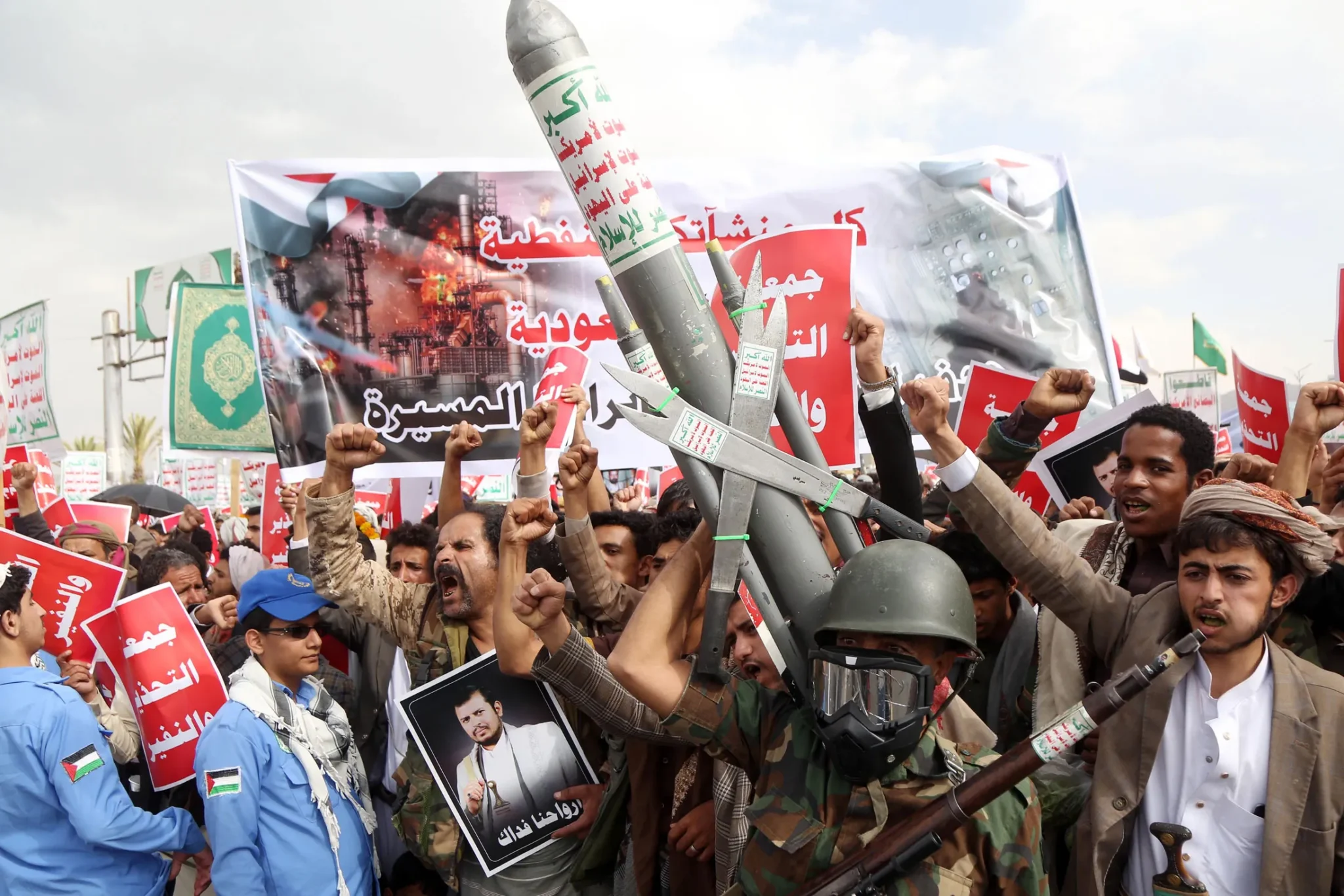
Yemen’s Houthi fighters are claiming responsibility for recent attacks on shipping vessels in the Red Sea, raising concerns about escalating tensions in the Middle East. By forcing ships to retreat from the Bab El Mandeb strait, a crucial maritime route connecting Europe and Asia, the Houthis have the potential to disrupt global trade significantly.
The situation has been exacerbated by ongoing strikes between the U.S. and Iran, coupled with worries that a deal aimed at developing Saudi Arabia’s nuclear industry could lead to an arms race in the region. Since the beginning of 2026, violence has surged, marking one of the more tumultuous periods for Middle Eastern conflicts.
For 12 consecutive nights, U.S. Central Command (Centcom) has executed airstrikes targeting Iranian coastal facilities related to radar, drones, and missiles. Historically peaceful Gulf Arab states are now grappling with persistent attacks from Iran, which lies just across the water.
The latest Houthi aggression comes after a previously established ceasefire with Saudi Arabia seemingly collapsed. Recent reports detail how two Saudi vessels were struck by missiles, with the Houthis asserting they warned ten additional ships to avoid Saudi ports, disrupting vital shipping traffic through the strategic Bab El Mandeb Strait.
This disruption holds severe implications for global energy and fertilizer supplies, already strained by Iran’s previous actions in the Strait of Hormuz. As a workaround, Saudi Arabia has utilized its East-West Pipeline to enable oil exports from its Eastern Province to the Red Sea terminal at Yanbu’ Al-Bahr, but this workaround is now under threat as the Houthis intensify their threats against maritime vessels.
U.S. President Donald Trump has vowed to counter the Houthi threat, but previous attempts have not successfully neutralized their capabilities. The Houthis are a Shia militia from northern Yemen, who in 2014 took control of the capital, Sanaa, amidst the chaos of the Arab Spring. Since then, they have dominated significant regions of Yemen, including the strategic port of Hodeidah.
The conflict escalated further in 2015 when Saudi Arabia intervened, supporting the ousted Yemeni government in fear of an Iranian-backed militia at their southern border. The initial belief was that Saudi air superiority would quickly bring the Houthis to the negotiating table; however, the conflict has since turned brutal, with heavy civilian casualties and no clear end in sight.
Should the Houthis persist in their campaign against shipping – a situation reminiscent of past engagements where they targeted Israeli-linked vessels – the disruption of maritime routes could lead to increased military responses from countries like the U.S. and the UK, further complicating the situation.
With rising tensions in the Arabian Peninsula, analysts focus on how this will impact the region’s stability. While previously war-torn countries such as Iraq and Syria have stabilized, the Gulf region remains precarious.
The recent U.S. initiatives, including a controversial cooperation agreement to assist Saudi Arabia with its nuclear energy program, spark further unrest. The agreement is cautiously viewed as it holds the potential to catapult the region into a nuclear arms race amidst a backdrop of already fragile peace.
The ongoing confrontations and the threat to essential supply routes pose urgent questions about the future economic landscape in the Middle East and the broader implications for international markets and global stability.
Keep in touch with our news & offers
Subscribe to Our Newsletter
Thank you for subscribing to the newsletter.
Oops. Something went wrong. Please try again later.