Vladimir Putin admits to fuel shortages in Russia due to Ukraine’s strikes, claiming they aren’t critical while stressing military needs.
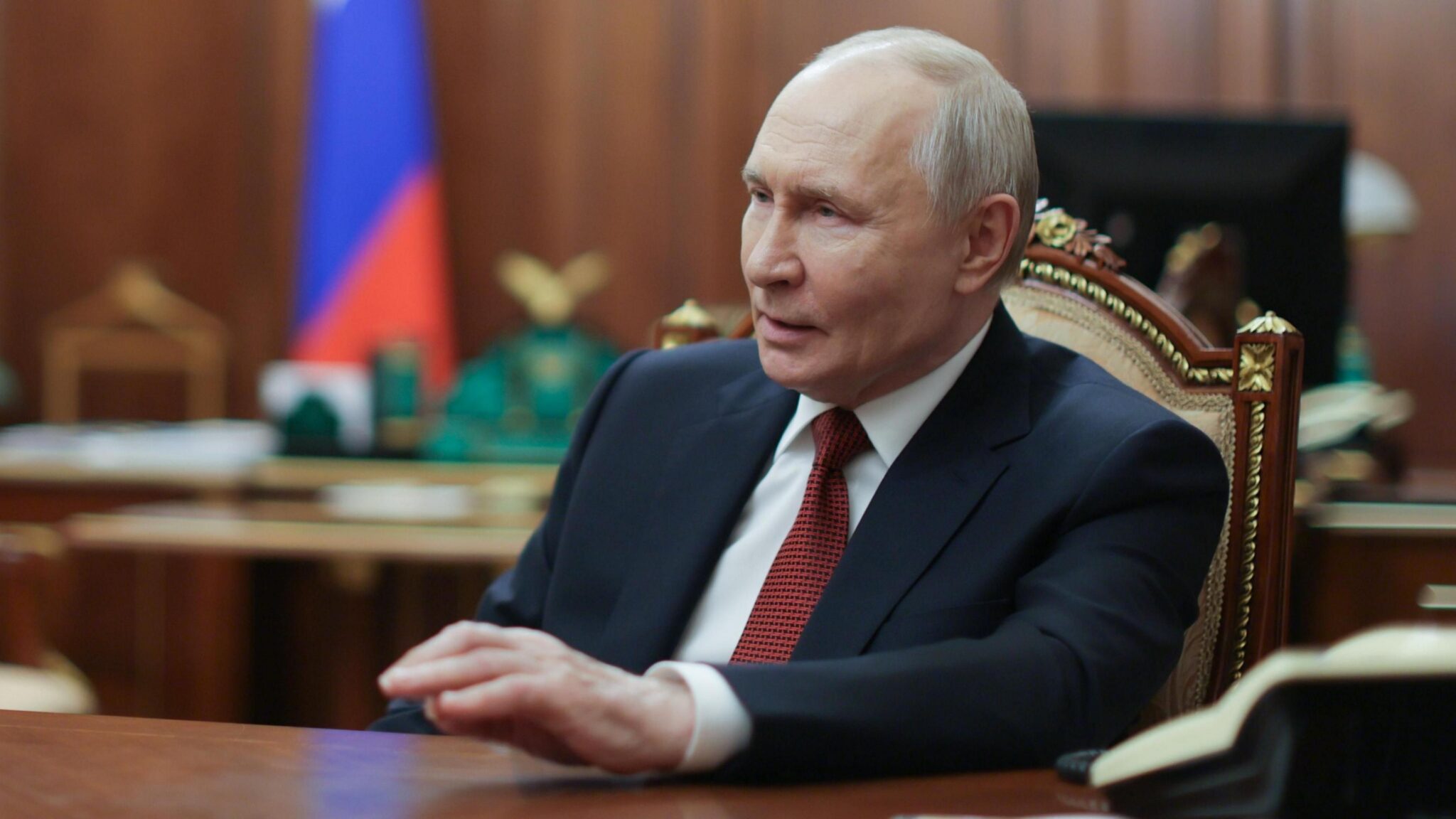
Vladimir Putin admits to fuel shortages in Russia due to Ukraine’s strikes, claiming they aren’t critical while stressing military needs.
In Russia, the effects of Ukraine’s missile and drone strikes on energy infrastructure from Moscow to the Black Sea have become increasingly apparent. Long queues at petrol stations and widespread fuel rationing have emerged. In Crimea, drivers have been banned from filling their tanks, prioritizing military vehicles instead.
For the first time, President Vladimir Putin has openly acknowledged the crisis. Speaking with senior officials and oil executives over the weekend, he was remarkably candid about the ongoing problems. “You’re well aware that problems persist for both motorists and businesses,” he stated. “Unfortunately, there are still queues at petrol stations, and finding the right grade of petrol isn’t always easy.” He further described the challenges facing the agricultural sector, noting that the harvest is dependent on a reliable fuel supply.
According to Mediazona, an independent Russian news outlet, fuel restrictions are currently in place across 56 Russian regions. In a later interview with state television, Putin admitted that Ukraine’s strikes were “obviously creating problems.” While acknowledging the situation, he claimed, “We are currently seeing a certain shortage, but it’s not critical.” He pledged to boost production of air defenses to shield Russian energy installations and expedite repairs to refineries targeted by Ukrainian attacks.
In Crimea, concerns are rising as Putin indicated that only “a few days’ supply” of fuel remained. Nevertheless, he expressed confidence that additional fuel would soon be brought in.
Putin’s openness about the issue is unusual given the gravity of the fuel shortages and the public awareness surrounding the situation. The significance of Crimea, seized by Russia in 2014, adds to the urgency of the matter since it has become a strategic military base for the Kremlin.
During the televised interview, Putin elaborated on the reasoning behind his disclosure, suggesting that Ukraine aimed to sow division within Russian society and diminish support for the war. “We won’t give them that chance,” he asserted, insisting that Ukraine’s long-range strikes have had “absolutely no impact on the situation at the front line.” In contrast, Ukrainian authorities dispute this claim, stating that their strikes aim to bring the war closer to Russian civilians and compel Moscow to divert military resources.
In recent months, Ukraine has implemented bold strikes on key Russian cities like St. Petersburg and Moscow, aiming to maximize military effectiveness while challenging the Kremlin’s control. Nonetheless, Dmitry Peskov, a spokesman for the Russian government, reaffirmed that Russia’s military goals remain unchanged, aiming to force Ukrainian forces out of four southeastern regions contested by Moscow, a claim that Ukraine fiercely rejects.
Putin maintained that Kyiv was attempting to negotiate a limit to hostilities, dismissing this as a strategy to buy time for regrouping and rearming. “It is clear why this proposal is being made because our counter-strikes deep into Ukrainian territory are much stronger, have greater impact, and are, frankly, more destructive,” he said. While he acknowledged the distress within the Ukrainian army, characterizing it as “catastrophically depleted,” he reaffirmed that saving Kyiv’s regime is not part of Russia’s strategy.
In Sevastopol, a governor installed by Moscow warned residents to expect power outages in some areas, with locals struggling to cope, some even resorting to purchasing backup generators without a reliable power source.
If Kostyantynivka falls, Russian forces might push towards further Ukrainian strongholds in the east.
Keep in touch with our news & offers
Subscribe to Our Newsletter
Thank you for subscribing to the newsletter.
Oops. Something went wrong. Please try again later.