Jacob Zuma’s meeting with Ajay Gupta reignites backlash over corruption allegations in South Africa, prompting government investigations.
Jacob Zuma’s meeting with Ajay Gupta reignites backlash over corruption allegations in South Africa, prompting government investigations.
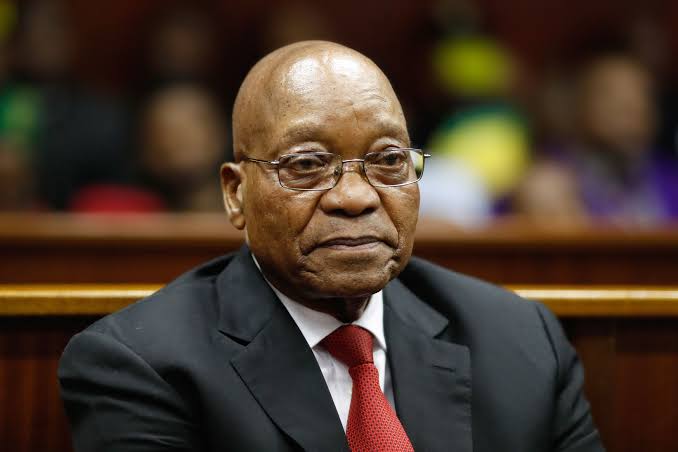
Former President Jacob Zuma’s recent meeting with Ajay Gupta in India has sparked outrage among South Africans, with a government minister claiming he is showing the country “the middle finger.” The meeting reignites concerns surrounding a corruption scandal that has lingered for more than a decade.
Once closely allied with Zuma, the Gupta brothers faced accusations of exploiting their connections with the then-President to manipulate South African politics. Following a judicial commission’s initiation of an investigation into massive fraud, the Gupta family left South Africa in 2018.
In 2019, authorities discarded an arrest warrant for Ajay Gupta. His brothers, Atul and Rajesh, fled to the United Arab Emirates, where an extradition request from South Africa was denied by a court earlier this year.
Khumbudzo Ntshavheni, a cabinet minister, expressed her dismay during a press briefing, asserting that it is “very disturbing” for a former leader to openly disregard the ethical concerns surrounding the Gupta family’s actions, which have cost the South African populace significantly.
Zuma, a veteran of the African National Congress (ANC), fell from power in 2018 amidst a cascade of corruption allegations related to the Gupta family. Nevertheless, he maintains his innocence regarding any impropriety.
A 2022 commission that probed state capture revealed that Zuma had been influenced to hire and fire critical ministers. This included the controversial termination of Finance Minister Nhlanhla Nene, who resisted the Gupta family’s demands. The report also illustrated a network of corruption involving South Africa’s state power company, Eskom.
Following his encounter with Gupta in India, Zuma expressed intentions to run for re-election in the upcoming South African elections. Minister Ntshavheni condemned this ambition as a “disgrace,” particularly noting the participation of South Africa’s high commissioner to India, Anil Sooklal, in the controversial meeting.
International Relations Minister Ronald Lamola announced the initiation of an investigation concerning the meeting, which he suggests may reflect Zuma’s efforts to conduct a “parallel foreign policy.” Historically, under his leadership, Zuma’s party garnered about 15% of the vote during the recent elections in 2024, an electoral shift that saw the ANC’s control diminish for the first time since the end of apartheid.
Keep in touch with our news & offers
Subscribe to Our Newsletter
Thank you for subscribing to the newsletter.
Oops. Something went wrong. Please try again later.