Vibe coding transforms Singapore’s tech community, making AI accessible and fostering innovation through workshops and events.
When Yong Quan Tan graduated from college in 2023, he viewed himself as a “traditional software engineer.” The release of OpenAI’s GPT-4 that March caused him to worry his developer skills might not be sufficient to maintain employment in the rapidly evolving tech landscape.
In his quest for knowledge, Tan sought out AI events in Singapore, where he found a lack of substantial engagement in this emerging field. Although the nation boasts thousands of tech startups, the vibrant developer culture found in places like San Francisco, Tel Aviv, and Bengaluru was noticeably missing.
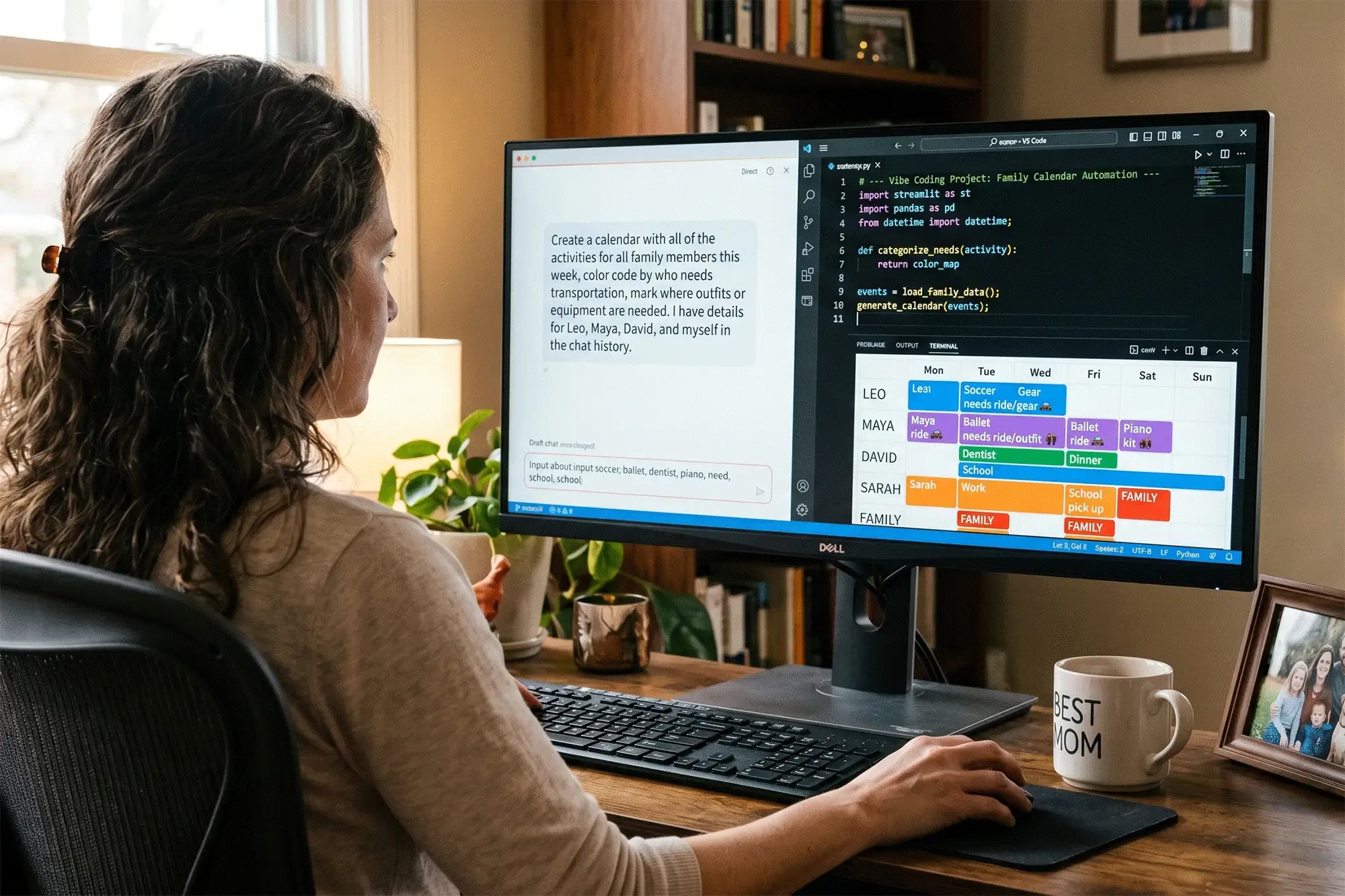
Over the past two years, a grassroots movement has taken shape in Singapore, leading to the rise of what is being called vibe coding. This style, which utilizes natural language for AI-generated software, has effectively lowered the barriers for entry into tech development, granting access to anyone eager to join the AI revolution.
The growing interest has not gone unnoticed by tech giants like OpenAI and Anthropic, which have established regional headquarters in Singapore, developing hundreds of job opportunities across both tech and non-tech sectors.
Tan’s pivotal moment arrived in late 2024 when he discovered AI Tinkerers, a group from San Francisco that organizes casual AI meetups. These gatherings diverged from traditional tech events, emphasizing hands-on participation and the sharing of ideas without the pressure of polished presentations.
Captivated by this community, Tan approached Henry Mao, the chapter’s founder, about taking over when Mao decided to focus on his startup. “Henry was like, I’ve never seen anyone be so persistent. OK, you get it, bro,” Tan noted, and he assumed leadership of the group last year.
Now known as Natives, AI Tinkerers Singapore conducts demo nights, workshops, and hackathons focusing on various innovative solutions, from voice agents to agentic workflows. Their events frequently attract over 100 participants, a limitation attributed not to a lack of interest but to venue size constraints, according to Tan.
Tan observed, “We were just running events, but then people started to feel like this could be something they belonged to.” Remarkably, two attendees from this community ultimately co-founded an AI startup together.
Moreover, AI Tinkerers is not alone in recognizing the resurgence of tech discussions and communities. Before the pandemic, Singapore was a hub of activity for tech enthusiasts, bolstered by startup incubators like BLOCK71 and solid support from educational institutions, government entities, and corporations like Grab and Amazon. However, these communities saw a decline due to COVID-19.
In 2025, the builder collective 65labs emerged with the intent to rekindle interest through hands-on events. Their October Cursor hackathon attracted over 1,000 applicants and produced around 150 functioning products within just 24 hours, funded by more than $400,000 from ten sponsors.
By May 2026, 65labs had also played a vital role in hosting the first Asian conference for AI Engineers, which engaged over 1,000 attendees and featured a diverse roster of 92 speakers from leading AI companies, including OpenAI and Google DeepMind. Singapore’s foreign minister, Vivian Balakrishnan, made a surprise appearance, discussing the development of secure, open-source personal AI assistants.
The chatter on social media post-conference underscored a common sentiment: Singapore’s emergence as a credible AI hub is only the beginning.
For Nehal Agrawal, a communications graduate from 2024, the growth of AI events encapsulates more than just numbers; it represents inclusivity. Initially viewing AI purely as a function of ChatGPT, Agrawal felt that AI was often inaccessible to non-technical individuals. However, vibe coding has broken down those barriers.
At a builder event she attended in early 2026, about 1,000 people of various ages turned up to learn and engage in AI discussions.
Vibe coding has altered the landscape of who can be an entrepreneur. Many non-technical founders have learned to utilize tools like Claude Code and Codex to launch their startups successfully. Agrawal noted, “Suddenly, people around me are talking about evals, harnesses, loops, context, and these are all non-technical people.”
For her, being AI-native does not equate to mastering extensive programming languages. Rather, it means effectively directing AI models and integrating various tools for personal projects or professional endeavors.
Agrawal explained, “It has removed a lot of psychological barriers to your own strengths or to your own capacity of learning.”