Washington’s rare coordinated effort with Japan aims to stabilize the yen, addressing concerns over financial impacts on U.S. Treasury markets.
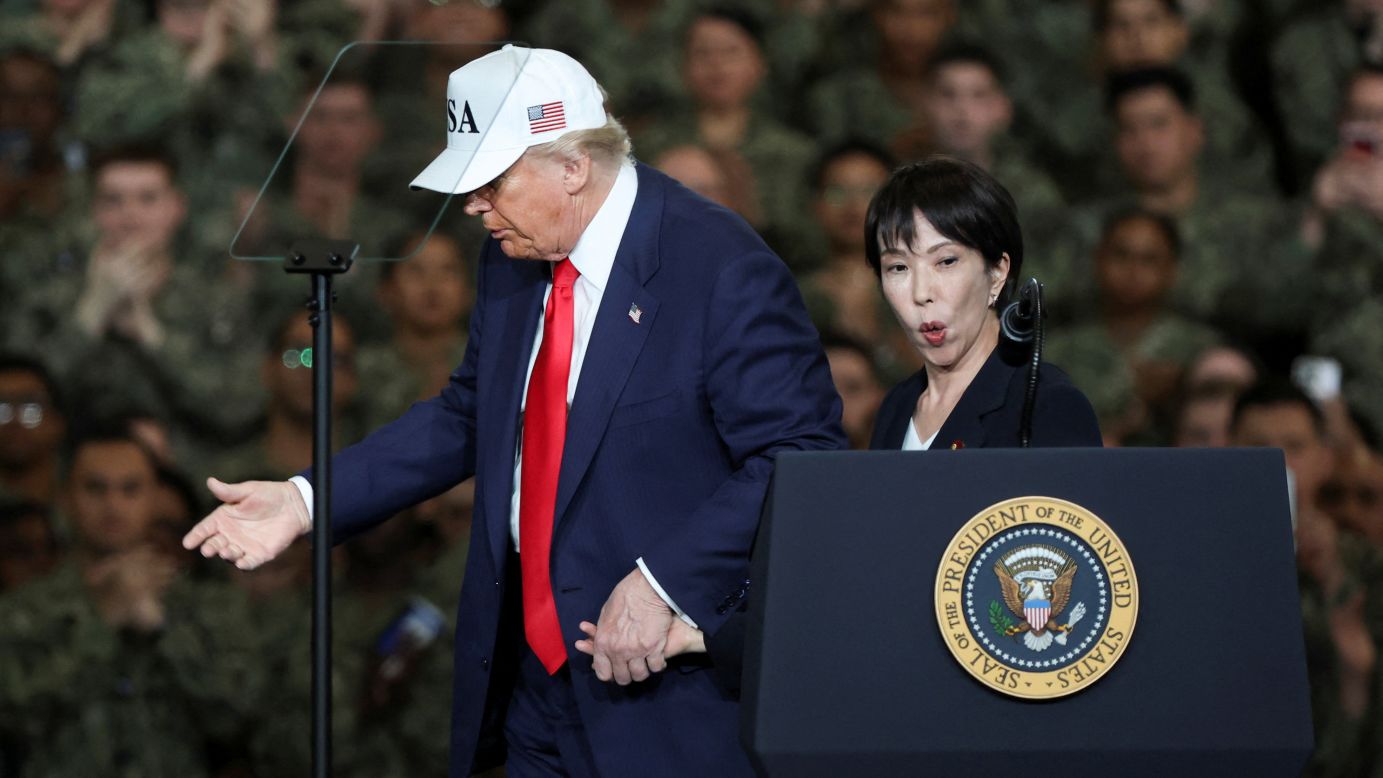
Washington’s rare coordinated effort with Japan aims to stabilize the yen, addressing concerns over financial impacts on U.S. Treasury markets.
Washington’s recent decision to step in and support the battered yen has raised questions about the motivations behind this rare coordinated intervention. Analysts suggest that concerns over the U.S. Treasury markets and Japan’s financial system played significant roles in the move.
Tokyo has become increasingly wary of the yen’s downward spiral, which recently plummeted to its weakest level against the dollar in nearly four decades, dipping to 163.73 per dollar before recovering slightly to 157.57 following the intervention.
This coordinated effort marked the first joint operation by the U.S. and Japan since 1998, and the first collaboration of its kind since the G7 acted to weaken the yen following the 2011 earthquake.
Industry insiders told CNBC that one of Washington’s primary concerns was to prevent Japan from resorting to selling large amounts of Treasuries to finance unilateral action, especially since Japan is the largest foreign holder of U.S. government debt.
Louise Loo, head of Asia economics at Oxford Economics, pointed out that avoiding a forced sale scenario might have been a key reason for U.S. engagement. “There is a self-preservation element here. Volatile markets driven by potentially fiscally aggressive policies from Japan could extend to the U.S. Treasury markets, destabilizing the dollar,” she explained.
Furthermore, the emphasis from both governments on the Federal Reserve’s standing FIMA repo facility—a tool that allows foreign central banks to access dollar liquidity without liquidating Treasuries—suggests a desire to minimize the likelihood of forced selling.
Japan’s finance ministry has indicated plans to utilize the FIMA repo facility for future interventions, a move that Masahiko Loo, senior macro strategist at State Street, believes might signal a more significant strategic intent than the intervention itself.
Compounding these concerns, a persistently weak yen could lead to increased selling of Japanese government bonds, raising yields that could spill over into global bond markets at a time when both Japan and the U.S. are dealing with rising long-term borrowing costs.
“Highlighting access to the Fed’s FIMA repo tells markets Japan can raise dollar liquidity without selling Treasuries, which addresses concerns that MOF intervention could pressure U.S. funding markets through short-end UST sales,” Loo added. “It’s an attempt to maximize the signaling effect and get the biggest bang for the buck with the tools already available.”
Since the beginning of the year, yields on the U.S. 10-year Treasury have surged almost 57 points.
President Donald Trump acknowledged the U.S.’s involvement in the coordinated effort, framing it as a gesture of goodwill towards Japan and a measure aimed at maintaining global economic stability.
The intervention also underscores Washington’s broader economic and geopolitical interests. Oxford Economics’ Loo noted that the U.S. views the yen as “substantially undervalued,” providing a rationale for correcting what it perceives as an unfair trade advantage that makes Japanese exports more competitive.
Additionally, if the U.S. believes that Japan’s fiscal policies are contributing to higher JGB yields and a weaker currency, this coordinated effort could be a stopgap that buys time for the Bank of Japan to eventually raise interest rates later this year. A stronger yen will ultimately require tighter monetary policy from Japan rather than continuous interventions, as Loo further emphasized.
Jesper Koll, an expert director at Monex, remarked that this coordinated intervention marks a new chapter in U.S.-Japan relations under President Trump and Japanese Prime Minister Sanae Takaichi. He stated, “U.S.-Japan cooperation and partnership has entered a new phase,” and characterized the coordinated action as a clear signal that “when Japan asks for help, America will answer Japan’s call.” He added that this move sends a geopolitical message to Beijing, suggesting that “China’s leadership cares about actions, not words.”
Vishnu Varathan, head of macro research for Asia ex-Japan at Mizuho Securities, noted that the participation of the U.S. in the intervention increases its effectiveness. He explained, “The disproportionately heightened efficacy of FX intervention comes from the involvement of the U.S. Treasury and Federal Reserve, giving markets greater reason to believe authorities are prepared to act again if necessary.” This collective response, coupled with warnings of future intervention, adds pressure against speculative positions that challenge the yen.
Despite these interventions, analysts warn that any gains may be fleeting unless Japan addresses the fundamental issues causing the yen’s decline.
Interestingly, reports stating that the U.S. sold euros rather than dollars to buy yen raised eyebrows in the market, as typical interventions rely on dollar assets.
Robin Brooks, a senior fellow at the Brookings Institution, criticized the mechanics of the U.S. operation, stating that it “confuses markets and will prove counterproductive.” He explained, “On the surface, that may give the impression that this intervention will be more impactful than past efforts, but U.S. participation raises more questions than answers.”
Brooks further asserted that intervention alone cannot reverse currency depreciation driven by Japan’s bond market. He noted, “As long as Japan’s government bond yields are artificially capped, the yen is overvalued and needs to fall.” Notably, the Bank of Japan had ended formal yield curve control in March 2024, but it continues to purchase substantial amounts of Japanese government bonds, actions that help maintain borrowing costs artificially low.
State Street’s Loo concluded by acknowledging that while intervention could only temporarily shape the financial landscape, broader movements at the BOJ and accompanying hedging flows would play a more significant role in defining the economic trajectory in the years to come.
Keep in touch with our news & offers
Subscribe to Our Newsletter
Thank you for subscribing to the newsletter.
Oops. Something went wrong. Please try again later.