Explore how Flock’s license plate readers work and the privacy debates they spark across communities in the United States.
Explore how Flock’s license plate readers work and the privacy debates they spark across communities in the United States.
Flock cameras, known formally as automated license plate readers (ALPR), are becoming ubiquitous in neighborhoods across the United States, often blending into their surroundings. Developed by the public-safety technology company Flock Safety, these cameras are strategically placed along roads, intersections, and near various businesses.
As vehicles pass, the cameras capture images and utilize machine learning to process details such as the license plate number, color, make, and model, converting them into searchable data. According to law enforcement agencies, Flock’s technology can significantly assist in tracking vehicles and identifying crime suspects. In some instances, police can search for a particular car among tens of thousands of cameras nationwide.
Flock asserts that its readers do not employ facial recognition technology. Customers, mainly the organizations that install the cameras, can control access to the data that is gathered. The company emphasizes, “They are built to focus on the vehicle involved in an incident and the details that can help distinguish it from other vehicles on the road.” Flock maintains that vehicle records are automatically deleted after 30 days unless local laws or contract arrangements require different retention periods.
Founded in 2017 by Garrett Langley, Flock Safety is based in Atlanta. The company reports that it has installed approximately 120,000 cameras across 49 states. Langley indicated in a recent X post that these cameras alerted authorities in a single day to more than 4,000 sex offenders, around 2,100 stolen vehicles, over 1,600 wanted individuals, around 160 missing persons, and one Amber Alert.
Operating on a subscription basis, Flock charges annual fees for each camera. The company achieved a valuation of $7.5 billion following its last fundraising round. Besides license plate readers, Flock also provides conventional video cameras, audio-detection technology, investigative software, and drones.
However, the proliferation of these cameras has sparked privacy concerns. Critics argue that Flock cameras can infringe on the rights of ordinary drivers who are not linked to any criminal activity. Reports indicate instances where misreads or inadequate verification procedures led to innocent individuals being wrongfully detained by police. For example, in Toledo, Ohio, a driver suffered injuries after being bitten by a police dog due to a misread license plate. In Roseville, California, a Business Insider investigation discovered that Flock misread plates 71% of the time in certain alerts during 2023 and 2024.
The Electronic Frontier Foundation (EFF), a civil liberties organization, has called Flock’s operations a form of mass surveillance, citing that the cameras capture images of all vehicles passing by, not just those under suspicion. Critics are worried about the potential for these systems to reveal detailed patterns of individuals’ movements, which could infringe upon personal privacy.
The EFF expressed concerns stating, “It has been misused by police to spy on their ex-partners and could be used to target individuals engaged in First Amendment activities or seeking medical care.” Flock stresses that their cameras do not follow vehicles continuously but capture fixed, point-in-time images, differing from surveillance systems that might chronicle movements over time.
As concerns grow, Flock does not currently provide a comprehensive public map of its camera locations. However, the community can obtain this information via the DeFlock project, which aims to map ALPR devices. Additionally, local governmental records may reveal the locations of cameras acquired by public agencies.
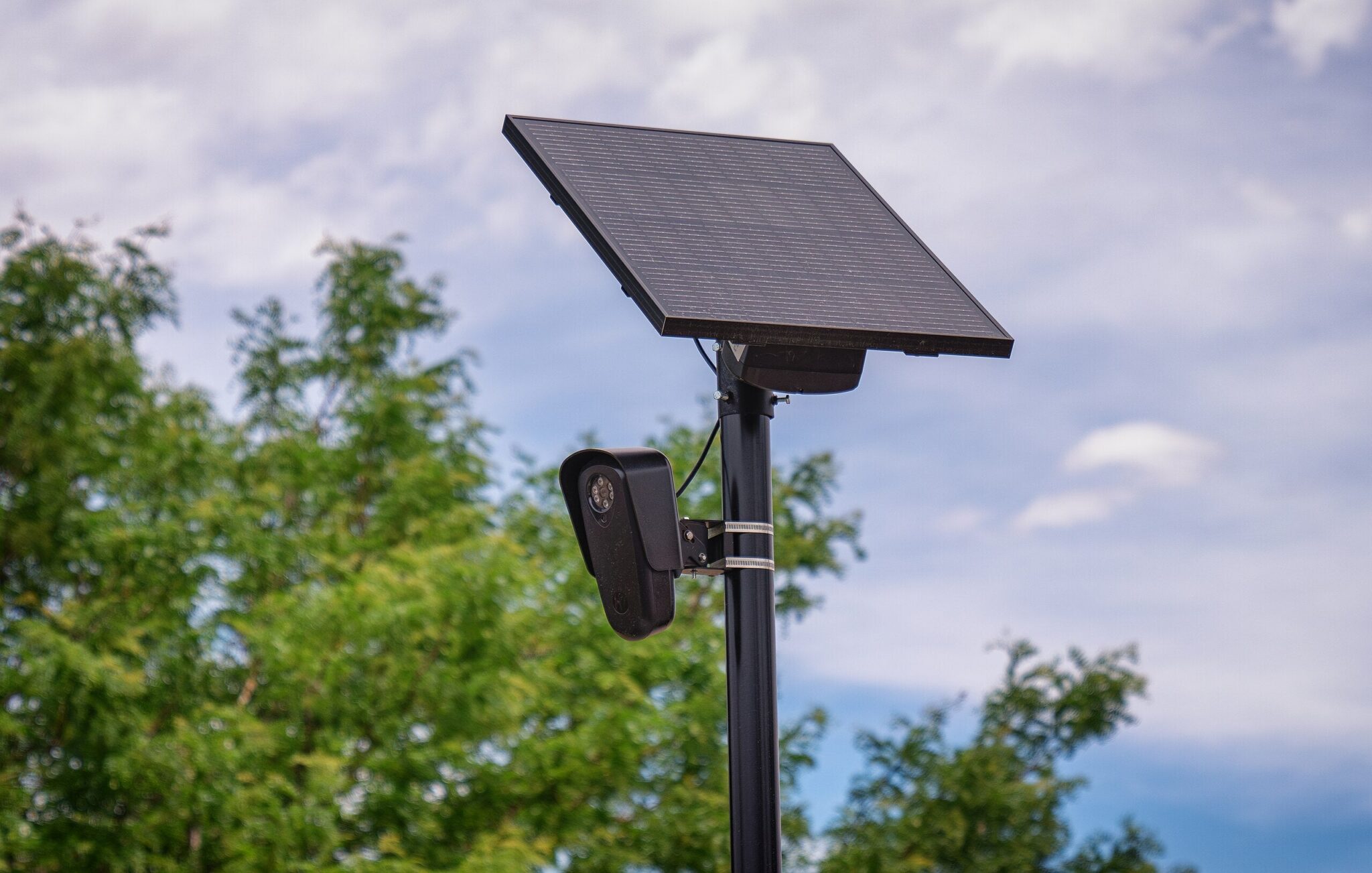
Flock cameras can also operate with solar panels. Typically resembling small rectangular boxes affixed to roadside poles, some installations come equipped with solar panels, allowing operation without a conventional electrical connection. Positioned to photograph both the front and rear of vehicles, they can be found in varied locations, including road shoulders and around parking lots.
Flock’s perspective on privacy issues emphasizes that their cameras provide mere samples of data rather than a continuous record of movements, focusing on specific incidents of interest rather than comprehensive monitoring.
Keep in touch with our news & offers
Subscribe to Our Newsletter
Thank you for subscribing to the newsletter.
Oops. Something went wrong. Please try again later.