US President Trump’s initiative to use frozen Iranian assets for war damages signals escalating tensions between the US and Iran.
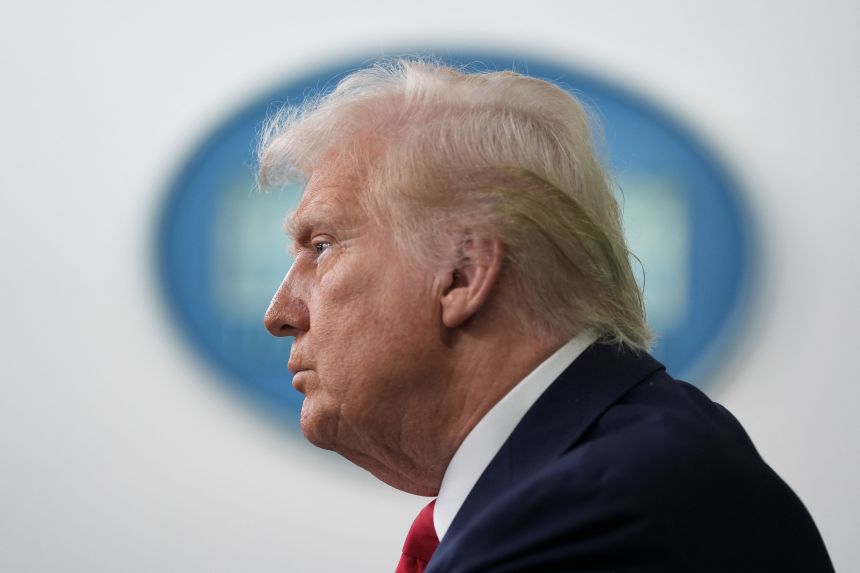
US President Trump’s initiative to use frozen Iranian assets for war damages signals escalating tensions between the US and Iran.
In a marked escalation of tensions, Iran has reportedly launched drone strikes on US military installations across the Middle East. This move follows 13 consecutive nights of American attacks against the Iranian nation. Reports indicate explosions along Iran’s Gulf coast and in its western, northern, and central regions, with state media confirming four fatalities and five injuries from an attack in the southwest.
Further complicating the situation, Iran announced strikes on targets in US-aligned Kuwait, which triggered air raid sirens in Bahrain and Jordan. Flights were also halted temporarily at a major airport in Iraq due to a reported drone crash.
The backdrop for these events includes a controversial statement from US President Donald Trump, who announced plans to use frozen Iranian assets for compensating war damages. “These damages may be very substantial but, nevertheless, this is the fair and equitable thing to do,” Trump wrote on his Truth Social platform, emphasizing that the costs associated with damages to ships and cargo in the strategic Strait of Hormuz would be covered by funds the United States controls.
Iran’s Foreign Minister, Abbas Araghchi, sharply criticized this move, stating that seizing the assets of another country to settle unrelated future claims sets a perilous precedent. He warned that the resulting chaos could lead to significant unrest.
Trump’s comments come just ahead of an important meeting with Israeli Prime Minister Benjamin Netanyahu, which is scheduled for Tuesday at the White House. Netanyahu is also anticipated to attend a memorial service for the late Senator Lindsey Graham, a long-time supporter of Israel. Concurrently, Ukrainian President Volodymyr Zelensky is expected to speak with Trump on the same day.
An upcoming conference in London involving US and UK officials will further address matters concerning the Strait of Hormuz. Participants will include US Defence Secretary Pete Hegseth and Chairman of the Joint Chiefs of Staff Dan Caine; the conference’s agenda was first reported by Axios.
Earlier in June, the US and Iran had agreed to a 14-point Memorandum of Understanding (MOU), aimed at halting military operations and reopening the vital Strait of Hormuz. However, just weeks after the agreement was signed, Trump declared the ceasefire “over” following renewed Iranian attacks on shipping and resulting US strikes.
Notably, the MOU stipulated that the United States would make fully available Iran’s frozen or restricted funds. With rising concerns over the potential threats to shipping—especially in light of new challenges posed by Iran-backed Houthis in the Red Sea—the price of crude oil has surged, exceeding $100 a barrel, the highest figure since May.
Trump also vowed to deliver “major military punishment” against Iran in response to Houthi attacks, signifying a possible shift toward more aggressive military action. He later mentioned considering a restart of substantial combat operations in Iran, suggesting strikes on a scale “bigger than ever before.”
The US military’s Central Command reported that strikes were conducted to degrade Iran’s capabilities to threaten civilian shipping in regional waters. Targeted locations included Iranian military command centers and drone storage facilities, a move that underscores the rising stakes in this volatile situation.
As tensions increase, the Iranian army claimed responsibility for attacks on US bases situated in Kuwait. In Bahrain, officials reported the activation of air sirens, while Iranian media indicated that alarms had also been triggered in Jordan. The broader ramifications of these actions remain to be seen as diplomatic and military dynamics unfold in this critical region.
Keep in touch with our news & offers
Subscribe to Our Newsletter
Thank you for subscribing to the newsletter.
Oops. Something went wrong. Please try again later.