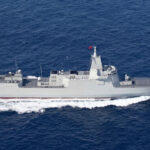
Iran targets US military sites as nearly 100 troops are injured amidst escalating tensions in the region. Shipping disruptions continue.

Iran targets US military sites as nearly 100 troops are injured amidst escalating tensions in the region. Shipping disruptions continue.
Iran has intensified its military actions in the strait of Hormuz, having launched an attack on a tanker that forced the crew to abandon ship. This escalation follows ten consecutive nights of US airstrikes aimed at Iranian military targets.
The Pentagon reported that nearly 100 US service members have sustained injuries over the past two weeks during these heightened military engagements. In response to the increasing attacks, the Iranian Revolutionary Guards confirmed they had struck US military facilities in Bahrain and Kuwait, targeting air defense systems and radar installations.
Reports emerged that a tanker in the strait was hit by an unidentified projectile, prompting the crew to escape to safety in a lifeboat. The situation in the region has led to defensive measures being taken by Kuwait, Bahrain, and Jordan to protect against further Iranian strikes.
Pentagon spokesperson Sean Parnell provided details indicating that most wounded service members suffered minor concussions, with 96% of them having returned to work. This comes amid allegations that the Pentagon is not fully disclosing the extent of troop injuries related to Iranian attacks. Parnell refuted claims that information was being withheld from the public.
In the past week, three US soldiers have lost their lives in military actions in Jordan and Iraq, heightening concerns about the potential for increased conflict.
Despite the unrelenting barrage of US airstrikes, Iran has maintained its stance over the critical strait of Hormuz, through which a significant portion of the world’s crude oil and natural gas supply is traded.
The situation was exacerbated on Monday, with the Iranian-backed Houthi group announcing a maritime blockade against Saudi Arabia, adding further strain on global trade and oil prices. The Bab al-Mandeb strait, which usually sees about 12% of the world’s trade flow, may also be impacted as the Houthis assert their authority in the region.
Saudi Arabia has committed to keeping shipping routes open, but threats from the Houthis could disrupt its oil exports, particularly given the significant increase in reliance on Red Sea ports due to prior closures of the strait of Hormuz.
Meanwhile, Iran’s interior minister has visited Pakistan, a key intermediary in the ongoing conflict, to explore potential solutions, although prospects for a new agreement appear uncertain following the collapse of an interim deal last month.
The continuous military operations have severely stalled shipping activities in the strait of Hormuz. As violence escalates, both Iranian and US forces have targeted critical civilian infrastructure, impacting millions.
The rising tensions have driven oil prices upward, with Brent crude reaching over $88 per barrel on Tuesday, and US petrol prices averaging $4 a gallon in light of the disruptions. This economic pressure could have wider implications, especially as the midterm elections approach in November.
The United Kingdom Maritime Trade Operations agency noted multiple reports of the tanker strike, which occurred eight nautical miles off the coast of Oman, with Iranian Revolutionary Guards claiming responsibility for the attack, alongside two other assaults on vessels in the area.
In response to US military recommendations, vessels have been advised to avoid Iranian-controlled routes, emphasizing the ongoing volatility in maritime operations.
Keep in touch with our news & offers
Subscribe to Our Newsletter
Thank you for subscribing to the newsletter.
Oops. Something went wrong. Please try again later.