
A Chinese missile destroyer fires live rounds in Japan’s economic zone for the first time, raising alarms over regional security.
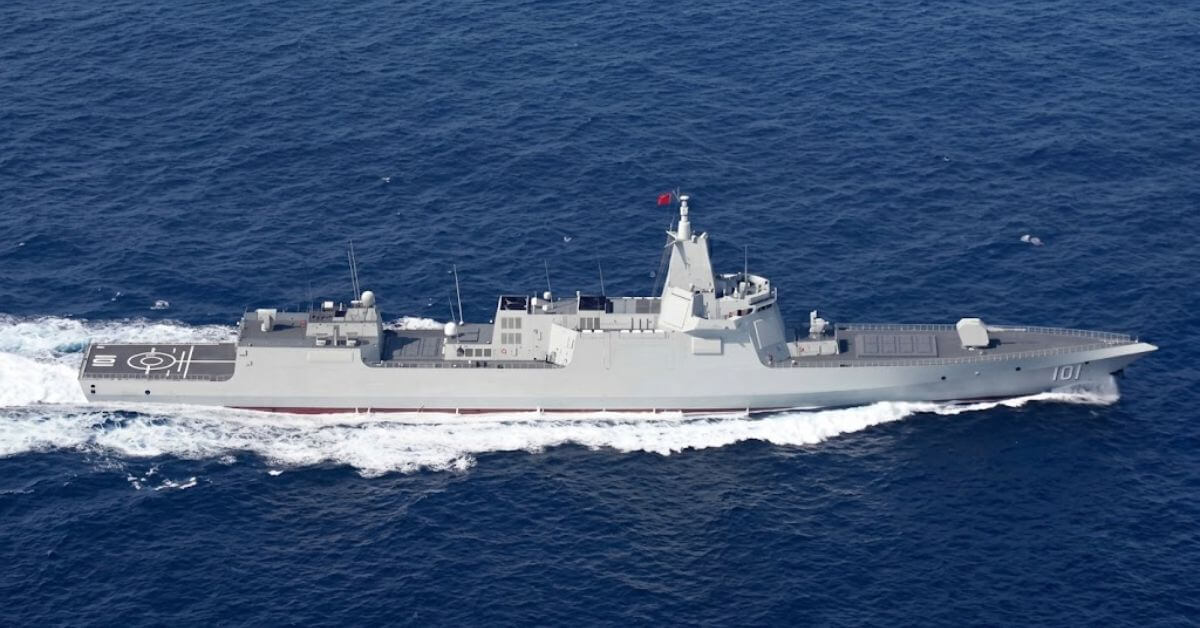
A Chinese missile destroyer fires live rounds in Japan’s economic zone for the first time, raising alarms over regional security.
A Chinese missile destroyer conducted live-fire drills inside Japan’s exclusive economic zone (EEZ) for the first time, alarming Tokyo amid ongoing tensions in the region. The exercise took place on a Sunday, approximately 180 kilometers from Okinotori, Japan’s southernmost island, coinciding with escalating confrontations between Chinese and Philippine sailors in the South China Sea.
During the military drill, the Chinese vessel issued warnings to shipping that it would be using live ammunition, reportedly employing machine guns. Japanese authorities spotted three Chinese warships alongside a Russian frigate sailing between Okinawa’s main island and Miyako island days prior to the exercise. They were re-identified around 330 kilometers southwest of Okinotori in the early hours of Sunday.
Japan’s top government spokesman, Minoru Kihara, stated that the drill aligns with a broader trend of military cooperation between China and Russia. He expressed significant concern by mentioning that Japan had conveyed to Beijing through diplomatic channels that the drills “could have endangered the navigation of nearby ships.” Kihara emphasized Japan’s commitment to monitoring the activities of Chinese and Russian vessels in the maritime area.
Beijing, however, contests the classification of Okinotori as an island, characterizing it as a reef and disputing Japan’s claim over the surrounding waters. This incident marks the first acknowledgment from Japan’s defense ministry of a foreign navy vessel firing live rounds within its EEZ, heightening tensions further.
Japan has voiced its apprehension to China regarding this episode and continues to enhance its surveillance in the vicinity. Compounding these concerns, military exercises by both Chinese and Russian forces have intensified since Japan’s relations with Moscow have deteriorated due to the continuing conflict in Ukraine, alongside contentious remarks from Tokyo regarding Taiwan made by Japanese politician Sanae Takaichi.
In another significant incident on Monday, a Chinese vessel approached the Second Thomas Shoal, under Philippine control but claimed by Beijing. Philippine authorities reported an altercation in which a sailor allegedly sustained a serious head injury from a Chinese crew member using a wooden baton. Chinese officials rejected this narrative, contending their personnel merely issued warnings while asserting that Philippine crew members had provoked the situation.
The Philippine government secured a pivotal ruling from the Permanent Court of Arbitration in 2016, dismissing China’s extensive territorial claims in the South China Sea. However, Beijing continues to disregard this verdict. Approximately concurrently, the Philippine and Chinese foreign ministers are scheduled for discussions at an upcoming 11-member Association of Southeast Asian Nations (ASEAN) meeting in Manila.
In response to these developments, the US government condemned China’s aggressive actions. Secretary of State Marco Rubio, arriving in the Philippines for the ASEAN summit, stated that “China’s troubling pattern of provocations against the Philippines’ legitimate maritime operations undermines regional peace and stability.” He reiterated the US’s endorsement of navigation freedom in Southeast Asia, warning against the control of waters by forces willing to use trade as a tool for geopolitical leverage, which could pose significant threats to regional sovereignty and security.
Though it remains uncertain whether Rubio will meet with Chinese Foreign Minister Wang Yi during his visit, he has expressed openness to such an engagement. Overall, the situation underscores rising tensions following China’s ongoing territorial disputes with several nations, along with Japan, India, and Bhutan.
Keep in touch with our news & offers
Subscribe to Our Newsletter
Thank you for subscribing to the newsletter.
Oops. Something went wrong. Please try again later.