Residents rely on Hezbollah’s support as the Lebanese state struggles under Israeli occupation and social welfare failures, deepening divisions.
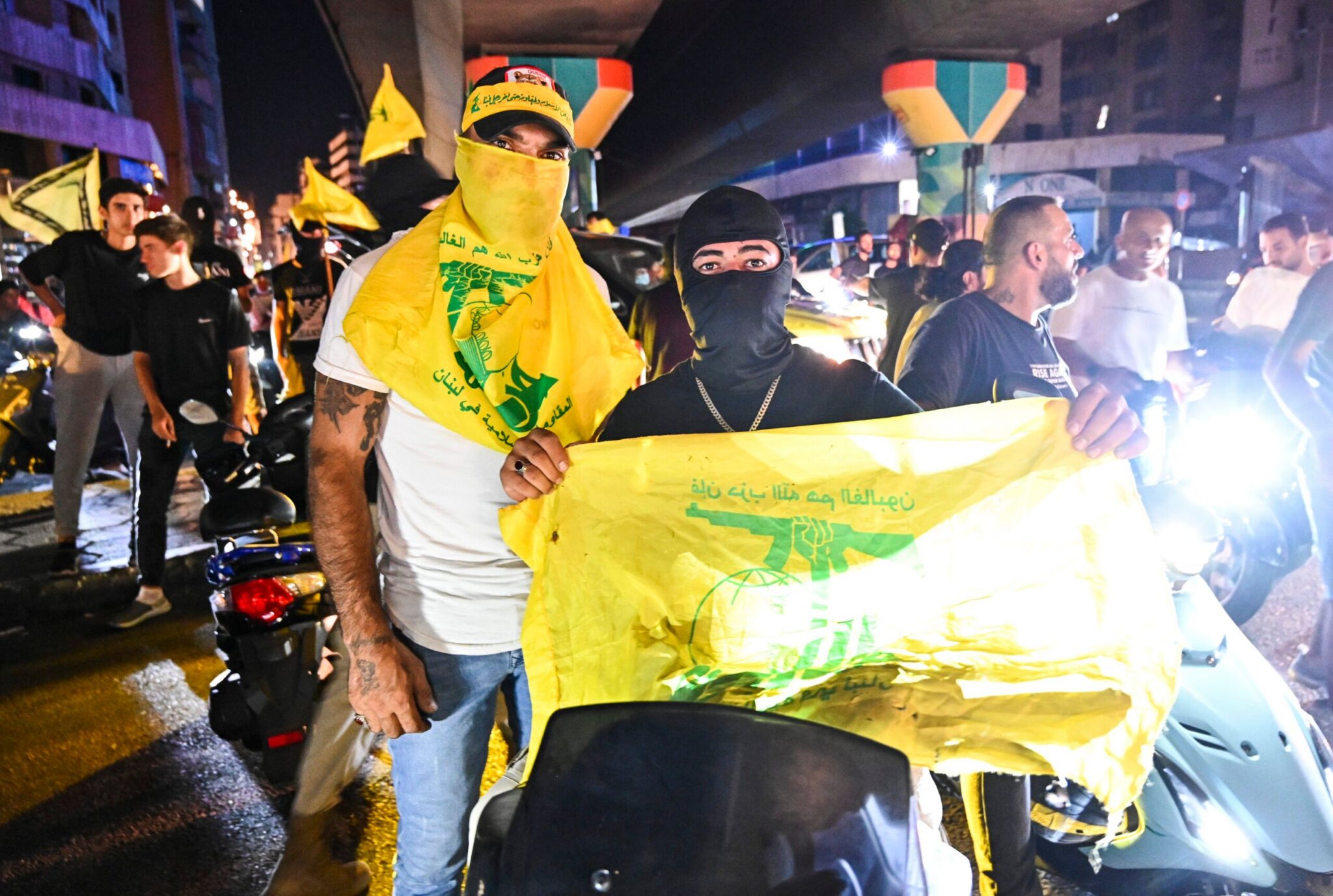
Residents rely on Hezbollah’s support as the Lebanese state struggles under Israeli occupation and social welfare failures, deepening divisions.
As the Israeli occupation continues, the divide between Hezbollah and the Lebanese state is becoming increasingly stark. Many residents in southern Lebanon find themselves relying on Hezbollah’s extensive social welfare system, which offers support that the struggling state cannot provide.
Fatima al-Ashkar, living in Markaba, experienced this firsthand after the death of her husband, Mohammed Ali, a Hezbollah member who was killed while defending the region. She depicted her loss to her children using toys to illustrate the air raids they faced, explaining, “Israel came and bombed here. Daddy was here. Daddy was martyred. Daddy was protecting us from Israel.” Hezbollah’s martyr foundation quickly stepped in to assist her family by providing a furnished apartment, covering their rent, school fees, healthcare costs, and even psychological support sessions for her children.
While al-Ashkar expresses gratitude towards Hezbollah, others in the region express frustration towards the Lebanese government, calling into question its effectiveness amid ongoing Israeli military actions. With Hezbollah’s extensive support system in place, many have begun to view the state with skepticism. “Honestly, I don’t care about the state. Before, we used to say: ‘They should speak, they should do something.’ Now, whether they speak or don’t speak, it makes no difference to us,” al-Ashkar stated.
Despite the Lebanese government’s attempts to assert authority, public trust in its ability to provide security continues to wane. Many feel that Hezbollah has filled the void left by the state’s failures. Mustapha Hamze, a doctor from the outskirts of Nabatieh, lamented the lack of a strong political organization to defend his rights and criticized both Hezbollah and the government for their ineffectiveness in addressing the Israeli threat.
The predicament is deepened by continued Israeli attacks that undermine claims of security that the Lebanese state tries to present. Residents witness their homes and community buildings destroyed repeatedly, while feeling abandoned by their government. Tia Abdalah, a displaced villager, articulated her disappointment: “We haven’t gotten anything from the state. And the army’s hands were tied by the government.”.
To regain the people’s trust, the Lebanese government is emphasizing the need for a comprehensive, strategic approach that involves cultural change and inclusion. A senior security official, speaking anonymously, noted the challenges in reversing generations of indoctrination that have favored Hezbollah’s support systems.
Lebanon is currently implementing pilot projects in areas recently returned from Israeli occupation, aiming for visible rebuilding efforts conducted by the Lebanese army. These efforts are intended to shift public reliance from Hezbollah to the state. However, the precariousness of the situation persists as Israeli hostility remains ongoing, with attacks occurring regularly and diminishing chances of effective government responses. The current overarching narrative underscores that without a withdrawal timetable from Israel, the state risks losing credibility and legitimacy in the eyes of its citizens.
For many like al-Ashkar, the state still feels alienated, and the prospect of security offered by it seems tenuous at best. “Sometimes you feel they’re working for the Israelis,” she expressed, illuminating the complex entanglement of loyalty, trust, and survival in a fraught environment.
Keep in touch with our news & offers
Subscribe to Our Newsletter
Thank you for subscribing to the newsletter.
Oops. Something went wrong. Please try again later.