The EU commends Spain for swiftly addressing the recent migrant influx in Ceuta, where around 72,000 migrants crossed from Morocco in two days.
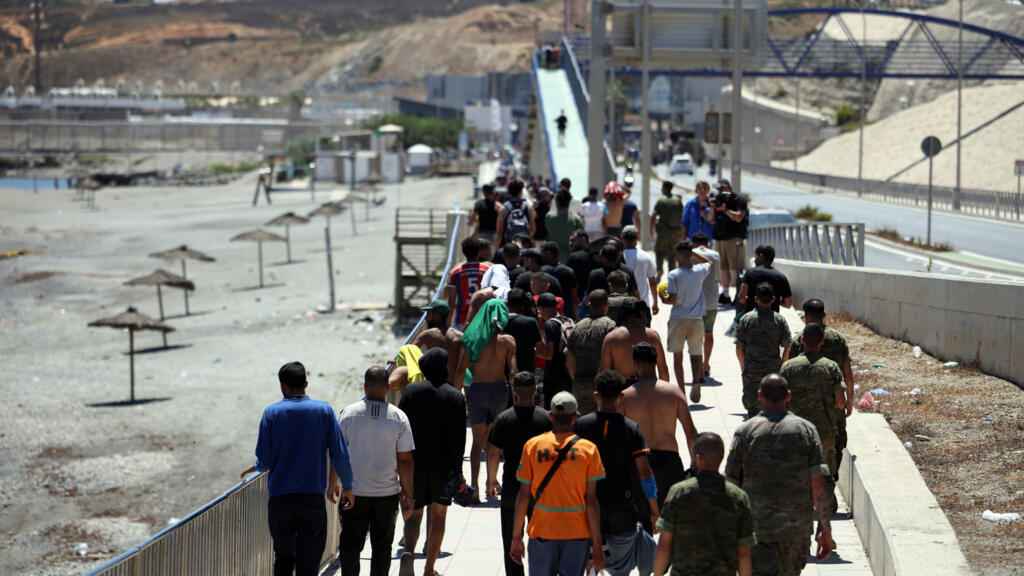
The EU commends Spain for swiftly addressing the recent migrant influx in Ceuta, where around 72,000 migrants crossed from Morocco in two days.
The European Union has commended Spain for its rapid response to the migrant crisis in Ceuta, following a meeting of the bloc’s interior ministers on Tuesday.
Between July 30 and 31, approximately 72,000 migrants entered the Spanish territory in North Africa, as reported by Spain’s Interior Minister Fernando Grande-Marlaska. He noted that around 70,000 migrants have since been returned to Morocco.
Tragically, at least 75 fatalities have been reported on the Spanish side of the border, alongside 11 deaths documented in Morocco. The urgency of the recent meeting was underscored by several EU members expressing concern over how Spain managed this crisis. Italy particularly described images emerging from Ceuta as “shocking” and subsequently announced its suspension of the Schengen agreement with Spain.
Irish Justice Minister Jim O’Callaghan, who led the meeting, expressed that the EU stands united in solidarity with Spain, pointing out that migration must be met with a cohesive European approach.
The atmosphere of the gathering was anticipated to be tense, with earlier criticisms aimed at Spain by certain EU nations. Italy’s right-wing Prime Minister Giorgia Meloni commented that such “uncontrolled immigration” poses a security dilemma for Europe.
In the wake of these developments, Denmark and Finland supported Italy’s stance, while Czech Prime Minister Andrej Babiš advocated for a temporary suspension of Spain’s Schengen benefits. Italy, along with Denmark and 20 other nations, subsequently issued a letter voicing their concerns regarding the situation in Ceuta.
In contrast, Spanish Prime Minister Pedro Sánchez articulated his deep concerns about those attacking Spain’s response, insisting that Ceuta is not part of the Schengen area.
Grande-Marlaska reassured that the zone remains intact and expressed hope that Italy would soon relax any additional border controls. Denmark’s immigration minister, Morten Bødskov, shared satisfaction with Spain’s immediate measures but emphasized the importance of maintaining control over the EU’s borders.
EU Commissioner Magnus Brunner characterized the incident as a “test” of European resilience and border security, asserting that it had been successfully navigated. He announced that the EU would provide Spain with emergency financial assistance to bolster its borders and manage the crisis.
Questions linger regarding the reason behind the sudden surge of migrants moving from Morocco to Ceuta. Authorities opined that the massive influx likely stemmed from organized crime networks and misinformation spread via social media.
A young administrative assistant from Casablanca named Ayoub recounted his perilous swim to Ceuta, citing the event as “the most traumatic experience I’ve ever had”. He shared his aspirations for a better life in Europe, emphasizing, “I want to be free, I want to pursue my studies and I want a chance in life.”
This surge was precipitated after Spain’s Supreme Court ruled that migrants intercepted at sea while attempting to reach Ceuta or Melilla, another Spanish exclave, cannot be swiftly returned to Morocco.
Moroccan authorities later expressed concern to Spain, warning that the court ruling could lead to chaos, yet Spain refuted these claims, asserting they had not been forewarned about the sheer magnitude of this unprecedented event.
Spain’s interior minister indicated ongoing collaborations with Morocco to prevent further breaches of Spain’s borders and reaffirmed that any remaining migrants in Ceuta would be returned promptly.
Images from Ceuta depicted large crowds of migrants receiving food and aid near the beach, with some holding makeshift banners that read “asylum”.
Local media reported that around 800 unaccompanied children are being sheltered in facilities across the city, raising alarms about their future.
Nicknamed as a dreamland for immigrants, Ahmed, a 29-year-old migrant from Sudan looking to reunite with family, stated, “I want to help them”. Though he now receives assistance, he remains uncertain about his status in Spain.
Djibril from Senegal voiced discontent, stating that migrants were not seeking trouble and condemned the conditions they faced. He criticized the inaction of the Spanish government, emphasizing the inhumane treatment endured outdoors without basic provisions.
From Sudan, Kamal lamented his difficult circumstances, declaring he was “trying to find somewhere where I can be protected”. He described the lack of basic necessities and the deteriorating conditions for migrants living in Ceuta.
While Grande-Marlaska assured that the rights of all migrants, especially minors, are respected during this crisis, the Spanish government has allocated approximately 25 million euros (£21.4 million; $28.8 million) to support these vulnerable individuals in Ceuta.
Keep in touch with our news & offers
Subscribe to Our Newsletter
Thank you for subscribing to the newsletter.
Oops. Something went wrong. Please try again later.