Canada announces retaliatory tariffs of up to 50% on US imports, escalating trade tensions after US tariffs on Canadian products.
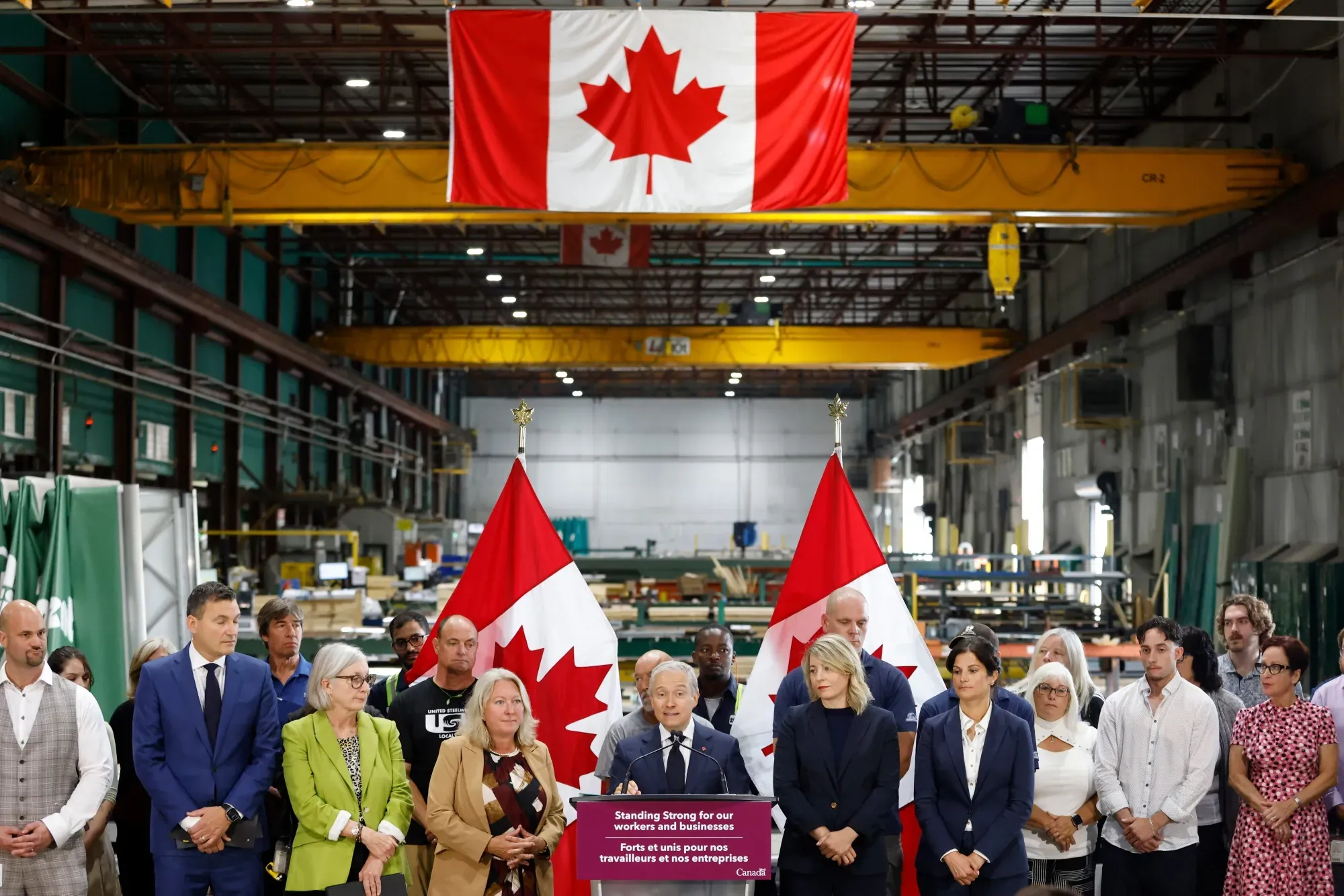
Canada announces retaliatory tariffs of up to 50% on US imports, escalating trade tensions after US tariffs on Canadian products.
Canada has announced a series of counter-tariffs soaring as high as 50% on various US goods in response to recent trade actions taken by President Donald Trump.
The newly imposed tariffs will affect nearly C$28 billion ($20 billion; £15 billion) worth of American products, which includes items ranging from steel and furniture to fresh tuna and cotton T-shirts. Officials confirmed these levies will come into effect on September 8.
This move marks the latest escalation in a trade conflict following the collapse of US-Canada trade negotiations, with each side accusing the other of making unreasonable demands that soured discussions.
Canada’s Finance Minister, François-Philippe Champagne, stated that the country’s decision to retaliate was necessary due to the tariffs imposed by the Trump administration, which reached 50% on several Canadian goods after negotiations fell apart last week. He emphasized, “Those tariffs will have real consequences for Canadian workers, businesses and communities across our nation. Canada must respond.”
The finance minister described the retaliation as “proportionate” and “strategic,” and he announced additional measures to aid workers and businesses affected by US tariffs, allocating C$7.5 billion towards support programs aimed at minimizing job losses.
The imposition of tariffs on goods traded between two historically close partners is expected to result in increased costs for both Canadian and American businesses, potentially affecting consumers through higher prices.
Polls show that many Canadians are in support of their government’s firm stance against the US; however, concerns linger regarding the reasons behind the failed trade negotiations, leading Conservative party members to demand the release of the full draft deal with the US.
In a statement following Canada’s tariff announcement, the White House remarked that America remains willing to provide Canada with the “most preferential market access of any country on Earth.” The statement criticized Canada for opting out of partnership, citing a preference for unreasonable demands over negotiation.
Former President Trump took to social media, accusing Canada of “ripping off” the US for decades, criticizing steep tariffs charged to American farmers. He expressed frustration, declaring, “I deal with many countries, and Canada is easily the most difficult and unreasonable.” He also teased changes to Lake Ontario’s name to Lake America, emphasizing that relations with the region would face significant adjustments.
Trump went on to threaten a rise in US tariffs on Canadian automobiles to as high as 50% starting January 1.
In a strong rebuttal, Prime Minister Mark Carney accused Trump of aiming to dismantle vital Canadian sectors, including automotive manufacturing, steel, and aluminum.
While public discourse has become heated, diplomatic overtures have been made by some officials who hope to resume trade discussions soon. Ontario Premier Doug Ford, who described the situation in ongoing talks as “a little heated,” expressed a desire for a mutually beneficial agreement for both Canadian and American people.
The ongoing trade escalation raises questions about the future of the North American trade agreement involving Canada, the US, and Mexico, known as the USMCA. In a prompt response, President Claudia Sheinbaum dispatched her economy secretary, Marcelo Ebrard, to Washington for urgent discussions following the latest developments.
The Canadian government has released a comprehensive list of nearly 900 US products that will be subjected to these new counter-tariffs, targeting items that Canadian consumers and businesses can procure from alternative sources to mitigate domestic impact.
Keep in touch with our news & offers
Subscribe to Our Newsletter
Thank you for subscribing to the newsletter.
Oops. Something went wrong. Please try again later.