
The UK government has nationalized British Steel amidst ongoing economic challenges, aiming to safeguard jobs and maintain steel production capabilities.
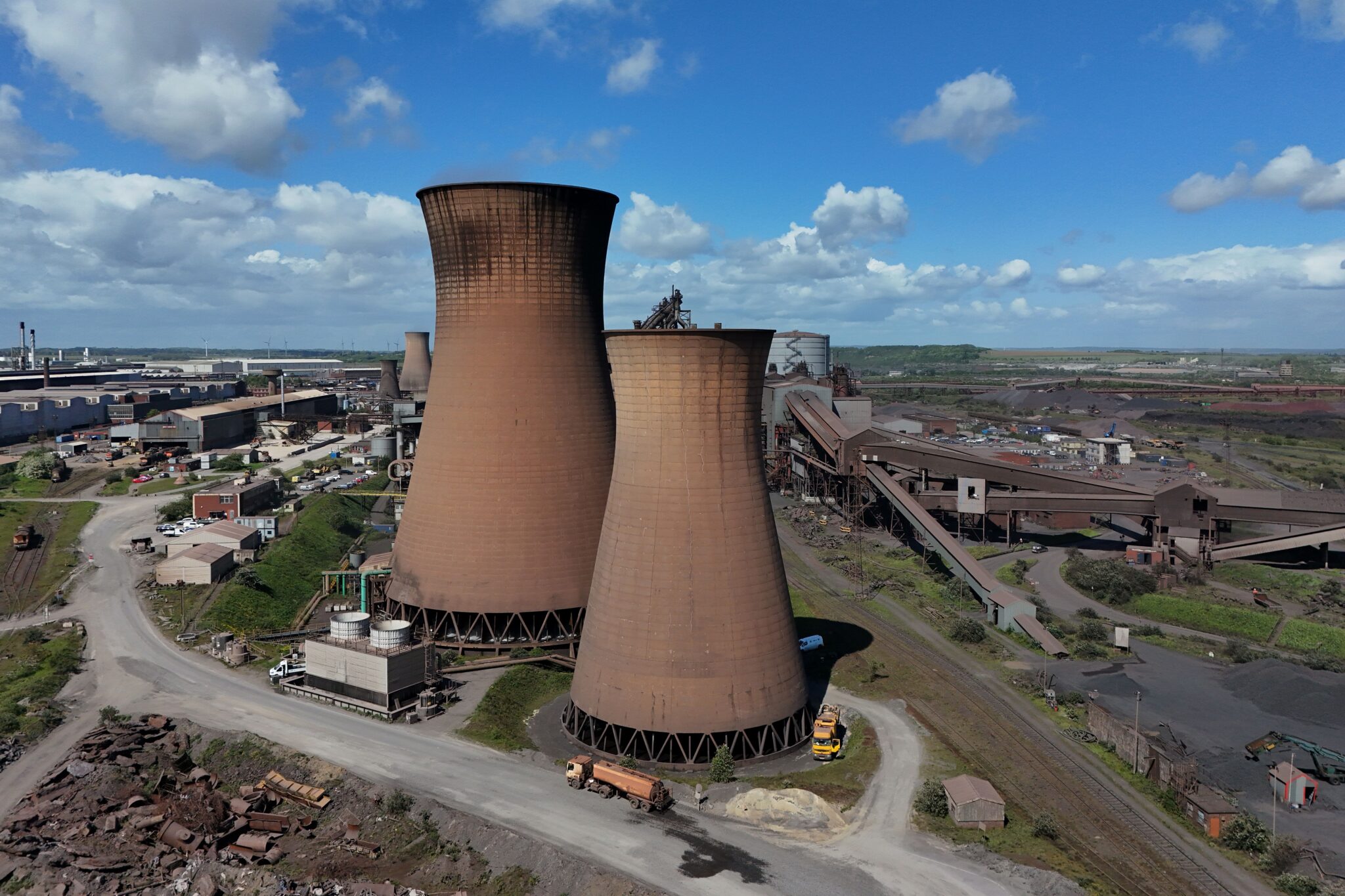
The UK government has nationalized British Steel amidst ongoing economic challenges, aiming to safeguard jobs and maintain steel production capabilities.
British Steel has officially been placed under public ownership following years of uncertainty surrounding the future of its Scunthorpe plant. This crucial move comes just months after the UK government assumed control of the facility, previously owned by China’s Jingye Group.
The Scunthorpe plant, employing approximately 2,700 individuals, represents the last remaining site in the UK producing virgin steel—essential for significant construction projects such as buildings and railways. The government views the loss of this capability as a potential threat to the UK’s economic security.
In a historical context, Tata Steel sold the loss-making sector responsible for manufacturing long products like transport rails back in 2016 for just £1, leading to the renaming of the enterprise to British Steel by private investment firm Greybull Capital. However, after facing financial collapse in 2019, the business was taken over by the UK government’s insolvency service, only to be sold to Jingye in 2020.
Fast forward to July 16 this year, and the UK government has now asserted ownership, with Jingye expected to seek compensation for this nationalization move. In response, China’s commerce ministry expressed strong dissatisfaction with the UK government’s decision.
Previously, in late March 2025, Jingye announced that the Scunthorpe plant was incurring losses of around £700,000 daily, which led to calls for consultations on the facility’s potential closure. Jingye cited that the blast furnaces could no longer operate sustainably, pointing to ‘highly challenging’ market conditions and costs associated with transitioning to lower-carbon production methods.
A report released earlier this year by the National Audit Office revealed that maintaining the Scunthorpe facility was costing the government about £1.3 million each day. Compounding these challenges is a notable decline in UK steel production, a trend exacerbated by a 25% tariff imposed by the US on imported steel.
A House of Commons Library briefing highlighted global overproduction issues, indicating an international surplus of steel, which has driven prices down significantly. UK manufacturers are grappling with higher operational costs, particularly around electricity, compared to their international counterparts.
The government’s rationale behind the nationalization is centered on protecting jobs and securing what it calls a ‘vital national capability’. With significant financial losses at stake, it seems unlikely the government will aim to retain control of British Steel long-term.
Business Secretary Peter Kyle has indicated that the fair compensation for Jingye would be evaluated by an independent assessor. He underscored the alternative scenario of allowing the business to fail—which would eliminate the UK’s capability for primary steel production, leaving the nation dependent on external steel supplies.
Currently, the skyline of Scunthorpe is dominated by four blast furnaces, each named after English queens—Bess, Mary, Anne, and Victoria. However, only Bess and Anne remain operational, with the furnaces, originally commissioned in 1938 and 1954 respectively, nearing the end of their functional lives.
The continuous operation of these furnaces is critical, as allowing them to cool can lead to significant damage and require extensive work to restart. The necessary materials for their operation, including coking coal and iron pellets, are in dwindling supply.
British Steel’s challenges parallel those of Tata Steel at Port Talbot in Wales, which ceased operations in September 2024, citing daily losses of £1.7 million. An agreement was reached between Tata and the UK government to invest £500 million to facilitate a transition to greener steel production.
With the UK steel industry contributing £1.7 billion to the economy in 2024—accounting for 0.1% of the total output and 0.8% of manufacturing output—this sector’s health remains significantly under scrutiny. The latest 2023 figures show the UK produced merely 5.6 million tonnes of crude steel, a stark contrast to China’s staggering 1,000 million tonnes, which dominates 54% of global production.
As the situation evolves, the ongoing developments at British Steel will undoubtedly influence the broader landscape of UK manufacturing and economic policy.
Keep in touch with our news & offers
Subscribe to Our Newsletter
Thank you for subscribing to the newsletter.
Oops. Something went wrong. Please try again later.










