The six-day funeral of Ali Khamenei is set to unfold in Iran, aiming to showcase national unity and resilience with millions expected to participate.
The six-day funeral of Ali Khamenei is set to unfold in Iran, aiming to showcase national unity and resilience with millions expected to participate.
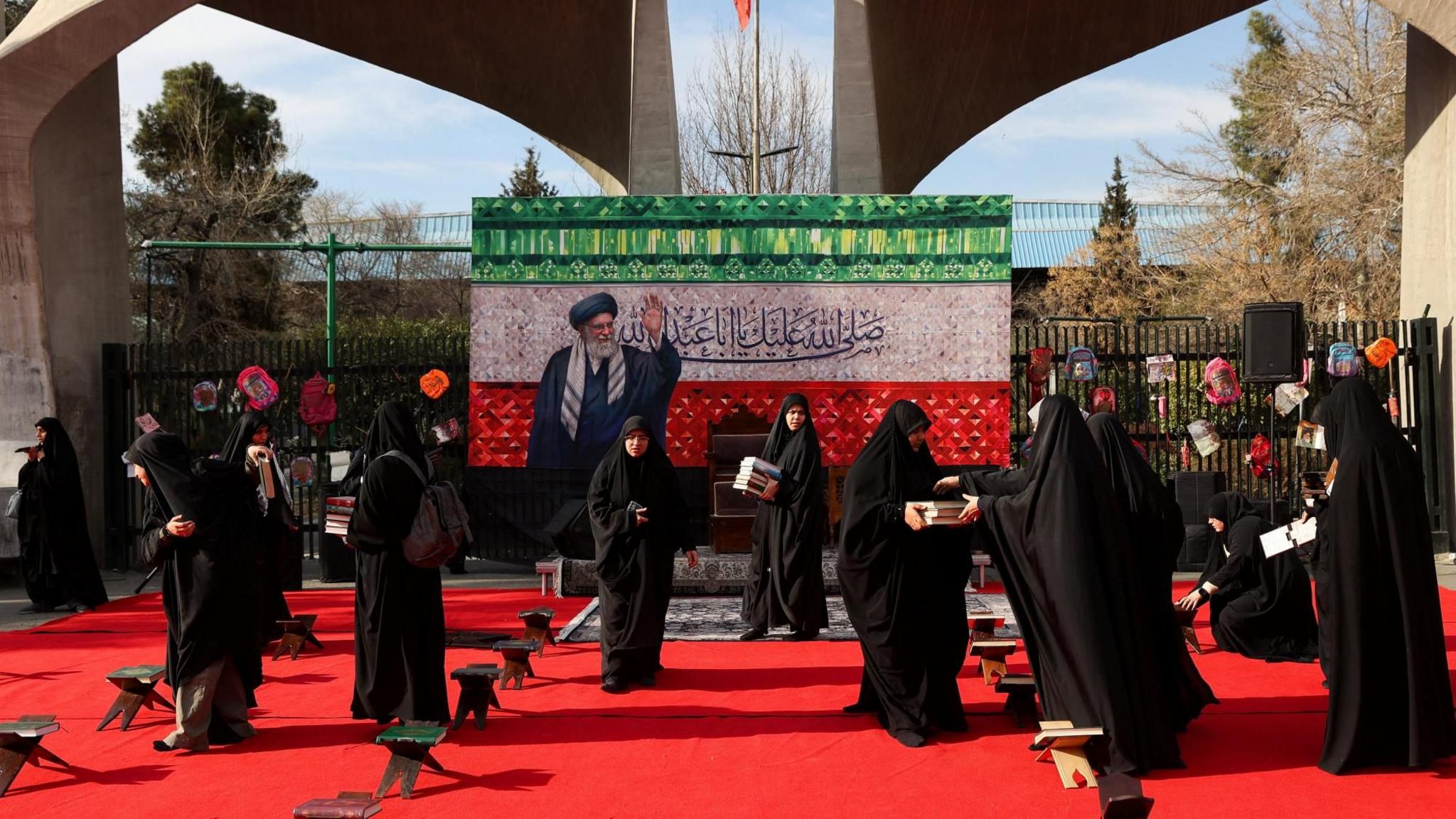
In the early hours of Friday, the capital city Tehran began to see an influx of police roadblocks, stalls, posters, and army vans as millions of Iranians prepared for the long-awaited six-day funeral ceremony of Ali Khamenei, the country’s supreme leader for 36 years, who was killed at the age of 86 during the initial wave of a US-Israeli attack in February.
This final farewell is intended to convey a powerful message of mourning, national strength, resilience, and social unity. By Thursday, groups of mourners started gathering along roads adorned with banners featuring the red fist, a symbol of the funeral, along with the slogan: “We must rise.” Many were making their way to special accommodations set up across Tehran for attendees of the ceremony. In Revolution Square, a massive statue of a clenched fist was being erected.
During an indoor event late on Thursday dedicated to honoring the families of individuals who lost their lives in the conflict, Khamenei’s coffin was displayed for the first time, drawing an emotional response from the crowd, as they pushed forward, tossing scarves onto the coffin in a sign of reverence.
Gen Ahmad Vahidi, the commander-in-chief of the Islamic Revolutionary Guard Corps (IRGC), emerged after remaining in the shadows since February 8. He played a significant role in suppressing the protests in January and contributed to the military strategy that the Iranian government claimed as a diplomatic victory during the ongoing war.
The body was then transported across Tehran to the Grand Mosalla mosque, carried above the heads of mourners who reached out to touch it as it made its way into the Great Hall, where it is set to lie for three days.
The extensive planning of the funeral reflects political and religious sentiments aimed at demonstrating resistance to the international community. Estimates suggest that as many as 30 million people may attend the ceremonies. As a nod to Iraqi politicians, Khamenei’s body will also be transported through the Shia cities of Kerbala and Najaf in Iraq.
On Friday, members of Iran’s political, judicial, and military establishment presented their final respects, covering the coffin with the sacred flag of Imam Husayn’s shrine. Several senior officials, including Mohsen Rezaee, a prominent IRGC commander, shed tears, displaying the emotional weight of the moment. The coffin also carried the memory of Khamenei’s granddaughter, only 14 months old, who was killed along with him in the attack, epitomizing the human toll of the conflict.
While foreign dignitaries attended the ceremony, only leaders from Iraq, Pakistan, Armenia, and Tajikistan were present at senior levels, indicating Iran’s long-standing isolation from Western nations. Iran’s foreign ministry spokesperson, Esmail Baghaei, criticized European countries for their positions regarding the US-Israeli actions, labeling them as shameful.
Funeral organizers face the challenge of ensuring large crowds are willing to pay their tributes, not merely to a leader, but to the broader Islamic Revolution. The context of an unresolved conflict with the US and Israel raises concerns about security and crowd management. Previous funerals for prominent figures, like Ayatollah Ruhollah Khomeini in 1989, were marked by chaotic crowds.
Iran’s first vice-president, Mohammad Reza Aref, who is leading the funeral arrangements, remarked that this event would be the most significant in Iran this century, and the best-attended since the 1979 revolution.
Throughout Friday, officials reiterated the sentiment of resistance against the West. Vahidi pledged that Iran would never relent, stating, “Khamenei has a place in our hearts and souls, and he is eternal for all of us, for our beloved Iran and the Islamic nation, and we will never say goodbye to him.” The head of the judiciary urged Western leaders to reflect on their histories, while hardline MPs proclaimed messages of blood vengeance over despair.
Mohammad Bagher Ghalibaf, Iran’s chief negotiator and suspended parliamentary speaker, echoed similar sentiments of resistance, asserting, “We must rise up and convey the nation’s call for bloodshed to the world to ensure they understand that the honorable nation of Iran will not remain silent in the face of tyranny and will not withhold its blood.”
While the posters depict Khamenei’s son and intended successor, Mojtaba, walking alongside his father, it is unclear if he will make an appearance at the funeral, following injuries sustained during the same attack that killed Khamenei. Speculation remains about his condition as he has only released written statements regarding political matters.
A significant gathering is slated for Monday, with a planned six-mile procession through central Tehran from Imam Hossein Square to Azadi Square, a site pivotal to the establishment of the Islamic Republic.
Funeral planners are acutely aware that glorifying Khamenei’s legacy without addressing the current economic hardships faced by Iranians could result in backlash. Thus, banners advocating for “a bright future for Iran” have been displayed alongside those honoring Khamenei.
The scheduling of the funeral coincides with Muharram, the initial month of the Islamic calendar, significant for Shia Muslims as they commemorate the martyrdom of Husayn ibn Ali—drawing parallels to Khamenei’s own demise in opposition to Western powers.
In one of his final addresses on February 17, Khamenei emphasized Shia principles of defiance, stating, “Someone like me does not pledge allegiance to someone like Yazid. A nation with the culture of Iran does not pledge allegiance to corrupt leaders like those in America.”
Keep in touch with our news & offers
Subscribe to Our Newsletter
Thank you for subscribing to the newsletter.
Oops. Something went wrong. Please try again later.