Nvidia’s Jensen Huang unveils a $500 billion AI infrastructure plan supported by major Wall Street firms, shifting the landscape of AI financing.
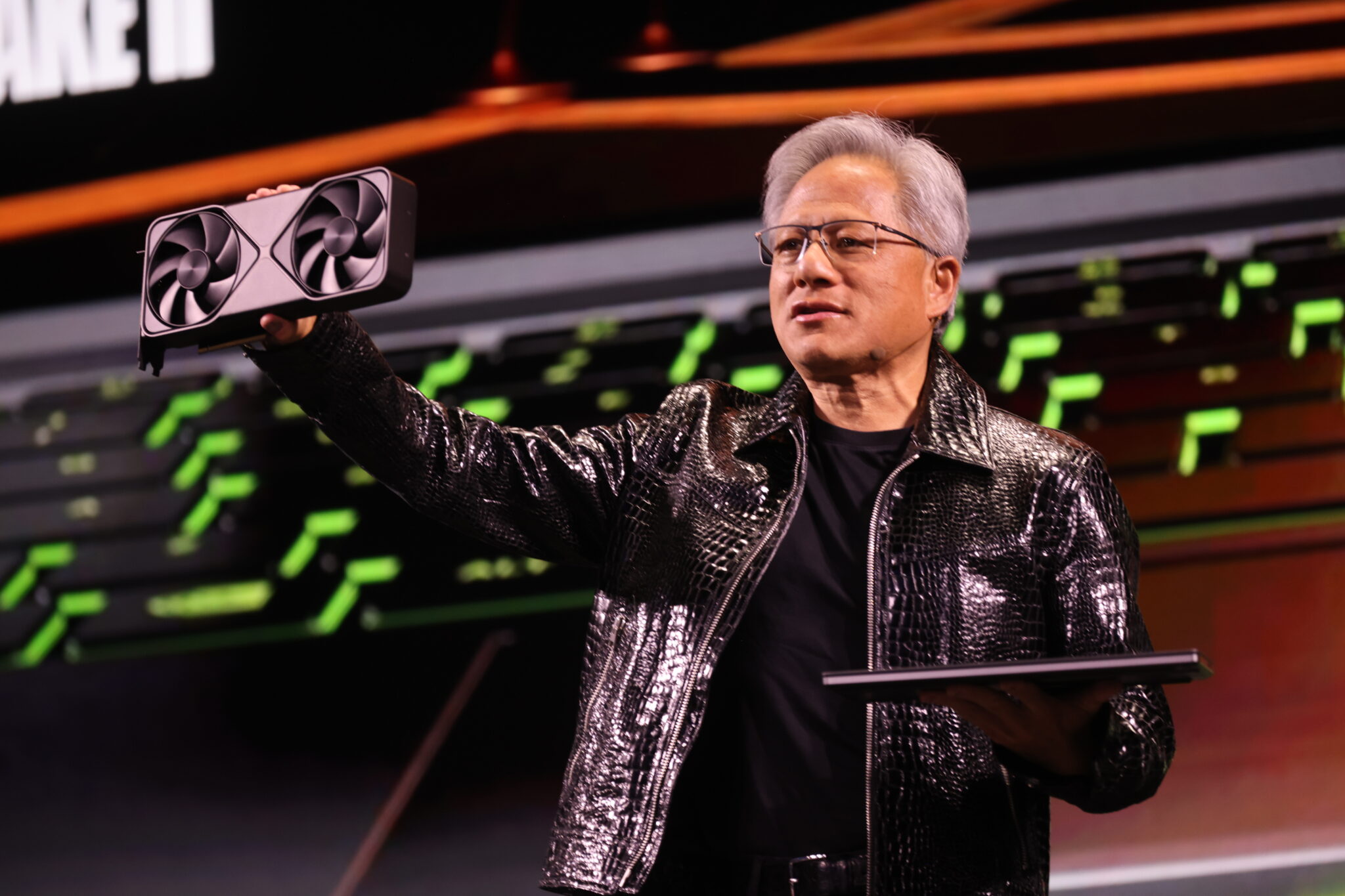
Nvidia’s Jensen Huang unveils a $500 billion AI infrastructure plan supported by major Wall Street firms, shifting the landscape of AI financing.
The initial phase of artificial intelligence development has relied heavily on unprecedented levels of equity and debt from leading tech firms, which have invested so aggressively that some have become cash flow negative. Nvidia CEO Jensen Huang recently disclosed a new financial strategy aimed not at corporate balance sheets, but involving significant backing from prominent Wall Street figures.
In a CNBC interview, Huang introduced his concept, described as a “big concept,” in the presence of leaders from major financial firms including Goldman Sachs, BlackRock, Blackstone, KKR, Apollo, and Brookfield. These firms have committed to raising $500 billion and possibly more, to build new AI factories, as the demand for advanced computing infrastructure surges.
Huang and his financial partners outlined what they believe is a transformative moment for the tech sphere: AI infrastructure is evolving into a new asset class. “These systems are not like our PCs, not like our phones,” Huang stated during the interview. “These are revenue-generating assets now. They are productive, long-lived, fungible, and flexible.”
While the specifics regarding potential borrowers, interest rates, and construction sites remain unclear, the firms have signed memos of understanding without binding contracts. Approximately 11 months prior, Nvidia announced a $100 billion investment in OpenAI for the development of a data center that would require 10 gigawatts of power—an investment that ultimately did not materialize. However, Nvidia did contribute $30 billion to a record-setting funding round for OpenAI earlier this year.
The new announcement conveys a more positive outlook, with these firms asserting that financial constraints will not hinder the expansion of AI technology. According to McKinsey, total investments in AI infrastructure could reach $7 trillion globally by the end of the decade.
This year alone, Alphabet, Amazon, Meta, Microsoft, and Oracle collectively raised over $150 billion via debt and equity markets to bolster their AI efforts. Intel recently announced a $15 billion stock offering, increasing it to $20 billion shortly thereafter.
Financial institutions are preparing to approach the market differently, with experts such as Goldman Sachs CEO David Solomon expressing that AI equipment will soon carry familiar monetization characteristics. “You’re starting to see, in a sense, asset-based financing against this infrastructure build-out,” he noted. “It’s not surprising because these are real assets with real value.”
Instead of conceptualizing supercomputers as mere devices for customer use, these systems, powered by Nvidia’s high-cost graphics processing units, are seen as lucrative investments. Huang added that the economics could improve through the utilization of Nvidia’s CUDA software, which can extend the lifespan of these systems.
Huang mentioned the potential for treating these technologies as revenue streams that can either be securitized or divided among investors willing to engage at various levels. However, this pivot towards securitization raises questions about possible risks.
Reflecting on past financial crises, some experts warned of the potential complications following the collapse of the subprime mortgage market between 2007 and 2009. Short seller Michael Burry, known for betting against subprime mortgages, previously pointed out that many tech companies were likely overstating the longevity of their AI chips and underestimating depreciation.
While this historical reference did not surface during Monday’s discussions, several financiers acknowledged existing risks tied to AI investments. Jim Zelter, president of Apollo Global Management, remarked, “There will be excesses; there will be pullbacks,” but highlighted that the diverse number of participants in the project could mitigate concentration risks.
“There will be big companies that win, and big companies that turn out not to be what people expected,” Solomon added. In his remarks about BlackRock’s involvement in the partnership, CEO Larry Fink drew a parallel to the mortgage market, recalling early days in the mortgage-backed securities field dating back to the 1970s. “This is the very beginning, like what it was when I started in the mortgage-backed securities market in the 1970s,” Fink stated, seeing this as a new frontier for financial engineering.
Each of the six financial firms will make independent lending decisions, with Nvidia committed to facilitating connections between customers and financing partners. Nvidia retains the option to backstop 25% of every loan, a strategy expected to yield more favorable interest rates for businesses that have previously depended solely on their credit worthiness. Huang indicated that borrowers must utilize system architectures specified by Nvidia, which allows for operational takeover by another firm if necessary.
While Nvidia still has various details to finalize with its financing partners, Monday’s gathering marked a substantial step in showcasing the financial resources available to support the AI ecosystem. Bruce Flatt, CEO of Brookfield, praised Huang for creating the necessary structures for attracting investment, emphasizing the vast amounts of capital available in the market.
Keep in touch with our news & offers
Subscribe to Our Newsletter
Thank you for subscribing to the newsletter.
Oops. Something went wrong. Please try again later.