Israel and Lebanon have signed a framework agreement aimed at lasting peace, despite ongoing tensions with Hezbollah and previous ceasefires.
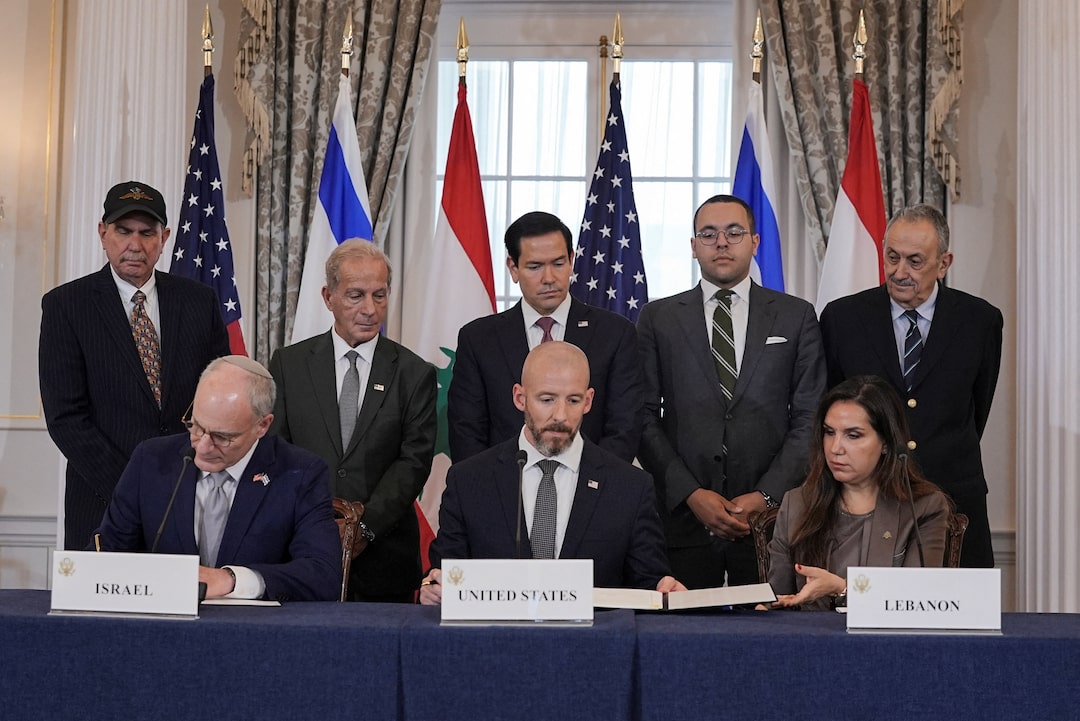
Israel and Lebanon have signed a framework agreement in Washington after several days of negotiations brokered by the US.
US Secretary of State Marco Rubio stated that the agreement will begin to establish a framework for sustainable peace and security in the region.
Despite this development, limited fighting has persisted between Israeli forces and the Iranian-backed Hezbollah in southern Lebanon, even in the face of an existing ceasefire.
The ongoing tension between Israel and Hezbollah has raised concerns in Washington that it might undermine its peace deal with Iran, which encompasses a commitment to halt fighting on multiple fronts, including Lebanon.

From a diplomatic standpoint, the signing of the agreement is seen as a positive step forward. However, the situation on the ground in Lebanon has shown little sign of improvement, despite previous ceasefires.
Israel and Hezbollah have exchanged cross-border fire, each accusing the other of violating the ceasefire. Nevertheless, the intensity of these exchanges has waned in recent days.
Lebanon’s President Joseph Aoun described the framework as a preliminary step towards restoring the country’s sovereignty.
Shortly after the agreement was signed, Israeli Prime Minister Benjamin Netanyahu reiterated that Israeli forces would remain in southern Lebanon until Hezbollah disarms. Currently, the Israeli army occupies about five percent of Lebanon’s territory.
Netanyahu indicated that Israel would allow the Lebanese army to start preparing to take control of certain areas in two pilot zones—one south of the Litani River and another to the north.
It remains uncertain whether Hezbollah, which is not a party to this agreement, will agree to withdraw its fighters from the South Litani area.
Israeli airstrikes on targets in southern Lebanon pose a threat to peace negotiations in the Middle East.
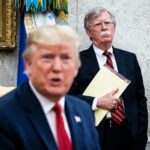
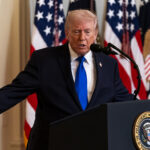
US President Donald Trump previously criticized Netanyahu during a strained phone call, reportedly using expletives, while asserting that Israel has the right to defend itself from Hezbollah’s rocket strikes on its territories. He also claimed he could exert control over Israel’s actions in the region.
Lebanon became actively involved in the conflict between the US and Israel against Iran on March 2, when Hezbollah retaliated against an Israeli strike that killed Iran’s supreme leader with rocket attacks on Israel, leading Israel to launch an air campaign across Lebanon and a ground invasion in the south.
A US-brokered ceasefire on April 16 failed to halt the violence.
In June, Israel and Lebanon agreed to renew their fragile ceasefire, with the US pledging to aid in establishing pilot zones for the Lebanese Armed Forces to have exclusive control, excluding non-state actors.
Earlier on Friday, Trump accused Iran of a violation of the truce after a ship was attacked in the Strait of Hormuz, to which Iran has not publicly responded.
In retaliation, the US Central Command later conducted strikes on missile and drone storage facilities, as well as coastal radar installations.
There has been no response yet from Iran.