US military strikes on Iran follow threats from Trump, escalating regional tensions and prompting Iranian retaliation against Kuwait and Bahrain.
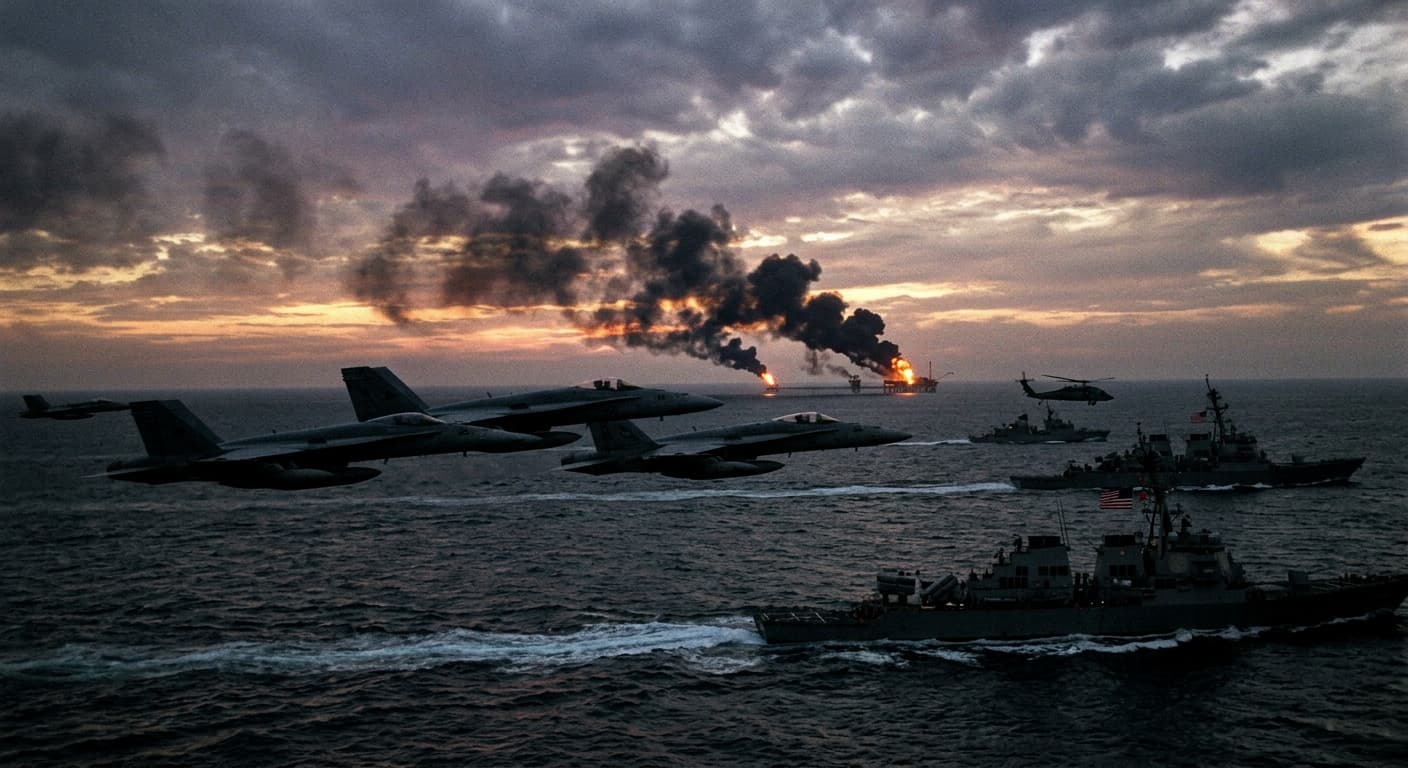
US military strikes on Iran follow threats from Trump, escalating regional tensions and prompting Iranian retaliation against Kuwait and Bahrain.
The United States has renewed its military strikes on Iran, initiating a second day of attacks that have ignited further regional tensions. President Donald Trump characterized these actions as ‘retribution’ against Iran after recent maritime incidents in the Strait of Hormuz, a crucial point for global oil transport.
In a statement on X, the US Central Command (CENTCOM) confirmed that the attacks were aimed at diminishing Iran’s capacity to threaten navigation in the strategically important strait. Reports indicate that explosions were felt along Iran’s southern coastline, leading to power outages in some areas.
In retaliation, Iranian forces launched attacks on Kuwait and Bahrain, nations home to US military bases, intensifying the ongoing conflict. Alarm sirens rang out across both countries as Iran’s Revolutionary Guards warned that any further US strikes would elicit escalated responses targeting other US bases in the region.
Kuwait’s defense ministry announced it was engaged in intercepting hostile missiles and drones, affirming its readiness. Concurrently, Qatar reported a temporary security threat alert that was subsequently lifted. President Trump, addressing the situation from a NATO summit in Turkey, indicated he believed any ceasefire arrangement with Iran was effectively null and void. He went as far as to assert that if Iran resumed its aggressive actions, the US response would be significantly more severe.
Iran’s chief negotiator, Mohammad Baqer Qalibaf, has made it clear that Iranian dominance over the Strait of Hormuz will continue, stating, “The Strait of Hormuz will be reopened only under Iranian arrangements, not through U.S. threats.” This renewed round of hostilities threatens to derail prospects for a stable diplomatic resolution following a memorandum of understanding that was signed on June 17.
The heightened military actions coincided with the preparations for the burial of Iran’s former supreme leader, Ali Khamenei, scheduled for Thursday in Mashhad. Khamenei was killed in previous US strikes that initiated the current conflict back in February.
Control of the Strait of Hormuz remains one of the most contentious issues between the US and Iran, as it serves as a vital passage for approximately 20% of the world’s oil supply. Its strategic importance cannot be understated, with limited options available for bypassing the chokepoint.
This latest escalation raises essential questions about regional security and the potential for further confrontations, as both nations remain steadfast in their positions.
Keep in touch with our news & offers
Subscribe to Our Newsletter
Thank you for subscribing to the newsletter.
Oops. Something went wrong. Please try again later.