Police departments in the US are leveraging podcasts to crack unsolved murders and generate tips, as seen in notable recent cases.
Police departments in the US are leveraging podcasts to crack unsolved murders and generate tips, as seen in notable recent cases.
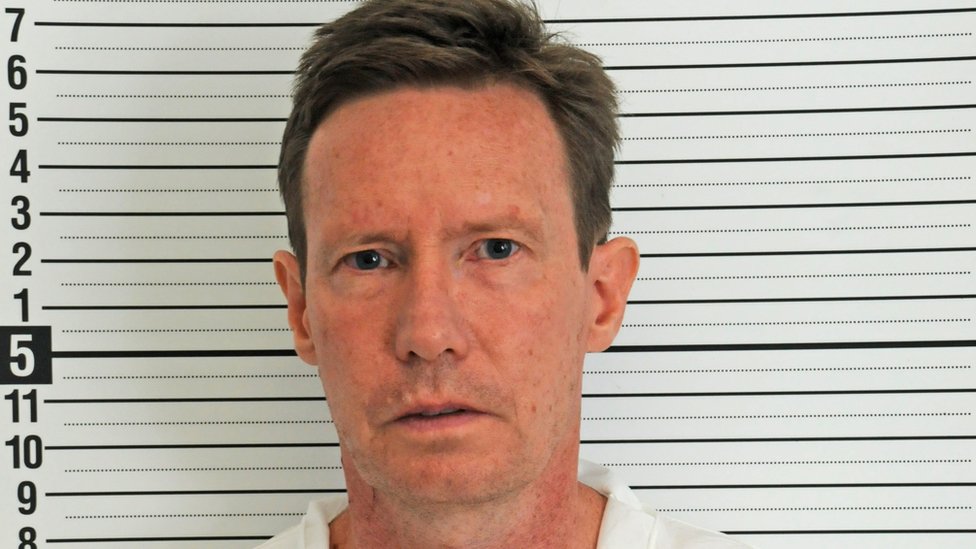
Peter Chadwick had been evading authorities for nearly four years, accused of murdering his wife, when California police launched a podcast centered on his case. This innovative approach led to his capture in Mexico 10 months and 20 days later.
In another instance, Karen Schepers went missing for over four decades until an Illinois police department released a podcast last year that resulted in her body being discovered at the bottom of a river within weeks.
Now, Colorado detectives are optimistic a podcast will bring in valuable tips regarding a 10-year-old unsolved murder case. The Aurora Police Department (APD) began its own podcast this summer, aiming to achieve justice for Chelsea Yasser, who was fatally stabbed in a shopping center parking lot in 2016.
The surge of true crime content is transforming how police departments operate. Joe Moylan, a public information officer at the APD, acknowledged the genre’s massive following. “The true crime genre – whether it’s TV, whether it’s podcasts, whether it’s books – is wildly popular,” he stated. “We intentionally sought to reach that broader audience.”
Experts note that the trend of police departments using podcasts is only in its early stages, but they anticipate growth in this method. However, Michael Alcazar, a retired NYPD detective, cautions about the potential spread of misinformation. He remarked, “I think it’s a tool that everyone will eventually embrace,” emphasizing that police have a chance to manage the narrative and solicit new tips.
Traditionally, many podcasts have featured former detectives conversing about cases or policing challenges. Yet, it’s rare to see police-led podcasts specifically focused on cold cases, as demonstrated by California, Colorado, and Illinois departments.
These police programs deliver episodic content that details the crimes, victims, and investigations, similarly to how the acclaimed podcast Serial narrated true crime cases when it premiered in 2014.
The Aurora podcast aims to engage listeners and inspire them to share any pertinent information regarding Yasser’s murder, with its case often referred to as the “White Whale” after Moby Dick, symbolizing its longstanding mystery for investigators.
Yasser, 21, was stabbed after entering a minivan in the parking lot; she collapsed shortly after exiting. Surveillance footage captured the van’s movement during the assault, yet the images couldn’t reveal any identifiable features, and DNA collected from under her nails did not match anyone in the database.
As the APD launched the podcast in June, detectives were also employing cutting-edge forensic genealogy methods to analyze the DNA, intending to keep listeners informed about additional investigative strategies.
Previously, the police had publicly sought information regarding Yasser’s murder, yet the broader reach of a podcast allows them to target a wider audience. “If you weren’t watching the news that night when it happened or if you didn’t read the newspaper, you might not know anything about this case,” Moylan said.
The challenge many police departments face is a lack of staff, budget, or resources required to produce podcast content effectively. Concerns over potential lawsuits and accountability further deter some agencies, as described by Alcazar.
In a notable instance, the Newport Beach Police Department’s podcast about Chadwick drew criticism when it introduced him as “a man who killed his wife in the peaceful coastal community of Newport Beach, California, in October 2012.” Though Chadwick had been charged and asserted his innocence, the podcast did not use the term “alleged” and termed him a “murderer.” Critics indicated this approach undermined the presumption of innocence fundamental in law.
Defending this narrative stance, public information officer Jennifer Manzella explained that engaging storytelling is essential for retaining audience interest without compromising the investigation. Following Chadwick’s apprehension in August 2019, he admitted guilt to second-degree murder and is currently serving a 15-year to life sentence.
While the podcast itself did not directly lead to his capture, Manzella noted it did play a role in maintaining pressure on Chadwick, making him more likely to err.
After he was captured, other departments expressed interest in following suit with similar podcasts.
Detective Andrew Houghton from Elgin Police Department in Illinois initially had reservations about podcasting as a tool for their cold case unit, especially as they were just beginning operations in 2024. Yet, after creating episodes, Houghton noted the format helped them reevaluate the case and develop new theories regarding the 23-year-old missing person, Schepers.
Through traditional investigative techniques and working with a search firm equipped with modern sonar technology, Elgin’s detectives ultimately located Schepers’ body and her vehicle in the river in March 2025. This discovery propelled them into a successful third season of their podcast, which continues focusing on various homicide cases.
As various departments look ahead to utilizing podcasts more extensively, experts believe that if proper staffing levels can be achieved, this method could also support police recruitment and retention. Janice Iwama, an associate professor at American University, highlighted that these podcasts present listeners an inside view of police work from actual officers, which might positively influence public perception and interest in law enforcement roles.
With younger officers more accustomed to these communication platforms, Alcazar speculated, “That’s their world. That’s what they’re most comfortable with.”
Keep in touch with our news & offers
Subscribe to Our Newsletter
Thank you for subscribing to the newsletter.
Oops. Something went wrong. Please try again later.