Nike, Starbucks, and GM face challenges in China as local competitors rise, reshaping consumer preferences and impacting their market share.
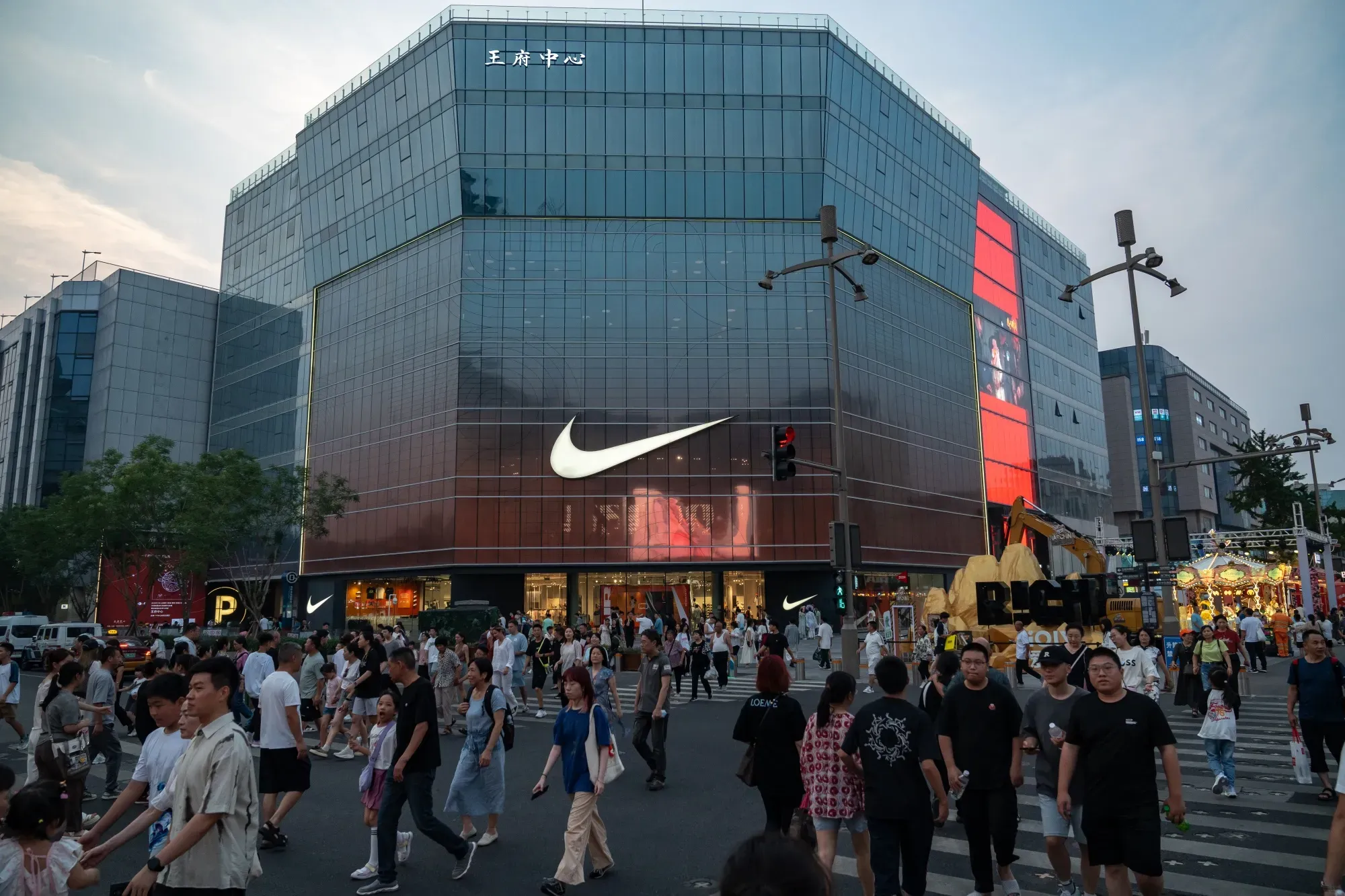
Nike, Starbucks, and GM face challenges in China as local competitors rise, reshaping consumer preferences and impacting their market share.
China was once a land of opportunity for numerous American brands, a thriving market teeming with potential. With over 1.4 billion people, it once promised a lucrative future for companies aiming to expand globally.
However, over the past few years, several prominent consumer brands—most notably Nike, Starbucks, and General Motors—have begun to see their fortunes in China wane. Rising geopolitical tensions, intensified local competition, and a shift in consumer preferences have all contributed to this decline.
Aaron Cheris, head of Bain & Company’s global retail practice, noted that the vastness of the Chinese market initially attracted numerous brands. “China is such a big market. The numbers are so big so quickly when you talk about China that sort of everybody has wanted to try, and that’s why all brands went there,” he explained.
Still, these companies have struggled to adapt to the local market dynamics. Cheris emphasized that the challenge lies not just in China’s market but in understanding how to meet consumer expectations effectively. “If anything, the question isn’t what’s going wrong in China — it’s why isn’t that happening in the rest of the world?” he added.
Price sensitivity among Chinese consumers is another issue. Cheris asserted that the premium American products carry often do not align with local consumer values. Additionally, domestic brands benefit from swift innovation cycles and superior distribution networks.
The backdrop of increasing geopolitical tensions has also played a role, particularly during the Trump administration, as trade policies have influenced consumer sentiment. This has coincided with a growing pride in local brands, prompting consumers to favor home-grown alternatives.
While some brands like Lululemon, Ralph Lauren, and Kentucky Fried Chicken have found success in China, others are declining in popularity. Nike has seen its business shrink by 30% since 2021, marking its lowest annual revenue in eight years in the country. As local brands gain momentum, Nike faces an overhaul of its distribution model to better connect with shoppers.
Experts, such as Yaling Jiang, founder of consumer research firm Aperture China, have stated that Nike’s relevance in the Chinese market has diminished significantly, while rivals like Adidas have gained ground.
The situation in China’s sportswear market is particularly notable, having more than doubled over the past decade, per data from GlobalData. Yet, Nike remains uncertain about recovering its losses. Outgoing CFO Matt Friend expressed apprehension about when the company’s Chinese operations would see growth again.
Similar challenges emerged for Estée Lauder, which has encountered significant headwinds in the market. CEO Stéphane de La Faverie acknowledged during a June conference call that he does not expect China to return to double-digit growth soon, despite some signs of recovery in net sales.
In 2022, Gap sold its China business to Baozun for $40 million after struggling to connect with local consumers. The transition appears to have rejuvenated their strategy, as they aim to open 50 new stores in mainland China by 2026.
American automobile giants have faced dramatic headwinds as well. General Motors, the longest-serving U.S. automaker in China, has experienced earnings plummet from approximately $2 billion annually in 2018 to consecutive years of losses in 2024 and 2025. Experts attribute GM’s struggles to the rapid rise of domestic automakers supported by government funding and a culture of innovation seen in their operations.
More Chinese consumers are opting for electric vehicles (EVs), driven by pricing and quality, with new energy vehicles accounting for 65.1% of new passenger cars sold in July, a marked increase from 54% the previous year.
GM’s enduring battle in China has sparked discussion about its future in the region. Tesla is reportedly contemplating selling or spinning off its Chinese business, while Ford has begun shifting its focus back to American operations, including relocating production of its Lincoln models back to the U.S.
Despite the tumultuous landscape, some brands are pivoting to stay relevant in the dynamic Chinese market, underscoring the need for adaptability and understanding of local consumer behavior.
Keep in touch with our news & offers
Subscribe to Our Newsletter
Thank you for subscribing to the newsletter.
Oops. Something went wrong. Please try again later.