
The UN halts ship evacuations in the Strait of Hormuz after an attack on a vessel, pending safety guarantees amid rising tensions with Iran.
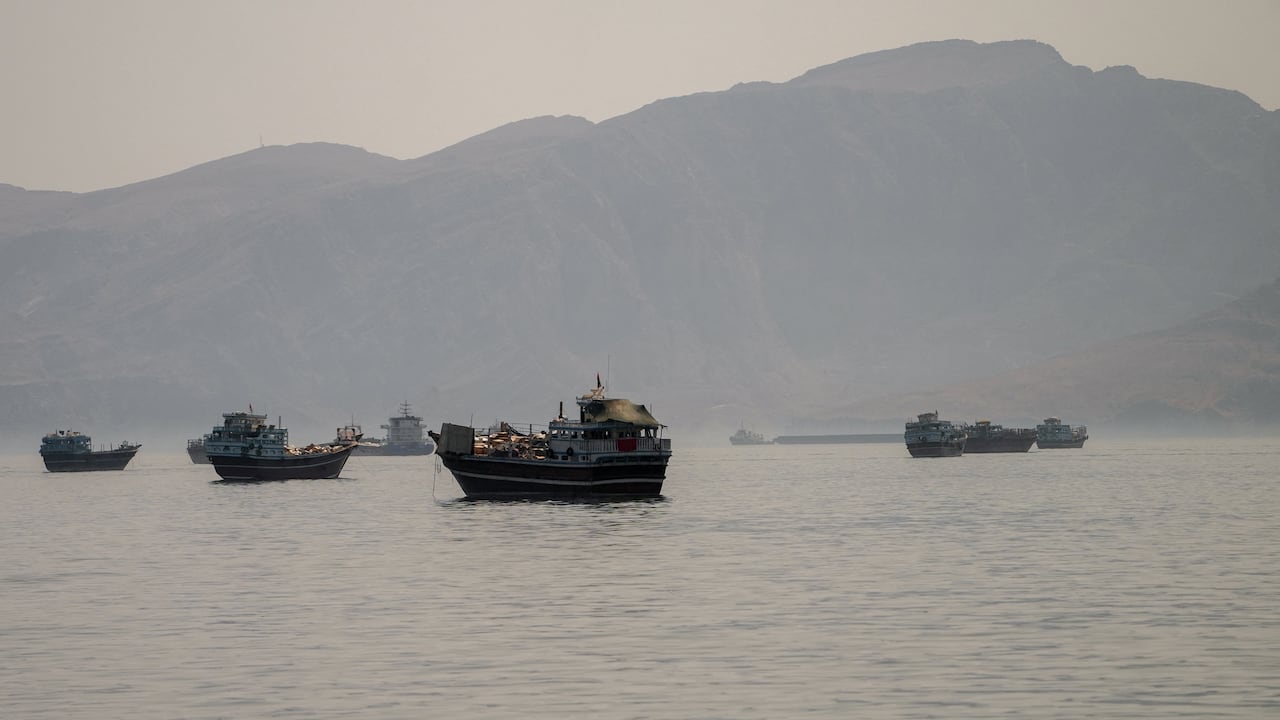
The UN halts ship evacuations in the Strait of Hormuz after an attack on a vessel, pending safety guarantees amid rising tensions with Iran.
A United Nations agency has suspended the evacuation of ships through the Strait of Hormuz following an incident in which a British military report indicated that a vessel was struck by a projectile near Oman. This comes after tankers had begun using a UN-backed route through the strait.
The Secretary-General of the UN’s International Maritime Organization announced that before any further movement of stranded vessels can occur, safety assurances must be established for those on the evacuation list as well as in the area. Details regarding the origin of the projectile and the specific vessel targeted remain unclear.
A statement from Iran, issued via its newly formed Persian Gulf authority for shipping control, claimed that vessels should not navigate outside designated routes without Tehran’s consent to remain safe. The attacked ship was not part of the evacuation operation, clarified Arsenio Dominguez, the secretary general of the UN agency.
Despite sustaining damage, the UK Maritime Trade Operations center confirmed that there were no injuries or environmental impact following the incident. The UN initiative aims to alleviate pressure on global trade routes and also diminishes Iran’s leverage as discussions on a peace agreement with the United States continue.
The U.S. Secretary of State, Marco Rubio, visiting the Gulf region to reassure allies, stressed the importance of the newly opened route. He noted, “If that stops, then we’re going to have a problem.” Following the attack, maritime traffic through the strait surged, although it still has not reached prewar levels. Oil prices briefly dropped below their prewar benchmark of just under $73 per barrel, indicating some market optimism regarding a resolution.
As U.S. and Iranian negotiators engage in talks about an interim peace deal, issues such as the navigation of ships through the strategic passage and Iran’s stockpile of highly enriched uranium remain points of contention. The two nations have 60 days to finalize the details laid out in a recently signed memorandum.
In a parallel development, hostilities in Lebanon between Israeli forces and Iranian-backed Hezbollah militants raise further concerns about regional stability, as clashes reportedly resulted in the death of five individuals due to Israeli airstrikes.
Despite some ships successfully escaping the strait with support from U.S. military forces, the UN’s ongoing efforts to free vessels from the region continue to evolve. A report cited a significant increase in crossings through the strait with 125 vessels recorded last week, up from just 33 the week prior.
With Iran’s navy issuing stern warnings about using the established routes, tensions are visibly mounting. An official statement from Iran’s naval command characterized the newly set transit routes as “unacceptable and completely dangerous.” Naval officials emphasized, “The only authorized route for passing through the strait of Hormuz is the one declared by the Islamic Republic of Iran,” asserting that violations would incur severe repercussions.
Keep in touch with our news & offers
Subscribe to Our Newsletter
Thank you for subscribing to the newsletter.
Oops. Something went wrong. Please try again later.