Mykhailo Fedorov’s call for a wartime presidential election marks a significant political challenge to Zelenskyy amid ongoing conflict in Ukraine.
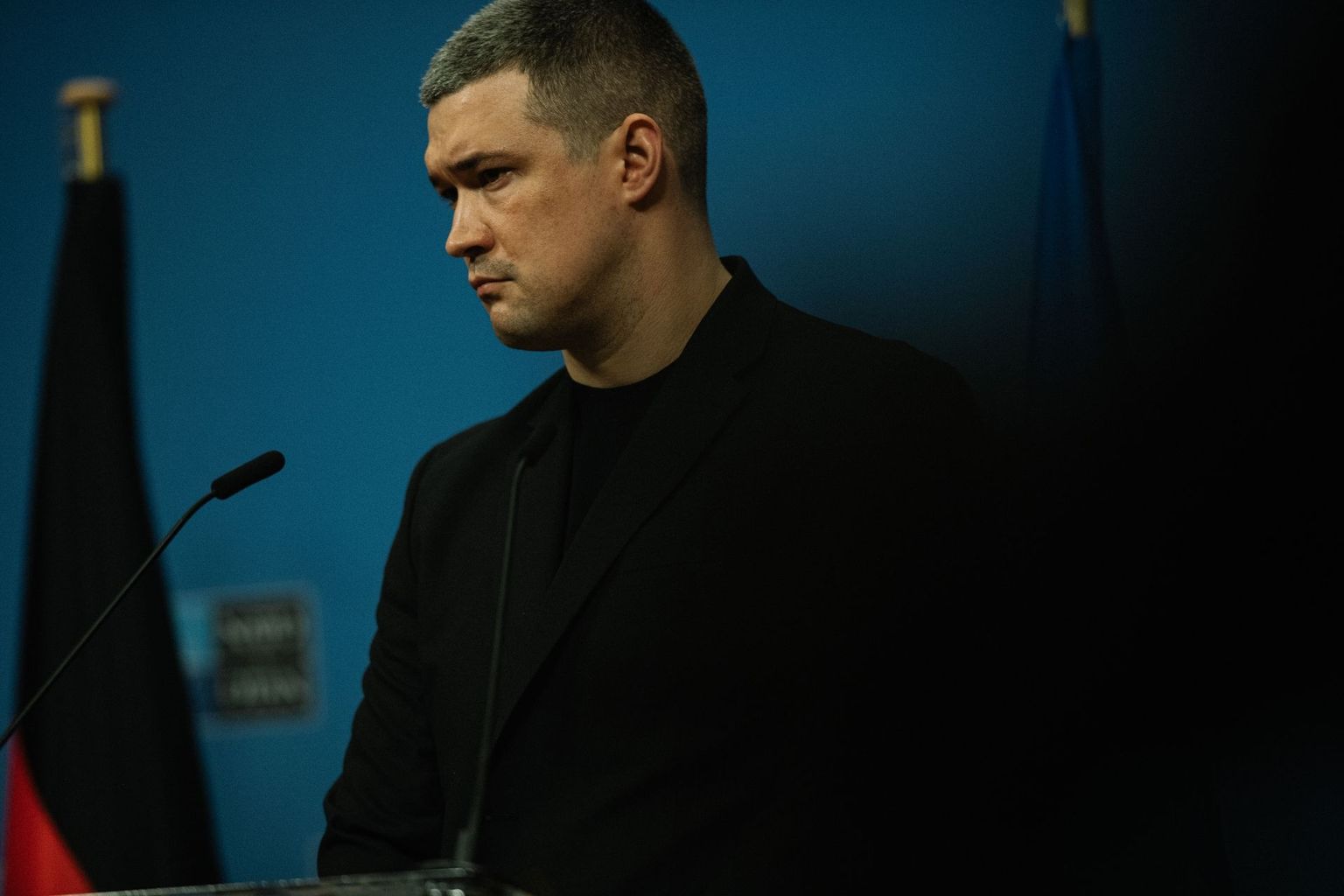
Mykhailo Fedorov’s call for a wartime presidential election marks a significant political challenge to Zelenskyy amid ongoing conflict in Ukraine.
Ukraine’s recently dismissed former defense minister, Mykhailo Fedorov, has called for a wartime presidential election, presenting the most direct political challenge to President Volodymyr Zelenskyy since Russia’s invasion in 2022.
In a video address released late on a Tuesday evening, Fedorov, whose abrupt sacking last month sparked protests, argued that Ukraine must “restore a full democratic process even amid a prolonged war.” He stated, “Democracy cannot be held hostage by Russia. We are fighting precisely because we want to remain a free European state.”
While not explicitly naming Zelenskyy, Fedorov implied that the current president is overseeing a poorly functioning state that struggles to combat corruption despite the ongoing national emergency. He argued, “People cannot endlessly live in a state where they do not understand why certain decisions are made. Why some reforms move forward while others are blocked.” Fedorov emphasized that Ukraine could manage both a wartime effort and a national poll.
Since martial law was imposed, elections in Ukraine have been suspended. Zelenskyy’s five-year term concluded in May 2024, but many citizens are reluctant to hold elections while conflict continues.
Former U.S. President Donald Trump has previously urged Ukraine to conduct elections, as his relationship with Zelenskyy improved over time, particularly as Ukraine demonstrated resilience on the battlefield.
Fedorov, 35, was Ukraine’s digital minister from 2019 until earlier this year and had a brief but successful run as defense minister before being dismissed in July. His sacking followed a government reshuffle after a fallout with military commander General Oleksandr Syrskyi, leading to public protests and Syrskyi’s eventual ousting, though reinstatement for Fedorov seems unlikely.
On the same day as Fedorov’s statement, Zelenskyy formally nominated Yevhen Khmara, the acting defense minister, for permanent appointment—a confirmation vote from Ukraine’s parliament is expected soon.
Political analysts have raised concerns about the feasibility of holding elections amidst ongoing Russian bombardment. Artem Bronzhukov noted that there is a significant perception in Ukrainian society that elections are only necessary after the active phase of the war concludes, highlighting Ukraine’s status as a “warring democracy” as evidenced by protests following Fedorov’s resignation.
Despite dwindling attendance, nightly protests have resumed beneath the presidential office in Kyiv, with one recent rally successfully drawing about 2,000 participants chanting “Fedorov, Fedorov, Fedorov …”.
Recent polls indicated that Fedorov would secure third place in the first round of a presidential election with 13.1%, lagging behind Zelenskyy at 22.3% and former armed forces chief Valerii Zaluzhnyi, now Ukraine’s ambassador to the UK, who garnered 21.4%. Furthermore, it was suggested that Fedorov and Zaluzhnyi could defeat Zelenskyy in a hypothetical runoff election.
Should Ukraine pursue an election, it would face various challenges, including the displacement of millions since the war began, over 1 million military personnel deployed, and approximately a fifth of the country under Russian occupation.
Keep in touch with our news & offers
Subscribe to Our Newsletter
Thank you for subscribing to the newsletter.
Oops. Something went wrong. Please try again later.