Spain sends troops to Ceuta as migrant surge overwhelms local resources, prompting calls for intervention and sparking tensions with Italy.
Spain sends troops to Ceuta as migrant surge overwhelms local resources, prompting calls for intervention and sparking tensions with Italy.
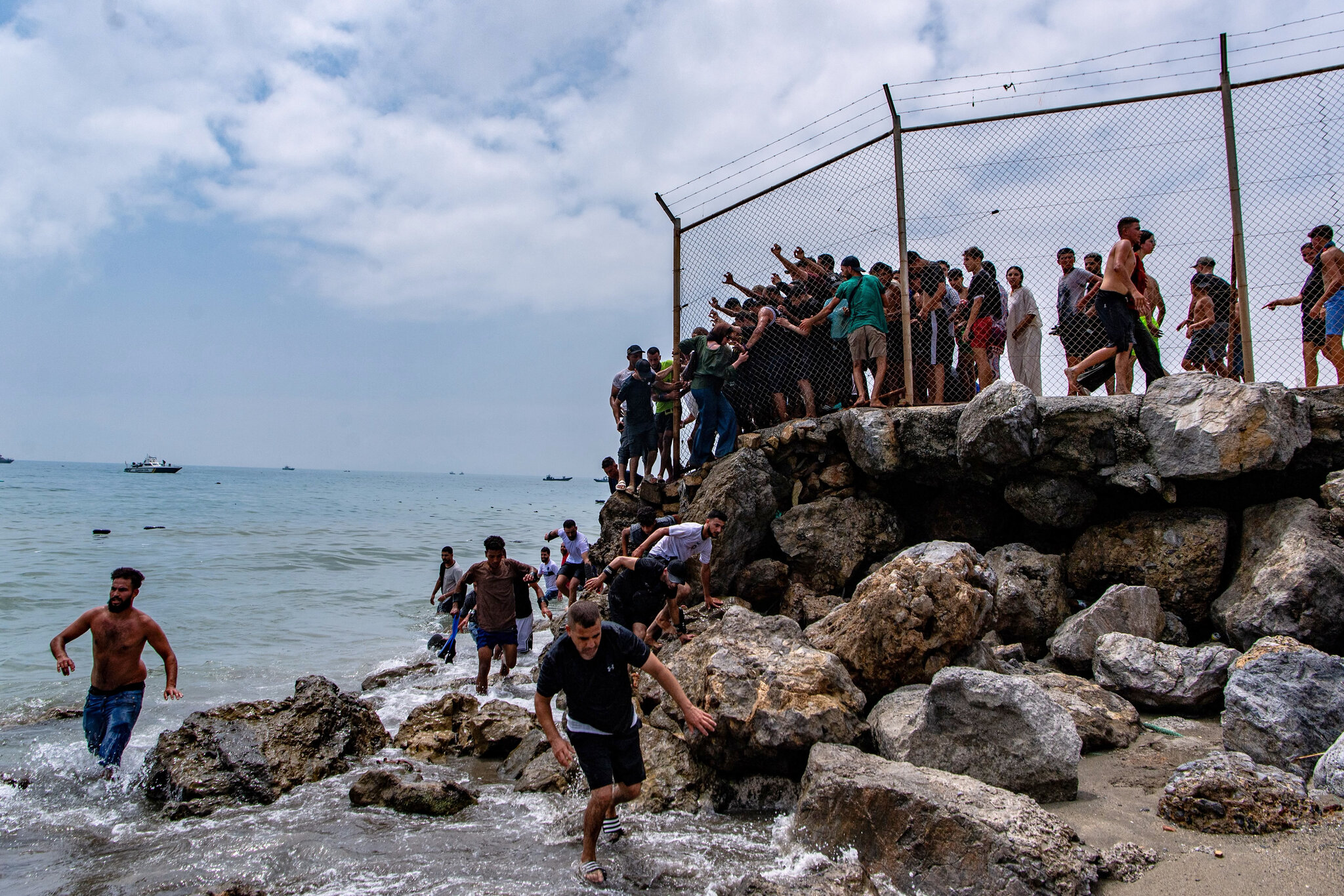
Spain is deploying troops to its North African enclave of Ceuta following a dramatic surge of migrants swimming from Morocco into the territory on Thursday. The event reportedly led to the drowning of at least 15 individuals who were attempting to reach the Spanish enclave.
Local officials in Ceuta had urgently requested assistance from Madrid as the number of crossings began to rise. On Thursday, however, chaos erupted when border controls appeared to fail, with thousands of migrants descending concrete embankments to swim around the jetty that marks the boundary.
As tensions mounted, Spain’s Supreme Court ruled recently that migrants intercepted at sea cannot be returned to Morocco without due process. The Spanish interior ministry has accused human trafficking networks of exploiting this ruling to facilitate the influx of undocumented migrants.
In response to the crisis, the Spanish government announced that the armed forces would assist the Civil Guard in maintaining order and ensuring security in Ceuta. The statement indicated that any necessary measures would be taken to stabilize the situation.
Ceuta, located on Morocco’s northern coast, is separated from mainland Spain by the Strait of Gibraltar. It has long been known as a point of entry for migrants seeking to reach Europe. The recent breach has prompted consideration from Italy’s government regarding extraordinary measures, including potential suspension of the open border Schengen agreement that allows for free movement between Spain and Italy.
Reports suggest that between 2,000 and 3,000 migrants may have crossed into Ceuta on Thursday, according to Spanish media estimates. While some migrants were seen celebrating their arrival, the grim reality of the crossings was underscored by the numerous casualties.
Spain’s Prime Minister Pedro Sanchez is scheduled to visit Ceuta on Friday to address the situation, having pledged a swift response to the crisis. Local reception centers are reportedly overwhelmed and the influx has strained resources, prompting Juan Jesús Vivas, the city’s leader, to urge the central government for immediate intervention.
The breach has also reignited diplomatic tensions with Italy, where Prime Minister Giorgia Meloni expressed concern that uncontrolled immigration poses a threat to Europe’s security. This sentiment was echoed by Italy’s Foreign Minister Antonio Tajani, further straining relations as Spain’s Foreign Minister Jose Luis Albares criticized these remarks as politically driven.
For residents and migrants alike, the situation remains precarious. Local authorities in Morocco attempted to deter crossings by using water cannons against groups of migrants. As of late Thursday, unconfirmed reports suggested clashes occurring near the Beni Ansar border point in Melilla, Spain’s second autonomous city adjacent to Morocco.
Ceuta and Melilla serve as the European Union’s only land borders with Africa. Over the years, Spain has increased security in and around these enclaves through enhanced surveillance and fortified barriers, yet the desire to cross continues to drive individuals to attempt dangerous journeys.
Keep in touch with our news & offers
Subscribe to Our Newsletter
Thank you for subscribing to the newsletter.
Oops. Something went wrong. Please try again later.