A SpaceX rocket is set to collide with the Moon, providing a unique opportunity for scientists to study lunar impacts and space debris.
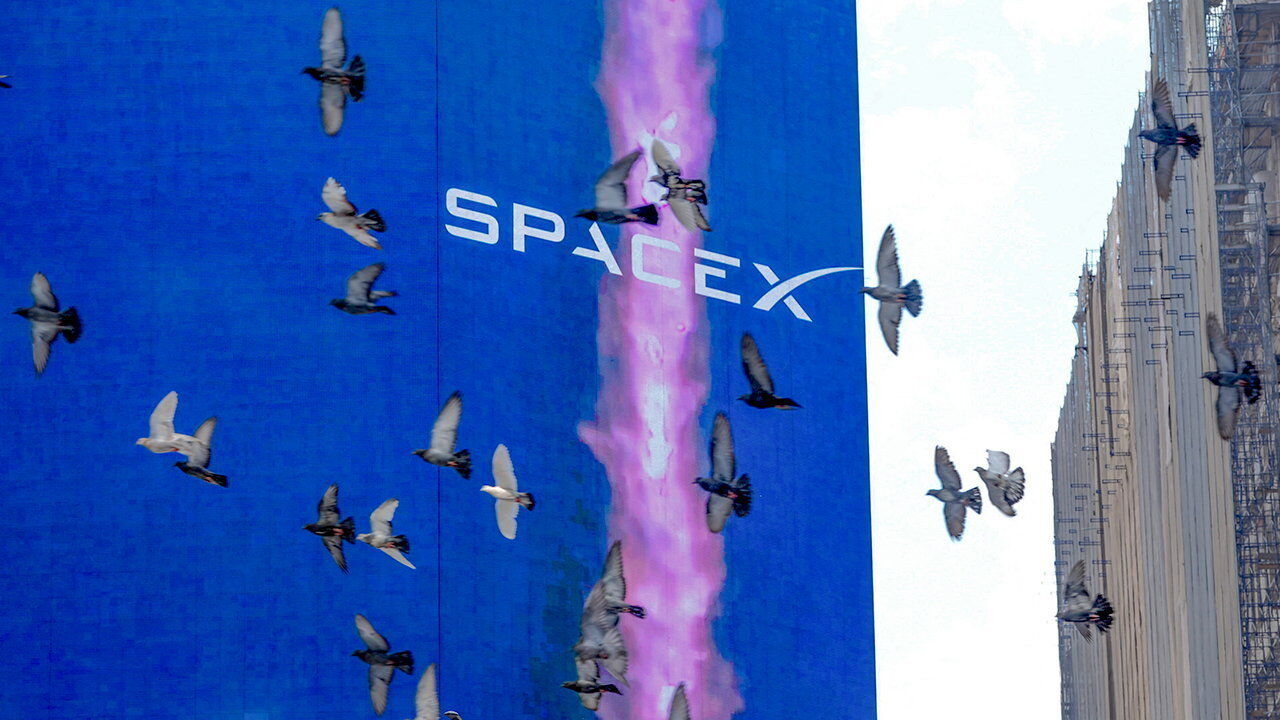
A SpaceX rocket is set to collide with the Moon, providing a unique opportunity for scientists to study lunar impacts and space debris.
The Moon has withstood numerous impacts over millions of years, creating its distinctive cratered appearance. Now, scientists are bracing for another collision, this time from a SpaceX rocket traveling at approximately 2.43 kilometers per second, or about 5,400 mph. The upper stage of one of the Falcon 9 rockets is expected to strike the Moon on 5 August.
Nasa’s Centre for Near-Earth Object Studies (CNEOS) confirmed the collision after astronomers used public data to track the rocket’s unexpected trajectory. “There is no danger to Earth,” said spokesperson Jimi Russell, adding that Nasa plans to monitor the booster for training and scientific purposes.
This Falcon 9 rocket was part of a joint US and Japanese mission launched in 2025, intended to transport two lunar landers along with scientific instruments. During the mission, components of the Falcon 9 are often designed to return to Earth, but some are left in space and can eventually collide with celestial bodies.
The stage that will collide with the Moon measures about the size of a five-story building and has a mass around 4,000 kg (approximately 8,800 lbs). Astronomer Bill Gray, who identified the rocket’s trajectory, predicts that it will land near the Einstein Crater, creating a crater that could exceed 17 meters (56 feet) in diameter.
This event is expected to garner significant interest from both amateur and professional astronomers. Dr. Matt Bothwell, a public astronomer at the University of Cambridge, described the event as unique. “It’s something really huge smashing into the Moon. It’s not remotely dangerous, we can just watch the show,” said Bothwell.
The impact is projected to occur around 02:35 EDT (06:35 GMT) and could generate a substantial dust plume, potentially reaching heights of 50 kilometers or more. Bothwell noted that, due to the Moon’s lack of atmosphere, the impact’s spectacle will likely be more impressive than similar events on Earth.
Those equipped with advanced telescopes may observe a flash on the Moon’s surface during the collision. This event presents an exceptional chance for scientific inquiry, enabling researchers to analyze the dynamics of lunar impacts.
Big telescopes across the Americas, in conjunction with Nasa’s Lunar Reconnaissance Orbiter and South Korea’s Danuri probe, aim to track the impact. A citizen science initiative is also inviting the public to capture the event on film. The observations could help improve models of lunar impacts and may reveal new information about the material just beneath the Moon’s surface, exposing fresh subsurface material for the first time.
Furthermore, Bothwell emphasized that this collision serves as a critical reminder about the growing issue of space debris. He stated, “I think more people should be more worried about space debris. Every single year we put more stuff in orbit. Sometimes the satellites just collide, and they shatter into more pieces.”
The European Space Agency indicates that around 54,000 objects larger than 10 cm are currently orbiting Earth. Since the inception of the Space Age in 1957, humanity has launched approximately 17,000 tonnes of material into space.
This collision marks the latest in a series of rocket impacts on the Moon, with the last incident occurring in 2022 when a Chinese Long March 3C stage collided with the far side of the Moon.
Keep in touch with our news & offers
Subscribe to Our Newsletter
Thank you for subscribing to the newsletter.
Oops. Something went wrong. Please try again later.