Nicaragua’s National Assembly considers barring opposition parties from elections as President Ortega tightens control over political landscape.
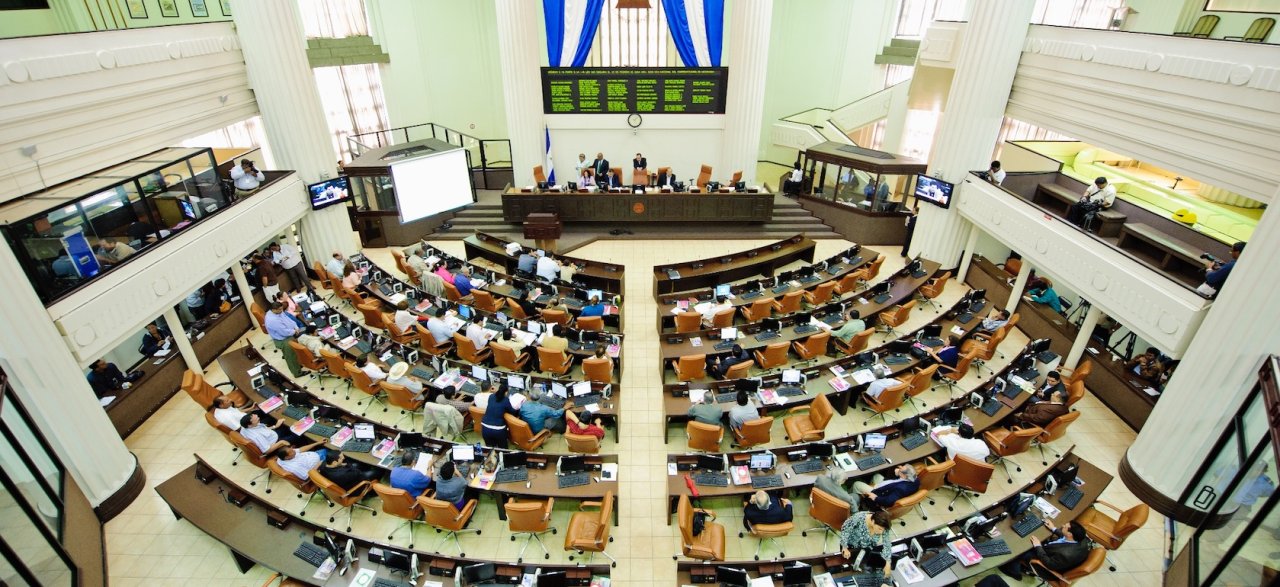
Nicaragua’s National Assembly considers barring opposition parties from elections as President Ortega tightens control over political landscape.
Nicaragua’s National Assembly, dominated by the government, is in the midst of a crucial debate regarding whether to prohibit opposition parties from participating in future elections. The legislative body is expected to cast its vote on this contentious issue in the first week of August.
This discussion emerged shortly after President Daniel Ortega declared, “there will be no more elections for them [the opposition] to try to seize the government, to seize power.” His statement has drawn widespread condemnation, particularly from UN High Commissioner for Human Rights Volker Türk, who emphasized that individuals from all political backgrounds should have the right to both vote and run for office.
At 80 years of age, Ortega has held the presidency since 2007, during which time his administration has increasingly silenced dissent, with many political adversaries jailed, exiled, or stripped of their citizenship rights. During a speech commemorating the 1979 Sandinista revolution – which marked the overthrow of the US-supported dictator Anastasio Somoza – Ortega accused opposition groups of being financed by the United States to undermine his government.
He expressed intentions to legislate measures that would effectively ‘erect a wall’ against what he referred to as “coup mongers,” ensuring that no amount of funding from the United States would allow the opposition to regain power.
US Secretary of State Marco Rubio, among other critics, decried Ortega’s remarks as revealing the “true authoritarian nature” of his regime. Rubio stated that Ortega, along with his wife, Rosario Murillo, who was designated “co-president” in February 2025, has strayed far from any semblance of popular consent.
Gustavo Porras, head of the National Assembly, dismissed the criticism as he discussed the assembly’s deliberations about shutting any avenues for the opposition to gain a foothold in Nicaraguan politics.
The last presidential elections in Nicaragua were held in November 2021, which were marked by a considerable crackdown on dissent. Ortega secured re-election in a contest that many deemed one-sided, as potential rivals were either incarcerated or forced into exile prior to the election. Only a few lesser-known individuals were permitted to run, with little chance of securing meaningful support.
Significantly, in November 2025, a constitutional reform was enacted extending the presidential term from five to six years, unanimously supported by the National Assembly. This reform not only consolidated Ortega’s power but also facilitated Murillo’s potential presidency should Ortega become incapacitated.
Since violent government suppression of protests in 2018, which resulted in over 300 fatalities, many Nicaraguans have refrained from denouncing Ortega publicly. However, opposition leaders in exile have vocally opposed the government’s latest actions. Juan Sebastián Chamorro asserted that Ortega aims to transform Nicaragua into a single-party state akin to China, North Korea, and Cuba. Meanwhile, Felix Maradiaga, an imprisoned former presidential candidate, remarked that Ortega’s latest moves illustrate his fear of dissent, revealing that the desire for change remains alive among Nicaraguans.
Keep in touch with our news & offers
Subscribe to Our Newsletter
Thank you for subscribing to the newsletter.
Oops. Something went wrong. Please try again later.