Lebanon’s parliament votes to abolish the death penalty, making it the first Middle Eastern country to formally end capital punishment.
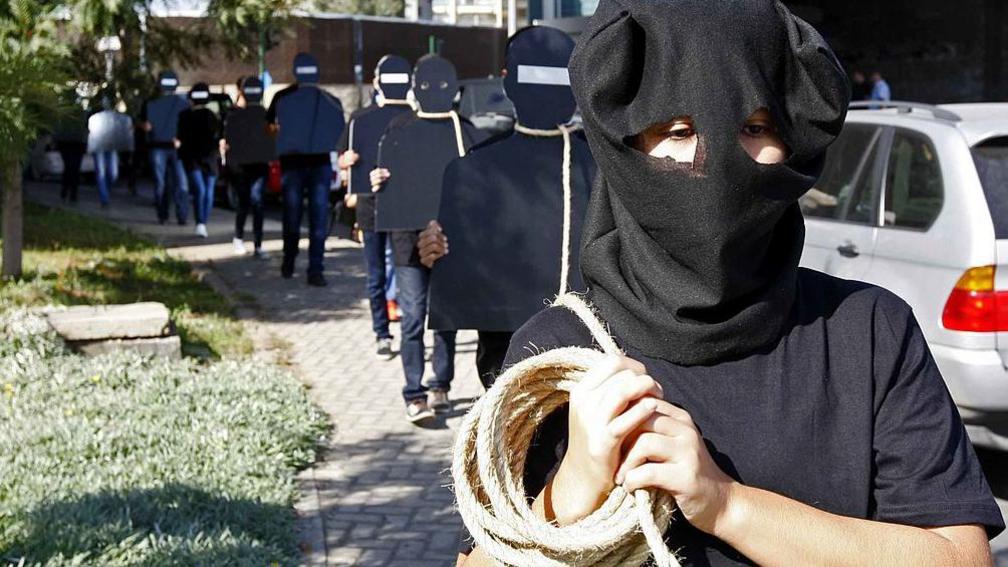
Lebanon’s parliament has taken a historic step by voting to abolish the death penalty, a significant move that would position Lebanon as the first country in the Middle East to formally end capital punishment.
The measure received overwhelming support in the 128-seat parliament during a critical vote held on Tuesday, though the parliamentary bloc associated with Hezbollah opposed the initiative. Following this legislative victory, the proposal now moves to the cabinet for approval before it is sent to President Joseph Aoun for final signing. The government has previously expressed its backing for the new legislation, indicating a strong likelihood of its passage.
Notably, Lebanon has not executed anyone since January 2004, although courts have continued to issue death sentences. Human rights organizations estimate that more than 78 individuals remain on death row, underscoring the gravity of capital punishment in the country.

Under the newly proposed law, capital punishment would be replaced with life imprisonment featuring hard labour, although details on how this alternative sentence will be enforced are still lacking. While the concept of hard labour exists in Lebanese law, its implementation has waned in recent years due to the ongoing financial crisis and overcrowded prison conditions, which have stretched resources thin.
This legislative action follows years of advocacy from civil society organizations and legal professionals aimed at removing the death penalty from Lebanese statutes. Oragit Younan, co-founder of the Lebanese Association for Civil Rights, has been a prominent voice in this movement, leading nearly three decades of efforts to abolish capital punishment. “We cannot solve a crime with a crime or end violence with violence,” she stated, emphasizing the moral imperative behind the push for reform. “Even in a war situation, we can advocate for human rights and achieve significant victories. We aim to set an example for others,” she articulated.
The parliamentary vote marks a pivotal moment, coming after more than two decades of a de facto moratorium on executions. While executions had previously required a decree signed by the president, prime minister, and justice minister, none have been issued since 2004, effectively halting the practice.
Historically, Lebanese law allowed for the death penalty in cases involving serious crimes such as aggravated murder, certain terrorism-related offenses resulting in fatalities, treason, and state security violations. Attempts to abolish capital punishment in the past have been met with hurdles, including legislative proposals introduced in 2004 and 2008 that failed to gain traction.
This recent legislative development is especially noteworthy given the ongoing contentious use of the death penalty in other Middle Eastern nations. For example, Jordan resumed executions as recently as June, marking its first inappropriately since 2017, while Israel’s parliament has been working to broaden the scope of capital punishment, particularly in cases related to recent conflicts.
Additionally, the UN human rights chief has voiced concerns over Iran’s increasing use of executions, highlighting the grim reality of at least 56 executions occurring on national security-related charges since mid-March. These developments reflect a complex landscape of human rights and judicial practices throughout the region.
The momentum in Lebanon could pave the way for broader discussions on the death penalty in Middle Eastern countries, making its move a potentially influential case study for human rights advocates across the region.