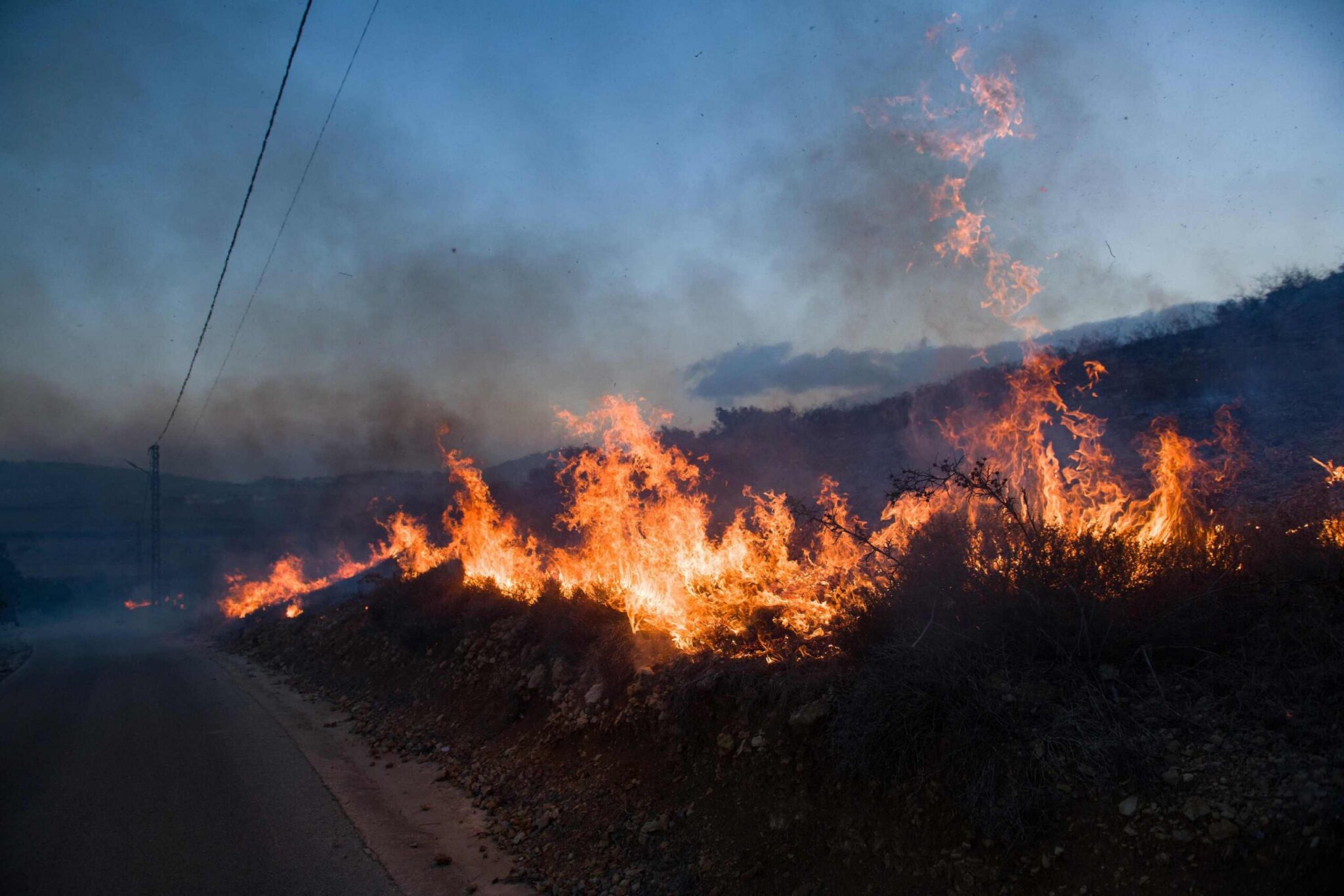
Firefighters and residents allege Israeli military is igniting wildfires in southern Lebanon, threatening the environment and livelihoods.
Emergency services, alongside residents and environmental activists in southern Lebanon, have accused the Israeli military of intentionally igniting wildfires in the region. The allegations came as forested areas faced destruction from fires triggered by military bombing.
Recent incidents have reportedly shown Israeli forces dropping flares in wooded areas near Khiam, igniting blazes that firefighters struggled to contain. The head of the civil defense in the Nabatieh region, Hussein Fakih, expressed concern, stating, “Most of our missions are now related to fires. There are enormous areas of woodland that have burned; approximately 30-40% of land close to the frontline has been affected by these fires.”
According to various environmental groups, these fires are not new but part of a broader pattern where Israel targets Lebanon’s natural environment. Following a ceasefire on June 17, which halted fighting mostly between Hezbollah and Israel, accusations of incendiary attacks have intensified.
Fakih added, “They commenced this act right after the ceasefire, with incendiary bombs released daily.” Reports indicate drones dropping incendiary materials, in addition to the use of white phosphorus shells and illumination flares aimed at setting vegetation on fire.
Municipal leaders from various south Lebanese regions concurred with Fakih, recounting similar incidents where Israeli munitions have sparked large wildfires, notably in olive groves and agricultural zones. Especially concerning were the fires reported on Friday, which spread rapidly in two heavily forested locations. The civil defense station chief, Samir Hardan, detailed an incident where a drone dropped munitions in woodlands, sparking a fire that firefighters battled overnight.
Firefighters, required to coordinate with the Lebanese army, faced restricted access to fight the fires in various areas due to operational constraints imposed by the military. Environmental groups contend that such fires exemplify an ongoing pattern of destruction that jeopardizes Lebanon’s biodiversity and woodlands.
Hisham Younes, founder of the conservation group Green Southerners, remarked, “These woodlands are long-established, home to vital ecosystems. The larger area serves as a critical passage for migratory birds. The actions undertaken by Israel amount to ecocide.” He emphasized the broader implications of such destruction, stating, “This isn’t simply about single incidents; it’s a flowing pattern of degradation which erodes ecosystem resilience and the capacity for regeneration. When this environmental degradation also undermines livelihoods, it becomes inseparable from the larger transformation of the land itself.”
Incidents of harassment have been reported against firefighters as they respond to the blazes. The Israeli military has previously justified its actions by arguing that Hezbollah has utilized forested areas as cover for military endeavors.
This situation has evoked concern from ecologists and human rights groups, stating that widespread fires and environmental destruction will carry extensive effects on the civilian population. In the summer of 2024, Israeli forces used medieval weaponry to launch flaming debris over Lebanon’s borders, showing a historical precedence for these methods.
As the situation evolves, the local population faces not only environmental destruction but also the erasure of their cultural history tied to their land. Mayor Hafez Ghasham of Yaroun lamented, “Many of our trees were passed down through generations, holding great sentimental value. They are attackers trying to make this land unfit for habitation, erasing our history and culture in the process.”