Ireland’s maritime security is under scrutiny as Russian vessels are increasingly seen in its waters, prompting a reassessment of defense strategies.
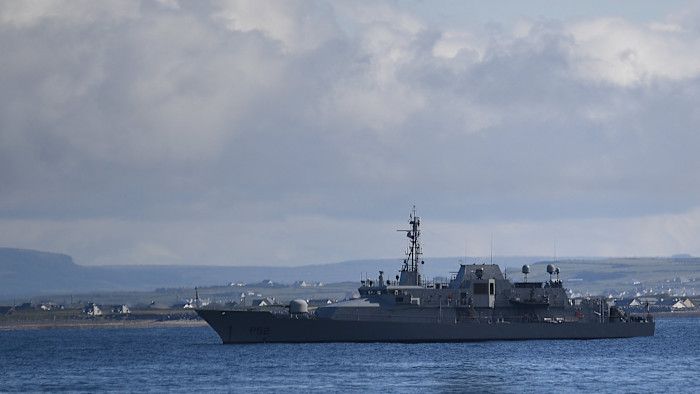
Ireland’s maritime security is under scrutiny as Russian vessels are increasingly seen in its waters, prompting a reassessment of defense strategies.
Russian presence in Irish waters has raised alarms, signaling that Ireland, rather than being a distant outpost, is increasingly on the frontline of security challenges. Concerns escalated when the Russian spy ship, the Yantar, began visiting Irish waters. This vessel, described as a research ship, is believed to be capable of attaching espionage equipment to undersea cables. During its time in the Irish Sea in 2024, it operated near a gas pipeline connecting Ireland and the UK, even activating its transponder to broadcast its proximity to critical infrastructure.
In recent weeks, Irish officials have observed an uptick in Russian shadow fleet vessels navigating the North Atlantic to bypass tighter controls in British and French waters. For Irish authorities, this growing Russian presence illustrates an unsettling reality: the country, historically sheltered by its geography, is now at a pivotal juncture concerning maritime security.
Irish waters are among the busiest globally, filled with shipping lanes, essential gas pipelines, and transatlantic internet cables. Approximately 75% of transatlantic subsea cables traverse or are close to Ireland’s exclusive economic zone, which encompasses 200 nautical miles and is seven times larger than the landmass itself. Ireland’s strategic significance in hosting numerous U.S. tech companies as their European headquarters adds another layer to these concerns.
With Ireland recently taking over the EU’s rotating presidency, officials emphasized that the country’s longstanding policy of neutrality would not hinder its commitment to enhancing its defense posture. During this tenure, security has been elevated to a priority agenda item.
Though the announcement seems routine, it marks a significant reassessment of Ireland’s defense strategy. In February, for the first time, Minister Helen McEntee introduced a maritime strategy aimed at overcoming what she termed “sea blindness.” This strategic plan aims to protect Ireland’s maritime domain, including crucial undersea infrastructure.
However, experts warn that significant challenges remain. Retired Irish naval officer Caoimhín Mac Unfraidh, who served for nearly three decades, pointed out that spending on defense remains limited despite calls for comprehensive modernization of the naval fleet. “We are dependent on the goodwill of friends and neighbours,” he said, reflecting a common sentiment among officials worried about Ireland’s defenses.
Currently, only two operational ships are part of Ireland’s naval fleet, with eight available for service, primarily due to staffing shortages. This situation underscores the broader neglect of military preparedness, as evidenced when Ukraine’s President Volodymyr Zelenskyy declined an offer from Ireland for light-armored vehicles, citing their restoration costs as excessive compared to their potential utility.
Nonetheless, Irish government officials have pledged €1.7 billion for defense capital spending from 2026 to 2030, signifying a 55% increase over previous budgets. Authorities are also optimistic about turning a corner on naval recruitment, reporting a 12% rise in Navy personnel in 2025 compared to the year prior.
Despite these commitments, Ireland remains the lowest defense spender in the European Union, particularly as neighboring nations boost their military budgets. In 2024, Ireland allocated a mere 0.2% of its GDP towards defense, starkly trailing the EU average of 1.3%.
Moreover, this discrepancy has not gone unnoticed at the EU level. Former European Commission vice-president Margrethe Vestager cautioned Ireland about its responsibility over maritime security, stating, “No one can be a weak link in our chain of protection.”
The urgency of the situation was further emphasized after critical comments from former Estonian president Toomas Hendrik Ilves about Ireland’s military spending and its implications for security cooperation with NATO.
In light of the recent geopolitical shifts, particularly following Ireland’s independence in 1922 and throughout the evolution of its military capabilities, national defense issues appear less prioritized among the public. Common concerns include domestic challenges such as cost of living, housing, and immigration, which tend to overshadow foreign policy discussions, including security.
Experts have noted that while public opinion currently leans heavily toward pressing domestic issues, the ramifications of potential disruptions in crucial infrastructure, such as internet and energy cables, could alter perceptions of national security moving forward.
Keep in touch with our news & offers
Subscribe to Our Newsletter
Thank you for subscribing to the newsletter.
Oops. Something went wrong. Please try again later.