With new technologies emerging, geothermal energy holds promise but requires significant investment to address economic challenges.
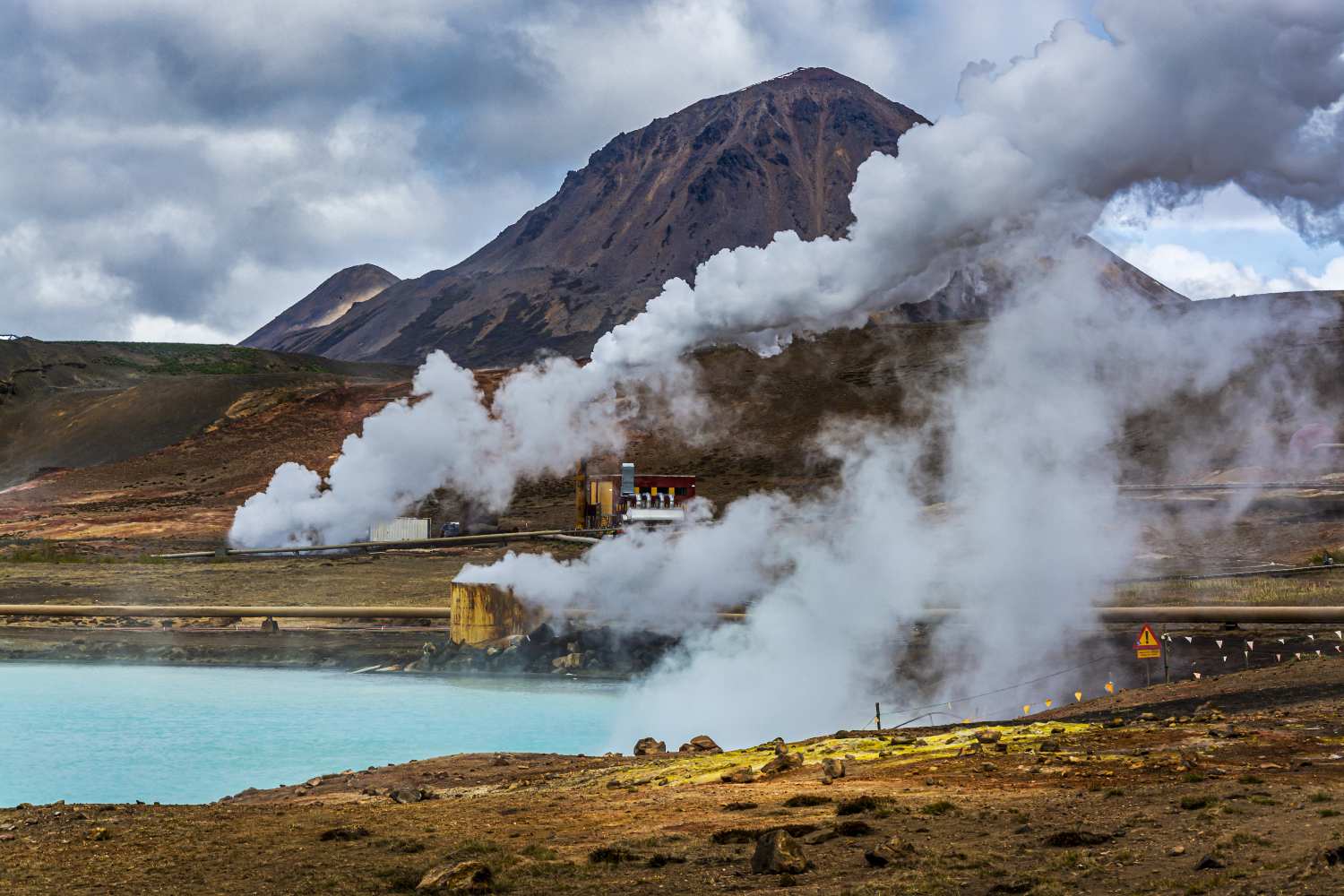
With new technologies emerging, geothermal energy holds promise but requires significant investment to address economic challenges.
There is a rare point of agreement among Democrat and Republican politicians regarding the advantages of geothermal energy. Utilizing the Earth’s natural heat, geothermal energy has the potential to access hotter and deeper locations than ever before.
This environmentally friendly energy source appeals to liberals for its low greenhouse gas emissions, while conservatives are drawn to the energy independence it offers, along with drilling technologies familiar from the oil and gas sector.
Some states in the US are attempting to expedite the permitting process for geothermal plants. In April, bipartisan senators introduced the Next-Generation Geothermal Research and Development Act. This legislation aims to empower the Department of Energy to support the advancement and commercialization of innovative geothermal systems.
One promising development in the field is enhanced geothermal systems (EGS). EGS involves the hydraulic fracturing of underground rock—essentially a technique similar to fracking—to unlock geothermal energy. Gernot Wagner, a climate economist at Columbia Business School, notes that while this technique has faced controversy within the fossil fuel industry, its advantages from a climate perspective are crucial.
Wagner emphasizes that the potential risks associated with seismic activity caused by these operations are outweighed by the benefits of harnessing a renewable and abundant energy source.
To accelerate geothermal energy exploration, advancements in drilling technologies are essential. Companies are currently developing tools capable of withstanding high temperatures and effectively penetrating hard rock. Some firms are even looking to eliminate traditional drilling methods altogether.
Quaise, a company born out of the Massachusetts Institute of Technology, is pioneering a technique known as millimetre wave drilling. This method utilizes electromagnetic waves to melt and vaporize rock, allowing access to geothermal resources almost anywhere in the world.
As Quaise works to establish a project site in Oregon, the company acknowledges that traditional drilling becomes increasingly unreliable at extreme depths.
Another vital factor in this geothermal process is water use. While concerns about contamination and overconsumption exist, Quaise asserts that its system will continually circulate water over super-hot rocks, minimizing potential risks.
However, the journey to operationalize such projects is fraught with challenges. The economic landscape for geothermal energy remains formidable. As Kelso admits, the initial costs remain high due to the limited power output compared to fossil fuel wells.
The ambition to unlock higher temperatures, ranging from 300°C to 500°C, is seen as a pathway to enhancing efficiency and ultimately changing the economic dynamics for geothermal energy. Fervo Energy, another next-generation geothermal firm, has made headlines after going public, initially valued at $7.7 billion, with construction costs amounting to $7,000 per kilowatt of electricity.
The comparison to traditional nuclear power costs underlines the financial barriers geothermal technology must overcome, despite its lack of ongoing fuel expenses. Fervo has also secured agreements, including a notable deal with Google to supply power for its data centers.
Investments are critical for the development of next-gen geothermal technologies, as they require vast capital to initiate projects. The International Energy Agency cautions that demand and expenses may fluctuate significantly.
Despite the obstacles, Wagner remains optimistic, highlighting geothermal energy’s resilience and potential over traditional fossil sources, which can fall victim to political volatility. He believes that geothermal energy is set for a breakthrough, with prospects for affordability and accessibility improving over time.
Keep in touch with our news & offers
Subscribe to Our Newsletter
Thank you for subscribing to the newsletter.
Oops. Something went wrong. Please try again later.