
The climate crisis is hitting Europe hard in 2026, with the continent warming at a rate twice as fast as any other. This alarming trend has led to deadly consequences, including tens of thousands of heatwave deaths reported this summer.

The climate crisis is hitting Europe hard in 2026, with the continent warming at a rate twice as fast as any other. This alarming trend has led to deadly consequences, including tens of thousands of heatwave deaths reported this summer.
Globally, temperatures are rising due to carbon emissions from the burning of fossil fuels, but Europe stands out for its rapid increase in heat. Currently, the continent is about 2.5 degrees Celsius warmer than it was before the widespread use of fossil fuels. In comparison, the global average rise is only about 1.4 degrees Celsius.
The rate of warming in Europe has accelerated to 0.56 degrees Celsius per decade since the mid-1990s, starkly contrasting with North America’s 0.42 degrees, Africa’s 0.36 degrees, and South America’s 0.27 degrees.
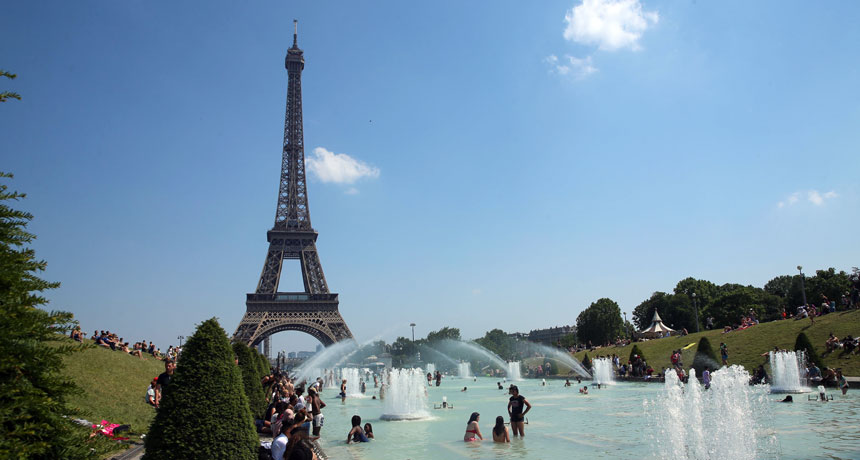
Several key factors contribute to Europe’s vulnerability. Changing weather patterns, proximity to the Arctic, a decrease in snowfall, and reduced air pollution all play significant roles. This year’s June heatwave was particularly notable, as it was exacerbated by a stagnant “heat dome” that trapped hot air over large areas.
Dr. Samantha Burgess from the EU’s Copernicus Climate Change Service noted, “We see statistically significant changes in surface pressure patterns and other measures of circulation when we look at trends over the last 40 or more years, and on this timescale they are more likely associated with climate change than natural variability.”
The Arctic, despite being an area mostly devoid of land, is actually the fastest-warming region on Earth. The melting of the polar ice cap, which reflects sunlight, leads to higher temperatures as the darker ocean absorbs heat. With a significant part of Europe located near the Arctic, the warming effect is magnified.
Historically, snow cover during winters has kept Europe’s temperatures down, but the current crisis is leading to a substantial reduction in snow coverage. As of March 2025, snow cover in Europe was approximately 1.3 million square kilometers below the 1991 to 2020 average—a reduction of about 31%, equating to the size of France and several other nations combined. This marks one of the lowest levels of snow cover since records began in 1983.
While Europe has made strides in reducing air pollution, which kills millions globally each year, the cleaner air appears to have unmasked the severe impacts of rising carbon dioxide levels. Particles from air pollution historically helped to reflect sunlight, keeping temperatures lower. Now, with fewer pollutants in the atmosphere, there is less reflection and more heat trapped.
Despite this grim situation, the science is still evolving, and experts aim to provide better estimates of the causes of these changes in the coming year. Burgess commented, “What we can say is that the importance of each factor must vary with season, with proximity to the Arctic important in autumn and winter, and circulation changes since the late 1970s of greater statistical significance in summer.”
The evident rise in temperatures is correlated with increased incidents of death, drought, and intense wildfires. Other severe weather phenomena like storms and floods have also intensified due to the added heat within the climate system. As these issues affect lives and livelihoods across Europe, the call for urgent emission reductions has never been more critical. Immediate action is needed to ensure that emissions reach net zero and to implement effective strategies to protect citizens.
Simon Stiell, the UN climate chief, emphasized the urgency: “The awful costs of this climate crisis—both human and economic—are now reaching national emergency levels. What needs to be done is clear: leave coal, oil, and gas behind faster, scale up renewables, and protect people.”