China successfully lands its Long March 10B reusable rocket, marking a significant step in its space program and challenging US dominance.
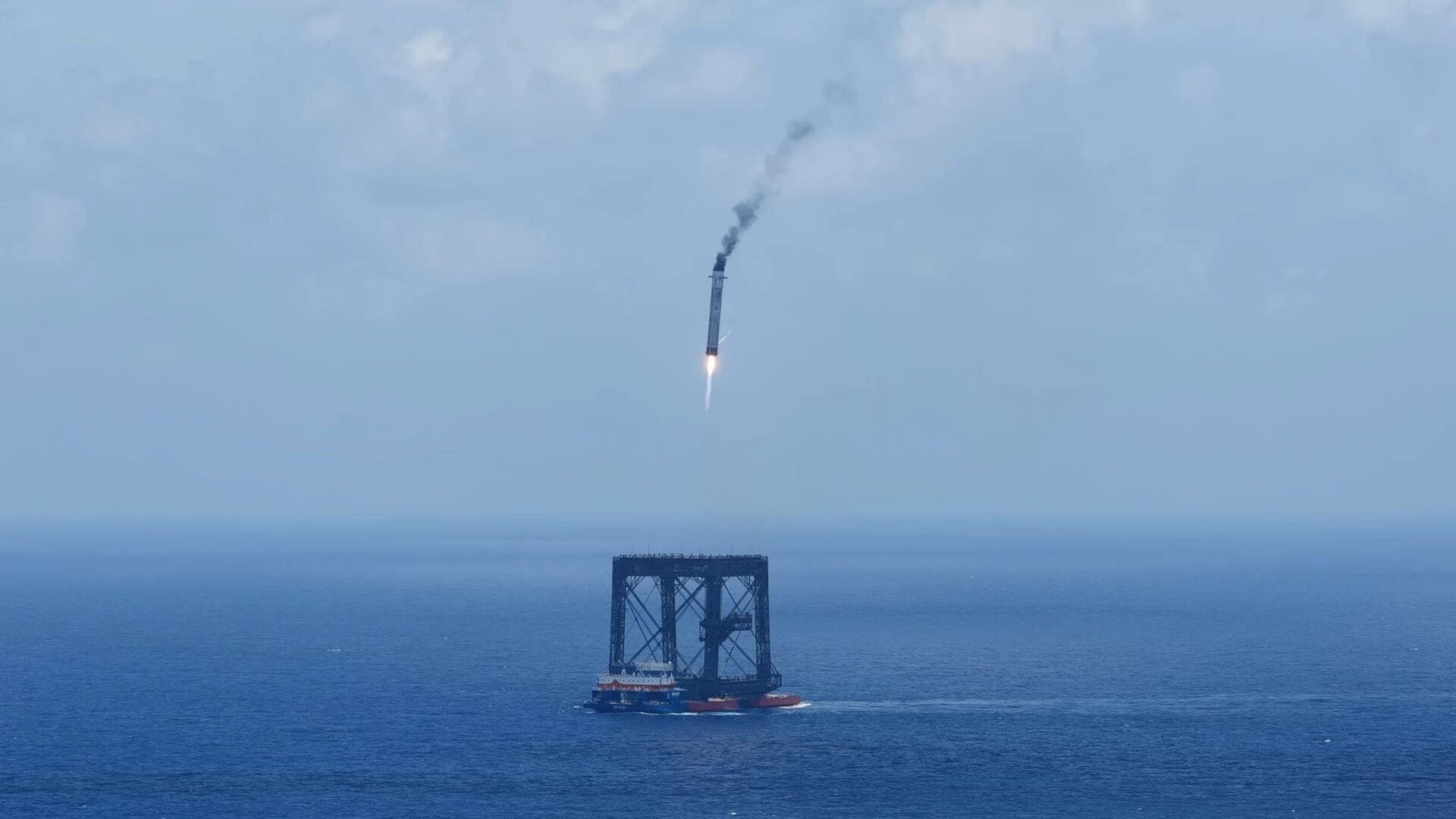
China successfully lands its Long March 10B reusable rocket, marking a significant step in its space program and challenging US dominance.
China has successfully landed a reusable rocket for the first time, marking a major breakthrough for the country’s space program, according to state media.
The China Aerospace Science and Technology Corporation reported that the Long March 10B rocket lifted off from Hainan in southern China at 12:15 local time (04:15 GMT) on Friday.
Around six minutes post-separation from the rocket’s upper stage, the booster returned to Earth in a vertical landing and was recovered on a floating platform.
This accomplishment indicates that China may be in a position to challenge the dominance of the United States in reusable rocket technology, following successful landings by SpaceX and Blue Origin, the latter being owned by Amazon founder Jeff Bezos.
Traditionally, rockets are considered expendable, with various segments discarded or destroyed during ascent, which makes the cost of launching spacecraft quite high. By reusing boosters, which are typically the most valuable part of a rocket, substantial savings can be realized in satellite launches and space exploration.
SpaceX achieved its first successful landing of a reusable Falcon 9 rocket from an orbital flight in December 2015, with Blue Origin conducting similar landings starting with the New Glenn in November 2025. The Falcon 9 has since become a workhorse for SpaceX, launching approximately 150 times annually with boosters that are capable of being reused multiple times.
China’s Long March 10B can carry a payload of at least 16 metric tons to low-Earth orbit and has drawn comparisons to SpaceX’s Falcon 9. However, in contrast to the Falcon 9 which autonomously lands on a ground pad or drone ship, the Long March 10B employs “landing hooks” to catch a net that is attached to a floating platform.
This successful landing follows an earlier attempt by China in February, where a Long March 10A made a controlled descent but splashed down next to a recovery platform instead of landing on it.
As China’s space program continues to evolve, this achievement serves as a stepping stone towards enhanced capabilities in space exploration.
Keep in touch with our news & offers
Subscribe to Our Newsletter
Thank you for subscribing to the newsletter.
Oops. Something went wrong. Please try again later.