China’s new Kimi K3 AI model from Moonshot AI impresses with performance as global experts react. Learn what this means for AI competition.
China’s new Kimi K3 AI model from Moonshot AI impresses with performance as global experts react. Learn what this means for AI competition.
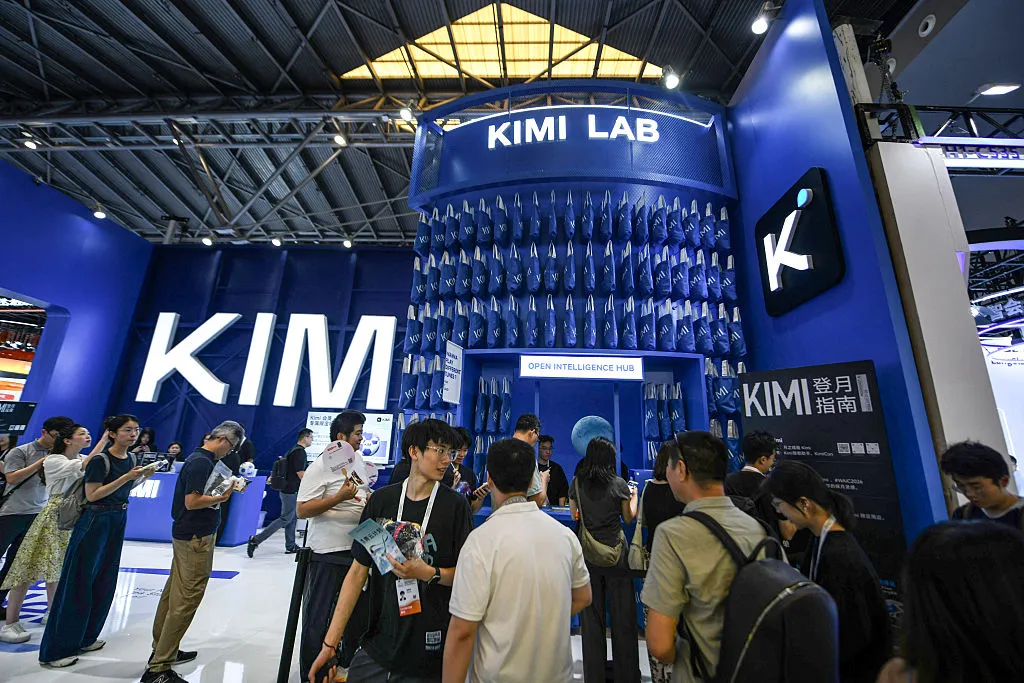
Chinese AI startup Moonshot AI has launched Kimi K3, a model they claim is the largest open-weight AI system currently available. Released just prior to the 2026 World Artificial Intelligence Conference in Shanghai, Kimi K3’s debut has stirred significant conversations among industry leaders and academics alike.
Though Moonshot acknowledges that K3 is not yet the most powerful when compared to proprietary counterparts like Anthropic’s Claude Fable 5 and OpenAI’s GPT-5.6 Sol, it has outperformed these giants’ second-tier models, including Claude Opus 4.8 and GPT-5.5 in various benchmarks, particularly in coding and agentic tasks.
Within a short time frame, K3 managed to seize the top spot on Arena’s frontend coding leaderboard, surpassing all leading US models, and achieved a third-place ranking on Artificial Analysis’s Intelligence Index. The launch suggests a shifting dynamic in the global AI race, where China’s advancements are increasingly closing the gap with leading American technologies.
Industry experts have responded to the news with a mix of excitement and concern. David Sacks, a venture capitalist and former AI czar during the Trump administration, expressed apprehension over the US’s regulatory actions and their potential to hinder innovation. He commented, “This is how you lose the AI race,” urging for a more open and less restrictive approach to AI development.
In agreement, billionaire investor Vinod Khosla highlighted broader issues, emphasizing how US immigration policies could deter top talent from entering the country, potentially stunting technological progress.
However, not all reactions have been cautious. Some experts view Kimi K3’s release as a positive sign for the AI landscape. Bill Gurley, a noted tech investor, argued that the rise of open models could enhance competition and innovation, insisting that “the open-model wave is not an attack on AI companies.”
Additionally, Box CEO Aaron Levie dubbed the launch a “huge win” for AI industries, pointing out that the effective performance of Kimi K3 could greatly expand operational capabilities for enterprises looking to automate workflows. The significant reduction in costs for high-level AI functions may change the game for various sectors.
Russ Salakhutdinov, a professor at Carnegie Mellon University, celebrated the launch as a monumental victory for the open-source community. He reflected on the achievements of Moonshot CEO Yang Zhilin, who has shown pioneering contributions to AI technology during his academic career.
As excitement continues to build around Kimi K3, venture capitalist Jason Calacanis mentioned that the pace of AI advancements has accelerated remarkably, predicting transformative changes across multiple fields in the near future. The industry’s community is united in curiosity and speculation about what lies ahead.
Moving forward, Kimi K3 represents more than just an AI model; it signifies a pivotal moment in the ongoing battle for AI supremacy between the US and China. With leaders in tech urging swift actions to adapt to this new landscape, the conversation around AI’s future and its implications continues to evolve.
Keep in touch with our news & offers
Subscribe to Our Newsletter
Thank you for subscribing to the newsletter.
Oops. Something went wrong. Please try again later.