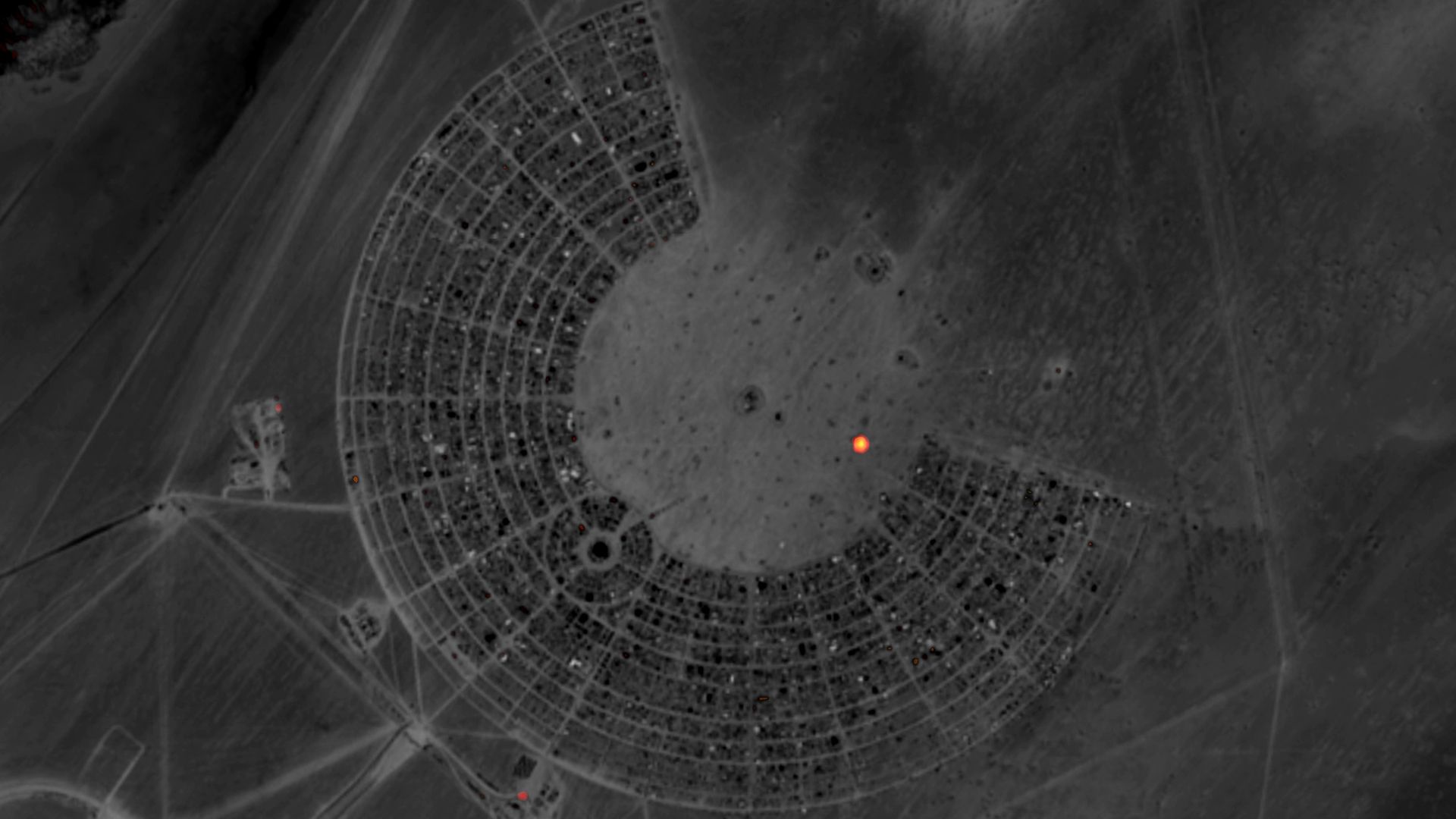
Satellite images reveal the transformation of Black Rock City as preparations for Burning Man unfold in the Nevada desert.
Burning Man is transforming Nevada’s Black Rock Desert into a temporary metropolis once again.
Thousands of participants began entering the gates at midnight on August 30, bringing with them the food, water, shelter, and supplies necessary to thrive during a week in the remote playa, located about 80 miles north of Reno.
With roughly 70,000 people expected to attend this unique art festival, it is often described as an annual experiment in radical self-expression, communal effort, and civic responsibility. The event has historically attracted notable figures from Silicon Valley, including Elon Musk, Mark Zuckerberg, Jeff Bezos, and Sam Altman.
Early arrivals on Sunday dedicated their time to raising shade structures, constructing camps, and installing various artworks, with the sounds of hammers, power tools, and dance music resonating throughout the dust. This year’s creations include a striking metal octopus and a shattered Eiffel Tower, alongside the iconic Man, a human-shaped effigy, and the Temple of the Moon, a 170-foot-wide sanctuary designed for reflection and remembrance. Both structures are intended to be burned in separate ceremonies as the event draws to a close.
Weather forecasts predict temperatures hovering around 80 degrees during the first half of the week, though expected gusty winds may stir up the playa’s notoriously challenging dust.
Prior to the opening of Burning Man, survey crews meticulously marked the city’s clock-face layout onto the empty playa. Radial avenues extend outward from the Man, while curved streets form the semicircular camping area.
Preparations for Black Rock City typically commence around a month before the festival, with crews establishing the city’s center, surveying the street grid, and constructing necessary infrastructure including roads, gates, service compounds, and ceremonial structures well ahead of the arrival of artists and attendees.
As Burners arrived by car over the weekend, they formed extensive lines across the Black Rock Desert, moving through temporary lanes that guide them toward the event’s entrance gates.
This sprawling queue has become a familiar aspect of the arrival experience at Black Rock City, where organizers check tickets and vehicle passes before allowing participants to proceed. From an aerial perspective, the lines of cars resemble a temporary highway etched into the playa, leading towards the expansive desert city that lies beyond.
The Black Rock City Municipal Airport, which emerges annually for just 13 days, is shown to be bustling in the satellite imagery.
Instead of traditional asphalt, the airport is constructed each year from scratch on the dusty playa, almost entirely staffed by volunteers. This temporary facility caters to general aviation and private planes, in addition to hosting Burner Express Air, a designated charter service that transports some attendees between the temporary airport and cities such as Reno, the San Francisco Bay Area, or Southern California throughout the event.
Center Camp, located near the 6 o’clock position of Black Rock City, boasts a large, acre-wide canopy offering shade while hosting performances, artwork, food, and social gatherings.
Primarily run by volunteers who manage scheduling, daily operations, and bartending within the interactive camps that surround the plaza, this area is a crucial civic space and a central meeting point for festival-goers.
At the geographic center of Black Rock City, the Man is taking shape above the Cryptomeria, a tree-inspired pavilion featuring root-like pathways and spiral staircases that ascend nearly 60 feet. This year’s pavilion was designed and named by Alexander Rose, a veteran participant in Burning Man.
As work progresses, numerous temporary art installations are gradually being set up across the open playa, transforming the landscape into an outdoor gallery.
An installation called the Temple of the Moon, specifically designed for the 2026 Burning Man event, is depicted as a 170-foot-wide sanctuary inspired by the Queen of the Night cactus and lunar cycles. Its petal-like design encases a chamber that reaches 52 feet high.
This installation was brought to life by artist James Gwertzman in collaboration with the Moonlight Collective and Temple Build Crew, serving as a tranquil space for reflection and remembrance.