A week after devastating floods in Nepal, 33 Australians remain unaccounted for in the Gyirong Port area as rescue efforts face significant challenges.
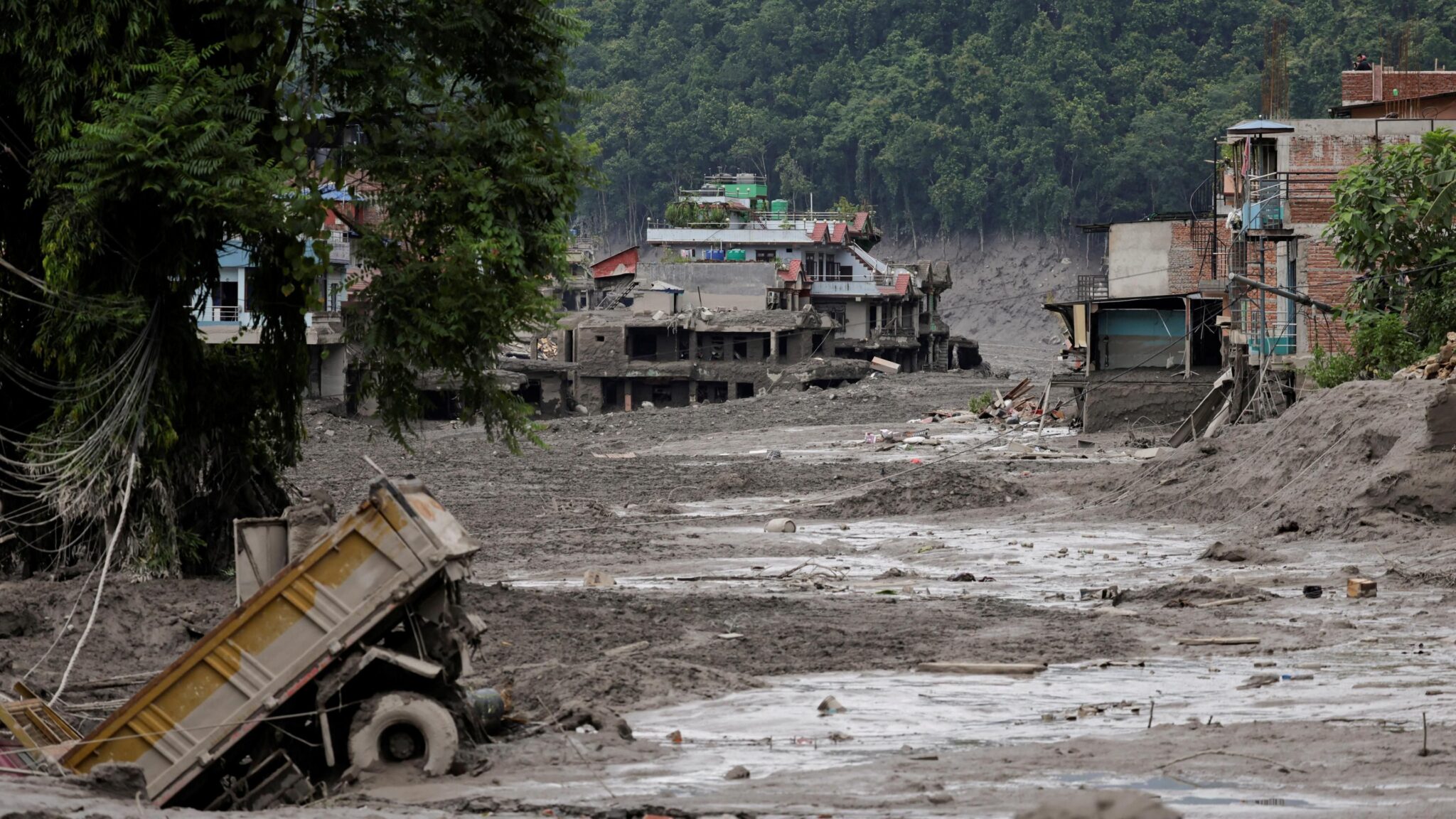
The majority of missing Australians were near Gyirong Port just minutes before a catastrophic flood hit the area. Rescuers report that the region is now devastated, submerged under several metres of silt and debris.
It has been nearly a week since the flood disaster in Nepal struck, and rescue teams are unable to reach the area where most of the missing Australians were last heard from. Gyirong Port, situated on the border between Nepal and China, was the first location impacted by the flood.
Images from Chinese rescue teams, who have managed to access the site via helicopter or on foot, reveal a once-bustling area that has been entirely flattened. Structures such as the immigration building and nearby power lines have been completely obliterated.
Family members of the missing expressed their despair, with one individual recounting her fruitless attempts to contact her husband after learning that phone lines were restored. “The embassies aren’t helping,” she lamented.
The tally of Australians unaccounted for rose to 43 on Monday, with at least 33 believed to have been near the Gyirong Port just before the calamity struck. Among those missing are 15 Australians affiliated with the Himalaya Glacier Company, 11 from the Isha Foundation, six associated with Kailash Journeys, and one from Kathmandu Holiday Tours and Travel. Many had arrived at the immigration center just 10 minutes prior to the flood.
Sujan Wasti, head of Kailash Journeys’ Nepal operations, shared that the last communication from the group occurred at 7:30 AM, indicating they were on their way back. They planned to land in Kathmandu on Thursday, where several were set to fly home.
Wasti stated, “In the area, the rescue has been done. Now, it will just be about collecting the bodies and bringing them home.” Since last Wednesday, teams have combed the Trishuli River searching for any signs of the missing trekkers, with two helicopter flights over the border and visits to local hospitals yielding no results.
“We are searching every place we can, but still we have not found anyone,” Wasti expressed. “Along the border, it was only dead bodies. If they are alive, it will be a miracle.” Chinese authorities are coordinating rescue operations in the impacted region.
As of Monday, crews have approximately 1.15 kilometres of roadway to clear and reconstruct in order to reopen the highway leading to the port from the Tibet side. Accessibility remains challenging, with only rescue crews allowed into the area; some have trekked for ten hours on foot before rappelling down into the valley.
Akhilesh Surjan, an expert in humanitarian and disaster management at Charles Darwin University, raised concerns about the delicate balance of maintaining hope for survivors. He noted that rescue specialists view the first 72 hours post-disaster as crucial for finding survivors. “After three days, the chance of finding survivors drops sharply,” he explained. However, he added that survival beyond this period is not unheard of.
In a reflection on survival probabilities, he described conditions that favor survival, such as access to air pockets and protection from harsh weather. Despite these considerations, he cautioned that rescuers face serious challenges, with thick mud and standing water complicating the identification of survivors using life-detection devices.
With additional rainfall forecasted over the next couple of days, rescue efforts are likely to face even more obstacles. Reports of high-risk geological disaster points in the area compound concerns about potential further flooding or landslides.
Surjan elaborated on the dangers for rescue personnel, mentioning that more than 85 rescuers, including police and army officers, are currently missing themselves. He emphasized that poor visibility and damage to communication infrastructure have severely hampered efforts.
Three days after the disaster, the first team of Chinese rescue workers reached the border crossing, stating that devastation was all around. They described the scene as devoid of any recognizable structures.
The Isha Foundation has mobilized volunteers to Kathmandu and Tibet to assist families and provide updates on the situation. Their loved ones were reportedly inside the immigration center, preparing to cross the border when disaster struck. On Sunday, the foundation sent a message to families urging them to prepare for the worst, emphasizing the significant debris that now blankets the valley.
Experts familiar with the treacherous terrain have asserted that it is extremely unlikely anyone could have survived the overwhelming force of the flood, which resulted in debris levels reaching up to 15 metres.