Walmart employees are stepping up to troubleshoot AI tools meant to aid their work but still face significant challenges in their implementation.
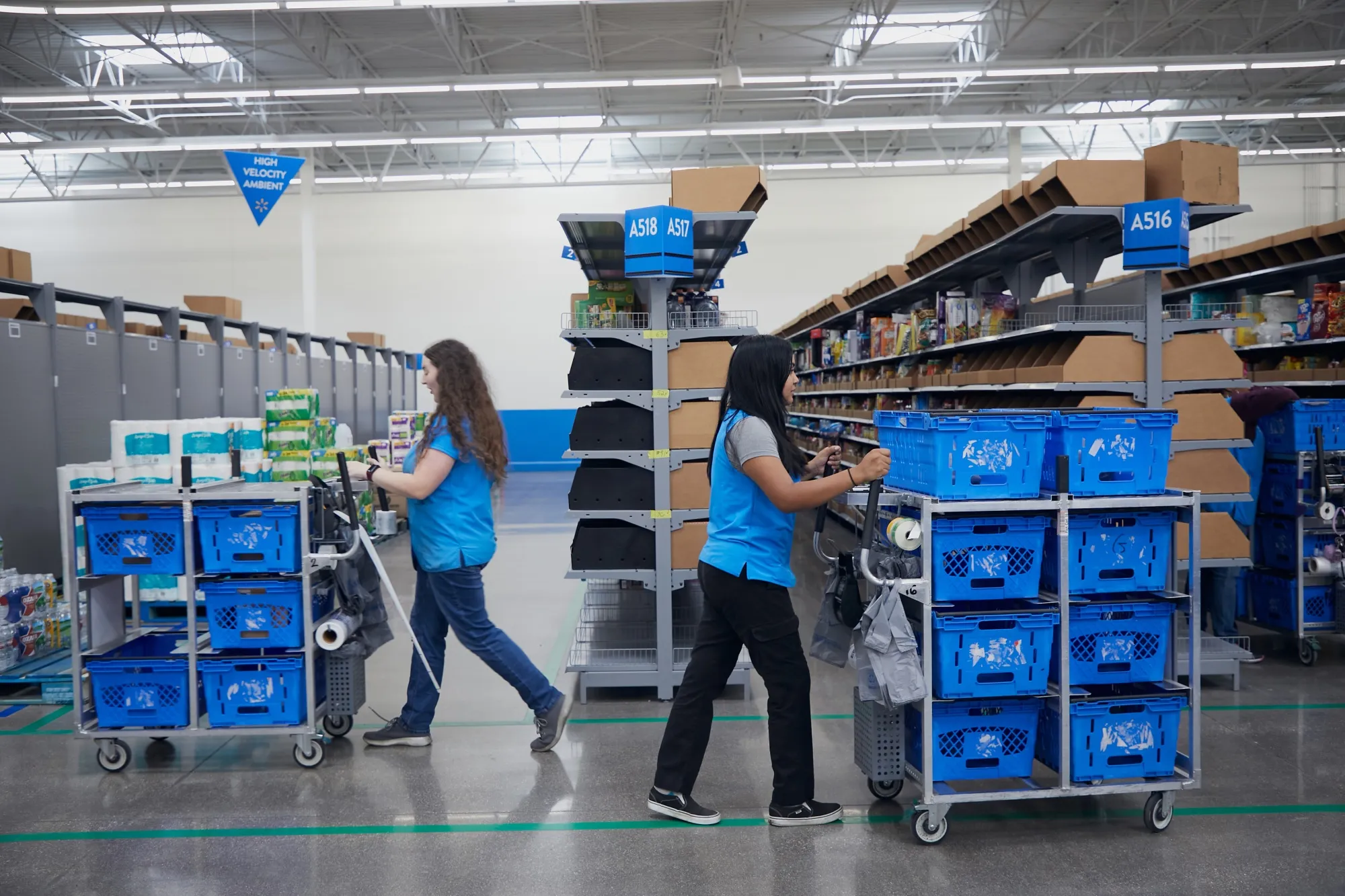
Walmart employees are stepping up to troubleshoot AI tools meant to aid their work but still face significant challenges in their implementation.
Walmart, the largest private-sector employer in the United States, is making significant investments in artificial intelligence (AI) to enhance the efficiency of its in-store workers. However, many employees are finding themselves in the unexpected position of having to correct mistakes and train the AI technology that is intended to assist them.
Employees have reported that the AI tools often fail to account for the complexities of everyday tasks. For instance, when restocking shelves, workers find that the system does not consider the necessary preparation such as cleaning messes or removing expired items.
Furthermore, updates to Walmart’s delivery service, Spark, have occasionally resulted in increased workloads. A new feature designed to help drivers efficiently navigate stores for items has prompted workers to spend more time querying their real-time locations, sometimes leading them to pick up items like ice or frozen goods unnecessarily.
Despite these challenges, Walmart executives seem prepared to accept some initial setbacks as part of the process. The company’s CEO, John Furner, has expressed confidence in an “AI-for-all” strategy, believing that empowering employees to shape the tools they utilize will yield better outcomes compared to a top-down approach.
Illustrating this strategy’s potential success, Walmart logistics manager Leo Garcia shared how he developed an AI application that effectively helps truck drivers return home more quickly while reducing the number of empty trailers. This initiative has shown that when employees are engaged in creating solutions, the outcomes can be beneficial.
However, Walmart’s initiative faces two major hurdles. For one, AI technology can elicit fear and resentment among workers, leading to hesitancy in fully embracing these tools. Additionally, the vast scale of Walmart’s operations, spread across more than 4,600 locations, makes it challenging to consolidate feedback about the application’s effectiveness. Each store has its unique clientele and needs, raising questions about how to navigate differing opinions.
The company’s Vice President for associate tools highlighted the importance of allowing stores the flexibility to apply the tools according to their distinct requirements. However, reconciling diverse feedback from various locations poses another layer of complexity. As Walmart continues to innovate and adapt to new technologies, the journey will likely involve both successes and frustrations.
Keep in touch with our news & offers
Subscribe to Our Newsletter
Thank you for subscribing to the newsletter.
Oops. Something went wrong. Please try again later.