The UK economy shows signs of growth amid challenges from the Iran war, with rising consumer spending but risks from high energy prices.
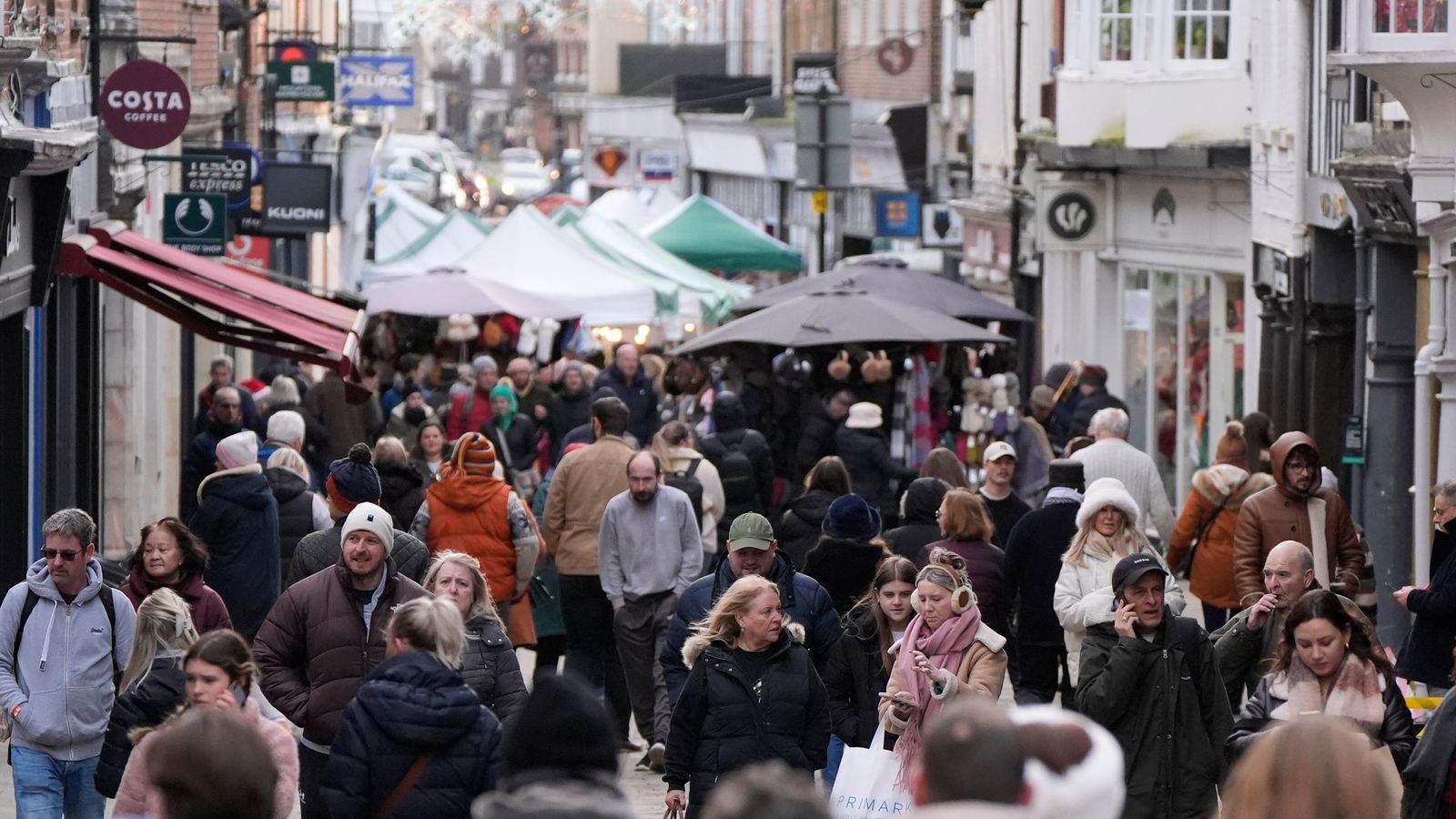
The UK economy shows signs of growth amid challenges from the Iran war, with rising consumer spending but risks from high energy prices.
The U.K. economy is demonstrating signs of a long-awaited recovery, yet the situation is complicated by the repercussions of the Iran war and escalating energy prices.
Recent data indicates that consumer spending in the U.K. has surpassed expectations due to several factors, including warm weather, a strong performance by England in the FIFA World Cup, and an increased level of business confidence.
According to official statistics released on Thursday, the U.K. economy expanded by 0.4% in the second quarter, building on a 0.6% growth in the first quarter. Business investments rose by 1.7% during this period, contrary to predictions from economists in a Reuters poll, who expected a 0.5% decline.
Sanjay Raja, chief U.K. economist at Deutsche Bank, emphasized that these figures position the nation on track to record the fastest growth among G7 countries for the second consecutive quarter, noting an impressive annualized growth rate of 2% in the first half of the year.
However, Raja cautioned that a slowdown is likely as increased fuel prices begin to strain household finances. “For the first time in a while, we now see modest upside risks brewing,” he added.
The outlook for the U.K. economy under the new Prime Minister Andy Burnham appears complex, as insights from the International Monetary Fund in April suggested that the ongoing conflict involving the U.S. and Israel against Iran could adversely impact the U.K.’s growth prospects more than any other affluent country.
The U.K. is particularly vulnerable to surging energy prices due to its reliance on oil and gas imports and has experienced a significant surge in goods inflation relative to many of its counterparts in recent years.
Bloomberg reported that officials from the Treasury recently presented worst-case scenario analyses to Burnham, indicating that economic growth could slow to a mere 0.3% next year if disruptions in the Strait of Hormuz continue to escalate. The Treasury has not responded to requests for comments regarding this analysis.
Tomasz Wieladek, chief European macro economist at T. Rowe Price, highlighted that there are encouraging trends indicating a shift in the U.K.’s growth drivers from increased government spending toward more robust private sector performance.
Nonetheless, Wieladek noted, the idea that the British economy remains unscathed by the Middle East turmoil is likely overly optimistic. He remarked, “Normally, growth in the first two quarters is reported to be much stronger than in the second half of the year.”
Shaniel Ramjee, co-head of multi-asset at Pictet Asset Management, pointed out that while hot weather has been beneficial for the services sector, the U.K.’s construction and industrial production sectors are down compared to last year, despite a global infrastructure boom.
Keep in touch with our news & offers
Subscribe to Our Newsletter
Thank you for subscribing to the newsletter.
Oops. Something went wrong. Please try again later.