Canada’s federal government provides urgent help as over 22,000 flee their homes due to unprecedented wildfires in British Columbia.
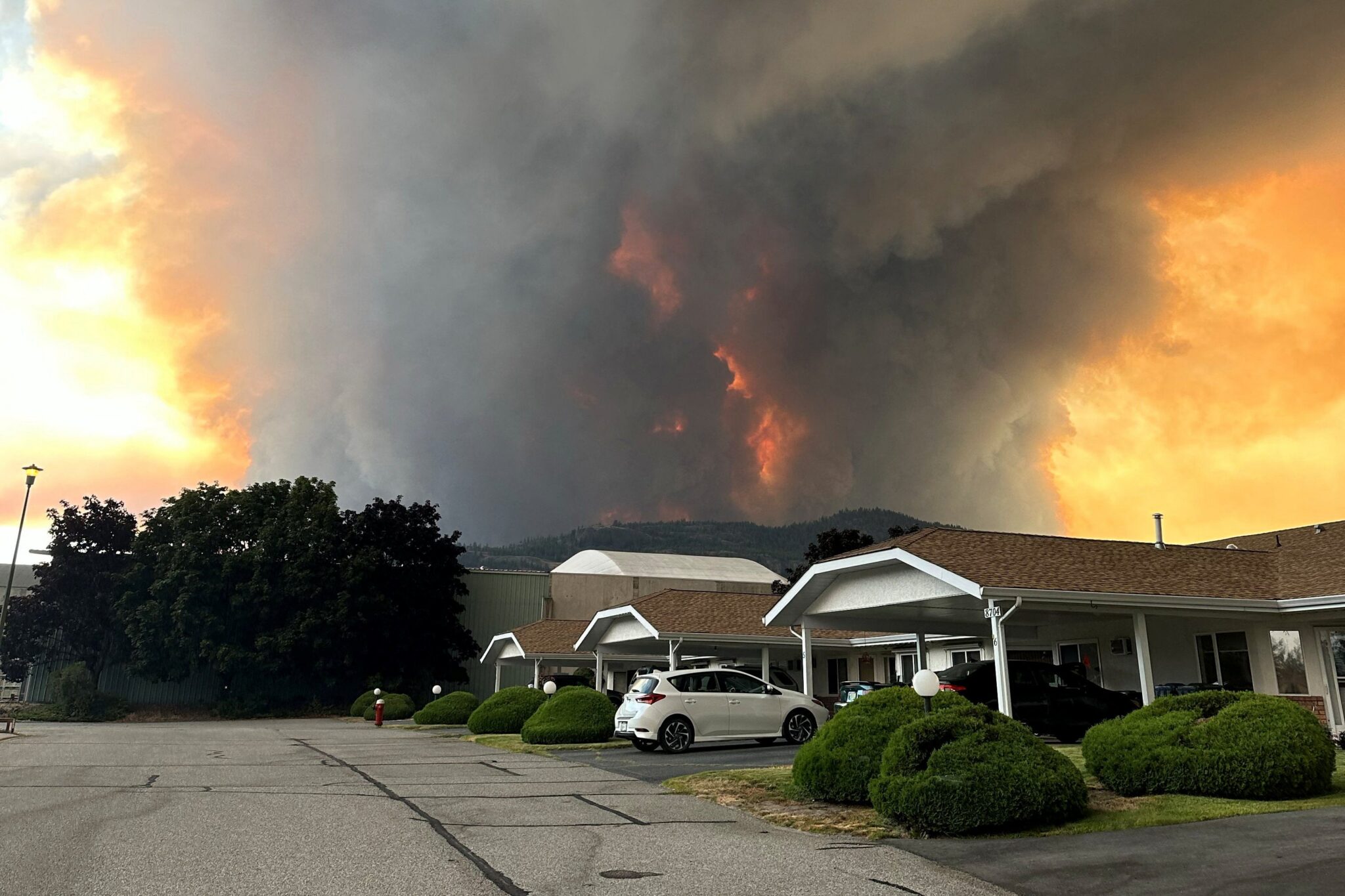
Canada’s federal government provides urgent help as over 22,000 flee their homes due to unprecedented wildfires in British Columbia.
In response to unprecedented wildfires that have forced approximately 22,000 residents in British Columbia to flee, the Canadian government announced urgent assistance for the province. The fires, described as ‘out of control’ by officials, have seen 102 active wildfires across British Columbia, with nearly half classified as beyond control.
The situation escalated dramatically over just a short period, with 78 of those wildfires igniting within the past week. The entire community of Summerland, located about 30 miles southwest of Kelowna, was evacuated overnight, as was an additional 8,000 residents from nearby Peachland. Authorities have also advised another 10,000 individuals to be prepared for imminent evacuation.
Eleanor Olszewski, Canada’s Minister of Emergency Management, addressed the situation via social media, stating, “I approved a request for federal assistance from British Columbia to provide shelter and accommodations for people who have been forced to leave their homes.” She directed federal officials to collaborate with the provincial government to deliver essential support.
The rapid spread of the bald range wildfire has complicated firefighting efforts. Initially detected late Friday, this blaze expanded to over 40 square miles—almost doubling the size of Manhattan—while racing approximately nine miles towards Okanagan Lake.
Premier David Eby declared a state of emergency, likening the rapid spread of the fire to “a bomb going off.” Cliff Chapman, the BC Wildfire Service’s director of provincial operations, flagged the prolonged hot and dry weather as the culprits behind the extremely dangerous fire conditions being witnessed this summer. Further exacerbating the situation, thunderstorms with potential lightning are forecast for the week ahead, raising fears that conditions could worsen.
As summerland residents hurriedly packed their belongings, Jennifer Pascoa shared her harrowing experience: “It happened so quickly. We came home from the beach, we saw the plume of smoke, and then within an hour, the sky was covered in dark, black clouds.”
The firefighting response has involved 10 standard helicopters and one night-vision helicopter, but operations have been hindered by thick smoke and challenging turbulence. The Royal Canadian Mounted Police (RCMP) are currently investigating a possible fatality linked to the fire near Summerland.
Mike Flannigan, a professor of wildland fire at Thompson Rivers University in Kamloops, remarked on the evolving nature of wildfires in the region, stating that they are becoming increasingly dangerous due to climate change. He pointed out that Southern BC and the Pacific Northwest in the U.S. have experienced minimal rain, leaving regions “bone dry.”
Flannigan further indicated that the wildfire conditions experienced now are unlike past norms, altering fire management protocol. He emphasized, “If a fire can run 60km in a day, you should be worried about it.” Traditional firefighting practices that allowed for a pause at night are no longer effective as fires continue to roar through the evening.
As fears mount for what lies ahead, agencies are preparing for a potentially extended fire season—as seen in areas like California. “It looks grim … there’s no rain,” Flannigan cautioned, expressing concern for the weeks to come as current drought conditions persist.
Keep in touch with our news & offers
Subscribe to Our Newsletter
Thank you for subscribing to the newsletter.
Oops. Something went wrong. Please try again later.