Ollanta Humala’s 15-year sentence for corruption has been overturned by Peru’s constitutional court, declaring the proceedings null and void.
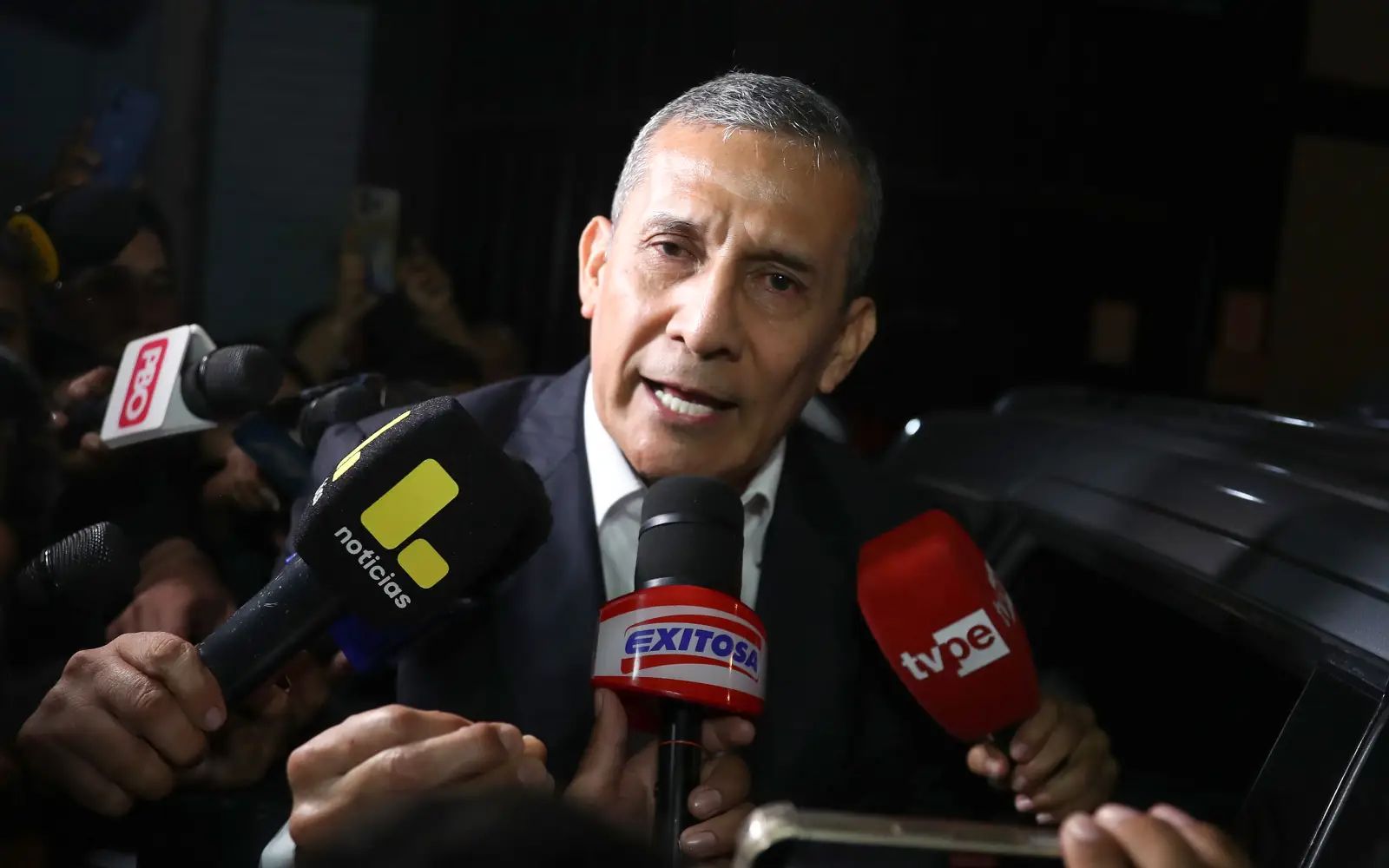
Ollanta Humala’s 15-year sentence for corruption has been overturned by Peru’s constitutional court, declaring the proceedings null and void.
Peru’s constitutional court has reversed a 15-year prison sentence imposed on former president Ollanta Humala, citing significant flaws in the legal proceedings against him. Humala, who served as president from 2011 to 2016, was initially convicted in 2025 for accepting illicit funds from both the Venezuelan leader and the Brazilian construction giant Odebrecht to finance his electoral campaigns.
The court’s ruling comes after Humala signaled his intent to challenge the conviction. It deemed all criminal proceedings against him null and void, leading to his release from Barbadillo Prison in Lima on Friday night, where a supportive crowd awaited his arrival.
Julio Espinoza Goyena, Humala’s lawyer, took to social media to celebrate the court’s decision, asserting that the contributions received during the electoral campaigns “do not constitute money laundering.” He further stated that the Criminal Chamber handling the case must officially dismiss the proceedings and ensure the freedom of Humala.
In connection with Humala’s case, his wife Nadine Heredia was also convicted of money laundering and received a concurrent 15-year sentence. However, she managed to secure asylum in Brazil and was granted safe passage there after the conviction.
Speaking outside the prison, Humala claimed they had endured “political and judicial persecution” throughout the trial. His case has been central to a broader investigation into corruption linked to Odebrecht, which has implicated multiple former Peruvian leaders.
During his tenure, Humala became the first of four former presidents to face scrutiny related to the Odebrecht scandal. Alejandro Toledo, the president from 2001 to 2006, received a sentence exceeding 20 years for reportedly accepting $35 million in bribes from the company. Alan García, who led the country from 1985 to 1990 and again from 2006 to 2011, tragically took his own life in 2019 while confronting allegations linked to bribes from Odebrecht. Another former president, Pedro Pablo Kuczynski, encountered impeachment proceedings after his ties to Odebrecht surfaced, though he has consistently claimed his actions were within legal bounds.
At the heart of Humala and Heredia’s trial were allegations that they accepted $3 million in illegal contributions from Odebrecht and $200,000 from then-Venezuelan president Hugo Chávez to finance Humala’s 2006 campaign. Throughout the legal battles, the couple has maintained their claims of being targeted by political motives.
Humala, previously an army officer, became a national figure following a failed military uprising against Alberto Fujimori’s presidency in 2000. Initially, he ran for president in 2006, promoting a platform influenced by Chávez’s socialist revolution. After a narrow defeat, he successfully won the presidency in 2011 against right-wing rival Keiko Fujimori with a more centrist agenda resembling the policies of Brazil’s Luiz Inácio Lula da Silva.
The controversy surrounding Odebrecht surfaced shortly after Humala left office, with the company admitting to extensive bribery of political figures across Latin America to secure lucrative contracts.
As the investigation progresses, the implications of this ruling could ripple through Peru’s political landscape, highlighting the contentious nature of political accountability in the country.
Keep in touch with our news & offers
Subscribe to Our Newsletter
Thank you for subscribing to the newsletter.
Oops. Something went wrong. Please try again later.