FIFA reverses plans to sell World Cup commercial rights after strong opposition from member associations, leading to a crisis in leadership.
FIFA reverses plans to sell World Cup commercial rights after strong opposition from member associations, leading to a crisis in leadership.
FIFA has decided not to pursue its plan to sell a stake in its commercial rights to the World Cup after facing significant resistance from its member associations. The announcement came on Friday, following a backlash that raised concerns over the leadership of FIFA President Gianni Infantino.
The proposal was initially aimed at generating up to $4.2 billion by selling a 20% stake to private investors for a new unit that would manage FIFA events, including the World Cup. However, the plan triggered outrage among various regional confederations, which felt blindsided and unconsulted about such a major decision.
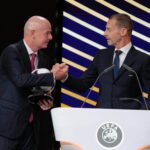
In reaction to FIFA’s withdrawal from the proposal, UEFA released a statement declaring it a victory for the global game, while emphasizing that restoring trust in FIFA would require significant effort moving forward. “The current FIFA leadership has not only lost UEFA’s confidence but also that of many other members of the football family,” the statement read.
Earlier this week, the 55 members of UEFA had unanimously rejected Infantino’s proposal. They expressed that such secretive plans formulated by unnamed individuals would be detrimental. UEFA thanked fans, leagues, clubs, and even heads of state who united against the proposal, reinforcing the notion that “football is not for sale.”
The pressure on Infantino is palpable, especially considering his upcoming re-election campaign, as the backlash questions his political capital. UEFA reminded Infantino of his 2016 election promises regarding transparency, stressing that the way he attempted to push through the deal contradicted its spirit.
“On both these promises, he has failed to deliver,” UEFA noted. The organization pointed out FIFA’s substantial reserves, stating that those funds should be employed for the benefit of the game rather than attempting private investments.
The swift reversal of the sell-off plan has spotlighted mounting unease within world soccer regarding Infantino’s approach. For his part, Infantino had initially announced the plans on Tuesday, only to retract them shortly afterward, claiming that FIFA had listened carefully to the feedback from its members.
Sheikh Salman bin Ebrahim Al-Khalifa, President of the Asian Football Confederation, welcomed FIFA’s decision. He emphasized the necessity of discussing any future initiatives that could impact global football in a manner that is transparent and includes all stakeholders.
Anter Isaac, chairman of Football Australia, echoed similar sentiments, urging continued innovation while adhering to the fundamental principles of governance and transparency. He stated, “Some principles, however, should never change. Integrity. Independence. Good governance. Transparency. These are not constraints on progress; they are what make lasting progress possible.”
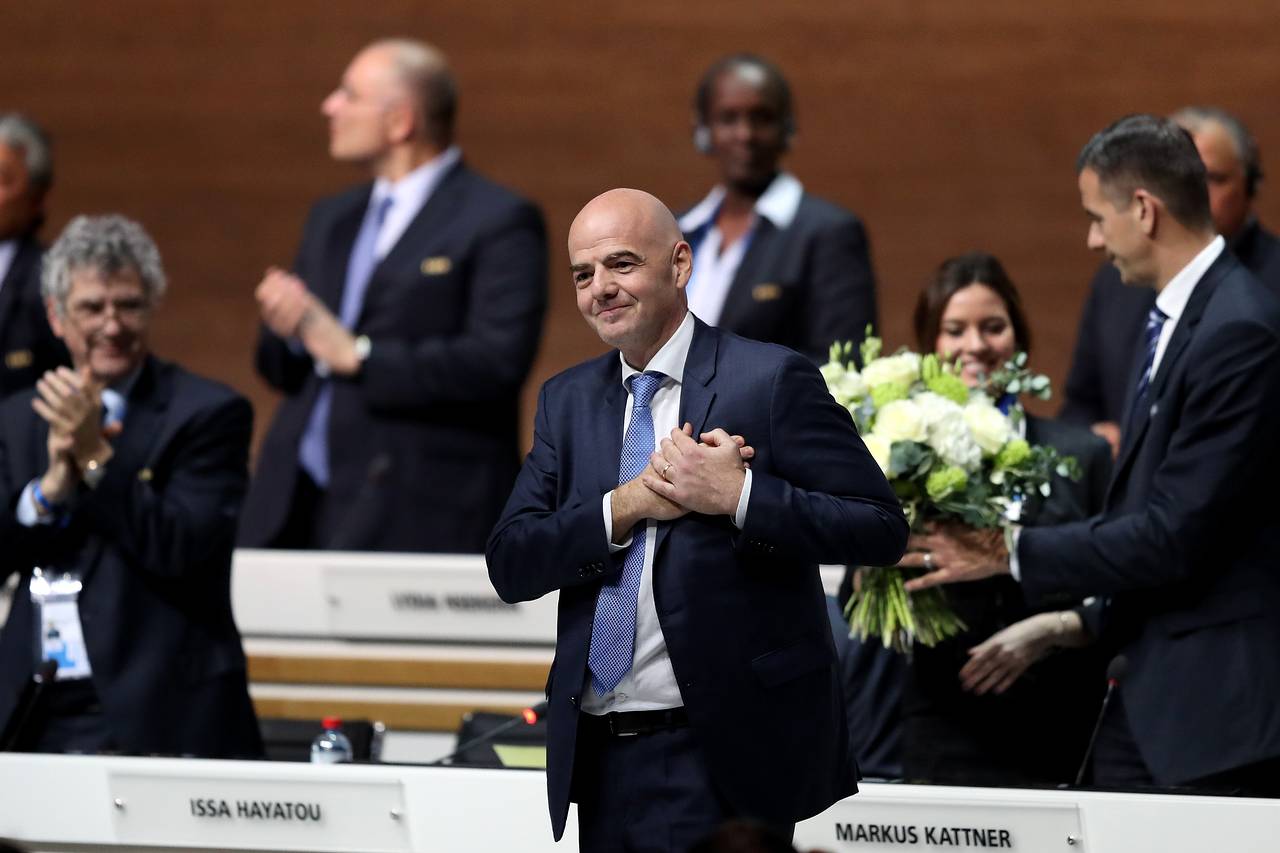
This situation arises at a critical moment for Infantino, who recently indicated his intention to seek a fourth term as FIFA president. After being re-elected unopposed twice since taking over from Sepp Blatter, the response to this failed proposal complicates his prospects as the next FIFA Congress in Morocco approaches.
Experts are noting that the rapid shift in fortune for Infantino is quite striking, especially after the success of the recent World Cup, which was touted as the most commercially successful in history. The sudden turn of events highlights the precarious nature of leadership in such a high-stakes environment.
Keep in touch with our news & offers
Subscribe to Our Newsletter
Thank you for subscribing to the newsletter.
Oops. Something went wrong. Please try again later.