Explore Tesla’s plans for the Optimus humanoid robot, its capabilities, challenges, and production timelines as Elon Musk unveils new details.
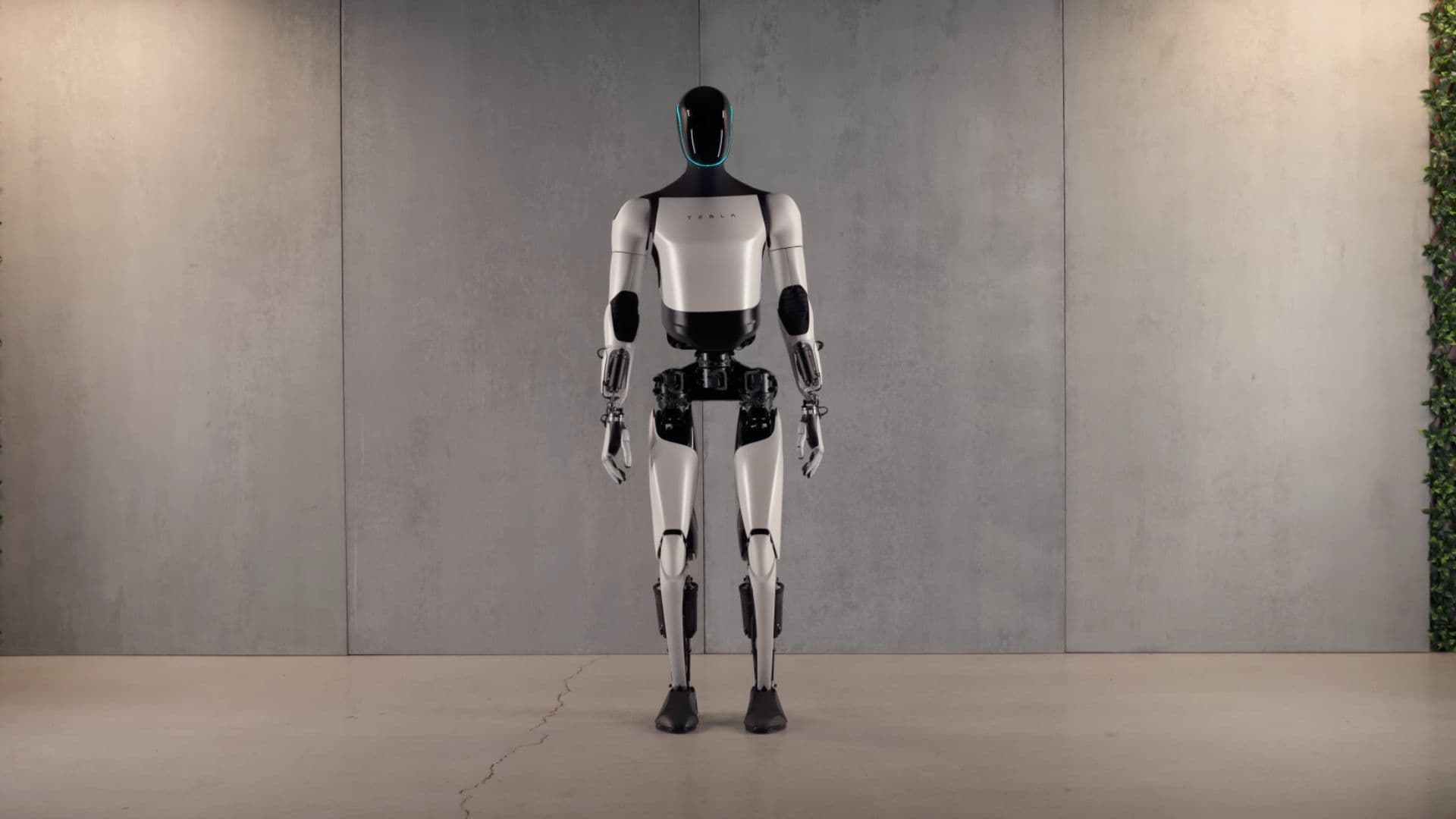
Elon Musk has transformed Tesla into the most valuable carmaker globally, and he is now channeling the company’s future into a different venture: a humanoid robot that walks on two legs named Optimus. Musk believes this robot could be “the biggest product ever,” envisioning a future where numerous humanoids handle factory work, household chores, and even assist in manufacturing more robots, collectively referred to as “Optimi.”
However, as of now, Tesla faces significant hurdles in proving Optimus can autonomously navigate complex environments and perform useful tasks, let alone mass-produce the robots. Musk recently addressed these issues on Tesla’s earnings call, where he offered few specifics about the Optimus project and managed expectations regarding the timeline for ramping up production. He did announce that the third-generation robot would soon be produced in Fremont, located in the San Francisco Bay Area.
The humanoid robotics market is growing increasingly competitive. Companies like Agility Robotics have already deployed their Digit robot in nine customer facilities, while Figure AI has made strides in logistics and distribution. Other companies, such as Sunday Robotics and Weave Robotics, are preparing to ship household robots soon.
Guy Hoffman, an associate professor at Cornell University leading its human-robot collaboration lab, described humanoids as a “fantasy product,” pointing out that the technology to create fully autonomous machines is still lacking, making the development of humanoid robots an even taller order.
Though Musk often takes on ambitious projects, he admitted that constructing Optimus is more complex than developing Tesla’s Model X or Cybertruck models. If successful, he believes that Optimus could herald a paradigm shift toward “sustainable abundance,” where human labor becomes less critical.
The journey to realizing Optimus began in 2021 when Musk introduced the “Tesla Bot” concept with a dancer in a robot costume. Since then, three years have passed, and demonstrations showcased some capabilities, such as walking and performing simple tasks under human guidance during Tesla’s “We, Robot” event. Observers remarked that while these robots could stand and walk autonomously, their more intricate actions, like pouring drinks, required operator assistance.
Specific details about the next version of Optimus remain undisclosed. However, it stands nearly six feet tall with a human-like design that some investors view as little more than a trick. Musk defends this design, arguing that a humanoid form is essential for a robot to accomplish various human tasks.
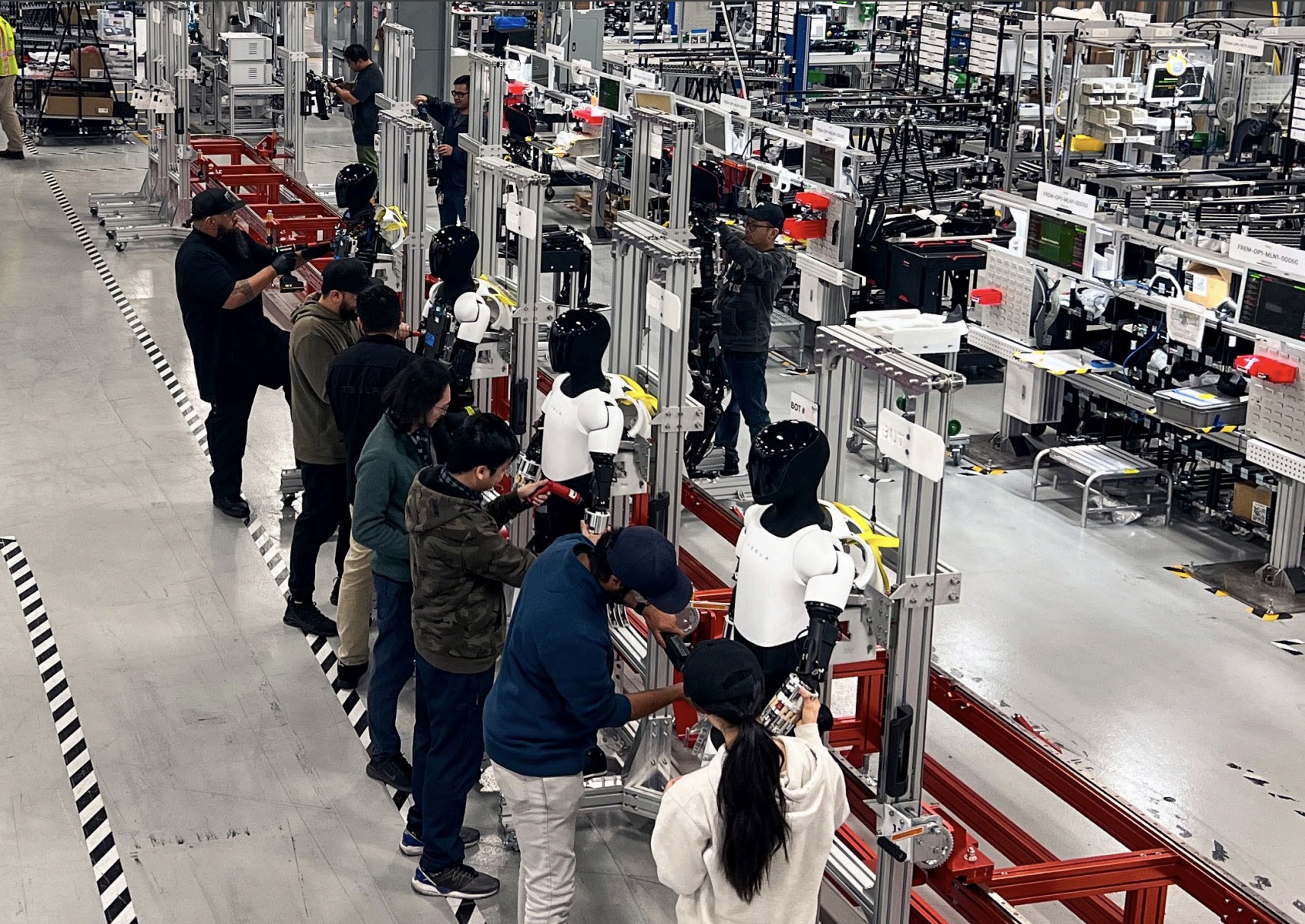
As manufacturing begins, Tesla has shared photos from the Fremont production line. Musk revealed that the company had ceased operations for the Model S and Model X in Fremont to make way for the Optimus assembly line, which aims for an eventual output of one million units annually. A second line being built in Austin is expected to have the capacity for ten million robots each year.
The initial batch of robots will undergo training at Tesla’s “Optimus Academy,” where they will practice tasks and accumulate data to refine their AI models. Musk anticipates that between 10,000 and 30,000 robots will improve their abilities at the academy.
During the earnings call, Ashok Elluswamy, Tesla’s AI chief, noted that their training could elevate the robots to “superhuman levels” of capability. However, Musk cautioned investors that early production would be an “agonizingly slow” process due to the lack of a supply chain for many components needed for Optimus.
Musk identified three critical challenges in creating Optimus: developing advanced intelligence, replicating human-like dexterity in hands, and achieving large-scale manufacturing. The robot’s ability to comprehend and navigate the physical world is essential, and Musk believes progress in Tesla’s self-driving technology gives them a foundation because Optimus will utilize AI chips designed for cars.
In addition, Tesla’s driving simulator has been adapted to train the robots in a virtual setting, but physical data from real-life tasks is equally vital. Employees have captured actions they perform in factories for analysis, yet capturing all real-world scenarios continues to be a challenge. Hoffman emphasized that Musk may be misjudging the disparity between developing self-driving cars and humanoids, likening it to comparing “checkers to nuclear physics.”
A key challenge is what Musk termed the “hands problem,” which involves creating a robotic hand that combines strength, precision, and flexibility within a compact space. On the earnings call, he stated that Optimus is designed for “human and then superhuman dexterity,” which has necessitated the development of specialized motors, gears, and sensors.
Production scaling remains a concern, with Musk warning that initial phases will be laborious and slow. Each Optimus unit is projected to cost between $20,000 and $25,000 to produce when full-scale manufacturing begins.
Furthermore, Musk has begun exploring the integration of AI across his business ventures. He posited how Optimus could interact with SpaceX’s technology, particularly following the acquisition of xAI earlier this year. He envisages a scenario where Optimus robots could be organized and assigned tasks collaboratively by AI systems like xAI’s Grok.