At least 40 killed amid protests and violence in Pakistan-administered Kashmir ahead of upcoming elections amid rising tensions.
Naqash Zardad was simply in the wrong place at the wrong time. The education department employee was working at his buffalo farm in Rawalakot when violent clashes erupted between police and protesters nearby. With roads blocked around his farm, Zardad couldn’t return home. A stray bullet hit the 30-year-old, killing him instantly, his uncle Altaf Hussain recounted.
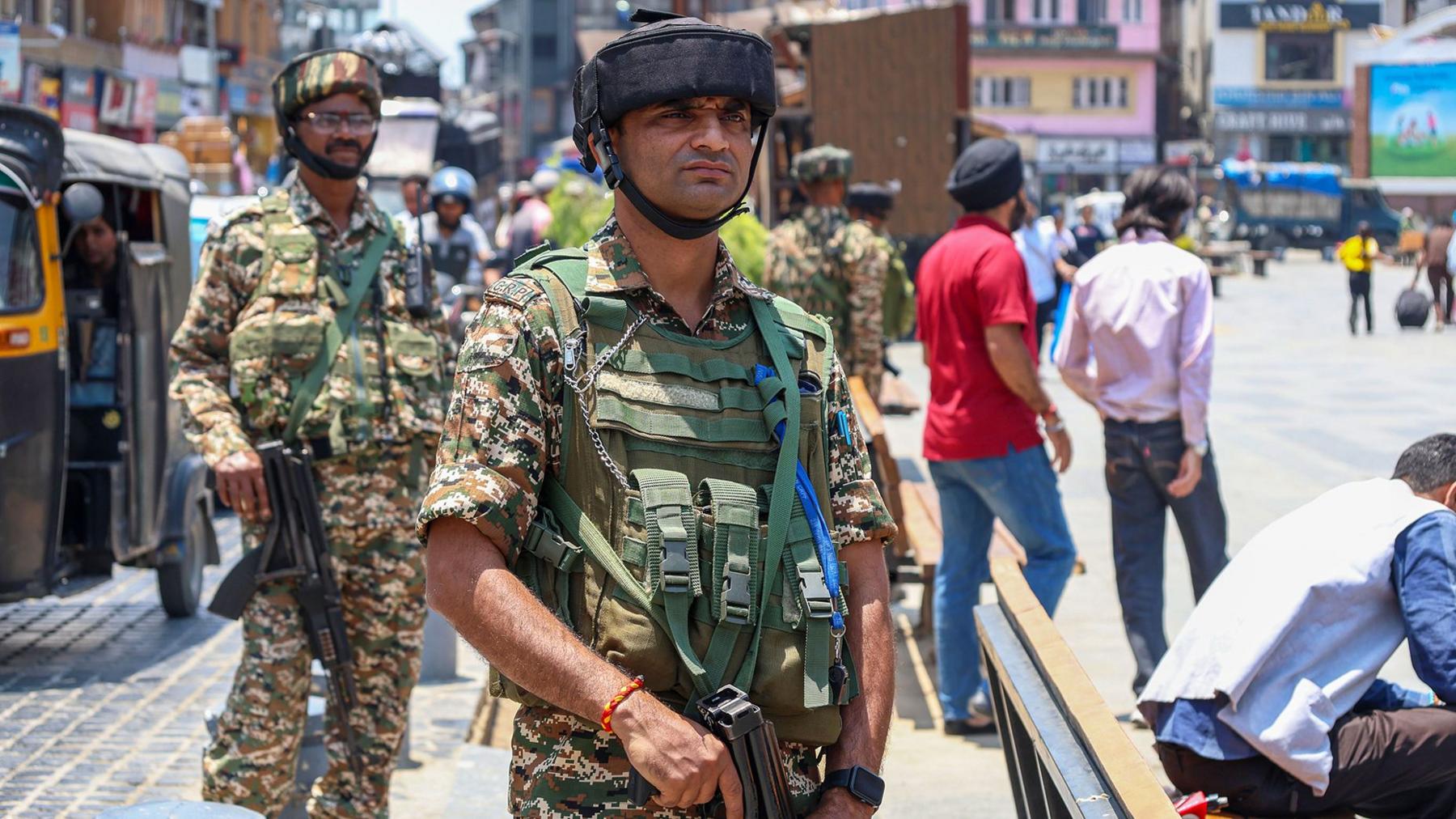
Zardad became one of at least 40 casualties in the lead-up to legislative elections in Pakistan-administered Kashmir. Of the deceased, 34 were protesters, while six were police and paramilitary personnel. Rawalakot has been a hotspot for significant violence.
Critics have accused security forces of employing excessive force against demonstrators involved in extensive marches and demonstrations organized by the Joint Awami Action Committee (JAAC). This coalition is advocating against the reservation of 12 legislative seats for refugees who relocated to Pakistan from Indian-administered Kashmir decades ago. The government’s reaction has included banning JAAC under anti-terrorism laws and launching crackdowns on protestors.
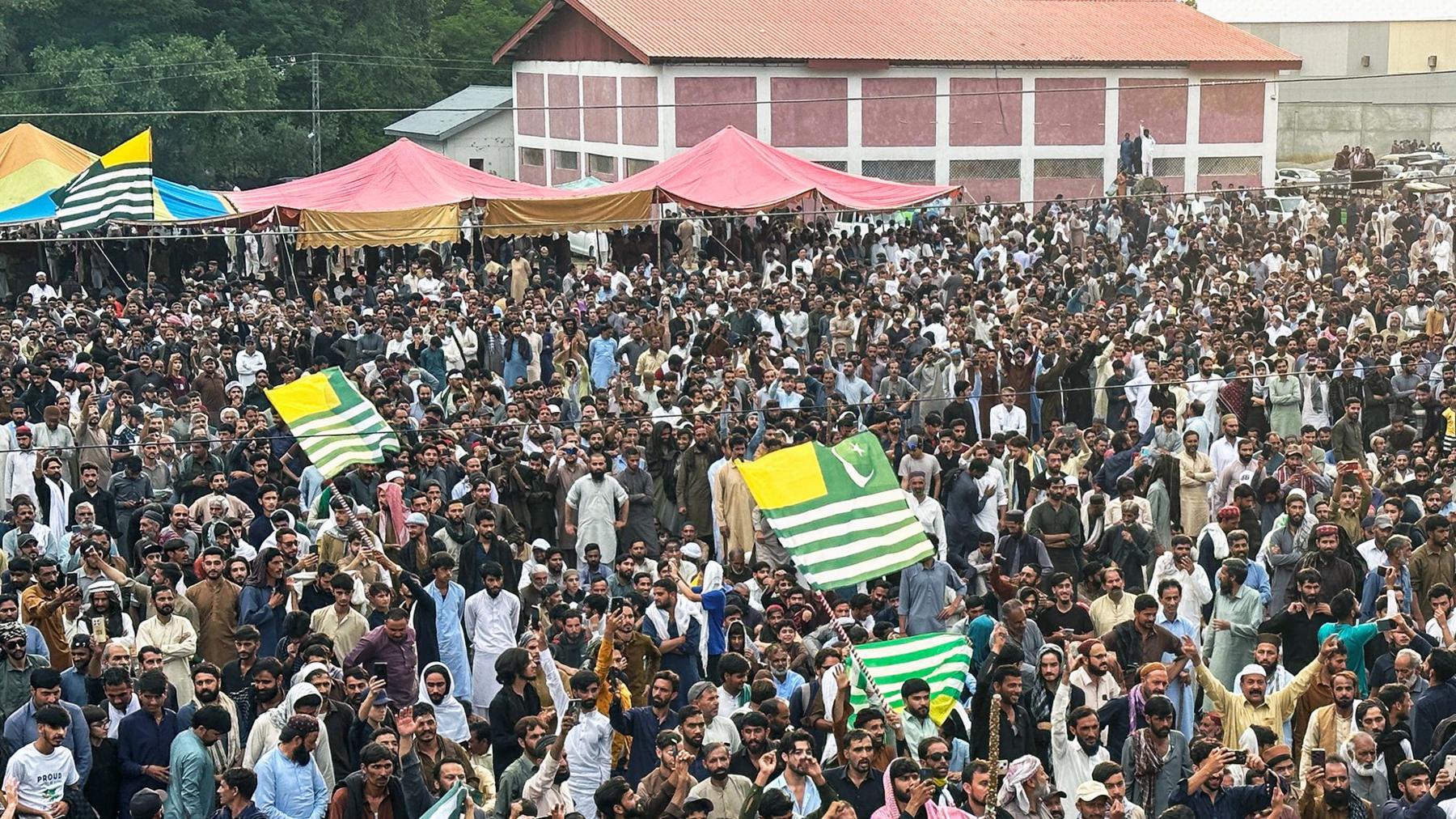
JAAC asserts that participating in the elections is not its goal. The reserved seats, which represent a significant portion of the 53-member assembly, have long sparked controversy. The assembly also consists of 33 seats directly elected and eight designated for women and other groups.
Back in the 1970s, legislation was introduced to ensure that former residents of Indian-administered Kashmir who settled in Pakistan could still participate in local governance. However, many of these individuals do not actually live in Pakistan-administered Kashmir, effectively sidelining locals from elections.
The JAAC is demanding the removal of these reserved seats, claiming they diminish local representation. Authorities maintain that these reservations are necessary, asserting that elections must proceed, albeit in three phases, with the first set to start on July 27.
In the last Legislative Assembly election in 2021, Imran Khan’s Pakistan Tehreek-e-Insaf (PTI) secured a significant majority but was later ousted through a no-confidence vote in Pakistan’s parliament in 2022. This has led to a turbulent political climate, with four prime ministers serving in just as many years. Predicting the outcome this time is difficult.
During a recent visit to the state capital, Muzaffarabad, an atmosphere of tension and fear was evident. Many residents were hesitant to discuss the elections. Some worried that showing support for a particular candidate could lead to being labeled traitors or ‘facilitators’ by JAAC. Conversely, supporters of JAAC feared harassment from law enforcement and intelligence agencies.
The violence has escalated to the point where candidates’ vehicles and properties have been torched, with JAAC being held responsible for these incidents. Consequently, many candidates have opted for muted campaign strategies.
Political rallies have shifted into private homes or small street gatherings, with a reluctance to make public statements. Noreen Arif, the sole female candidate representing the ruling Pakistan Muslim League-Nawaz (PML-N), indicated that the protest calls made her choose to hold meetings in private settings.
Sardar Mukhtar Khan from the opposition Pakistan People’s Party (PPP) acknowledged the JAAC’s influence, indicating that their protest has resonated deeply with the youth, necessitating a cautious campaign approach. In contrast to prior elections, both PPP and PML-N leaders only started holding public rallies in the final week of the campaign.
Despite the charged environment and restrained campaigning, Kashmir Affairs Minister Ameer Muqam insists that proceeding with elections is the ‘only solution.’ He emphasized that voters should have authority in determining their future and that such power must not rest solely with a few individuals.
However, some within the region argue that conditions are not conducive for elections. Zahid Amin, former head of the Muzaffarabad Development Authority, expressed doubt over the credibility of the elections, given the current climate.
The violence has not only raised alarms within the region but has also drawn international concern. On July 17, UN Human Rights chief Volker Türk called for immediate investigations into the deaths occurring during the unrest, addressing both protesters and security forces. He criticized the banning of JAAC, remarking that criminalizing a civil society group and imposing restrictions on gatherings causes serious worries regarding rights infringements.
Pakistan’s neighboring country, India, has attributed the violence to a long history of systemic exploitation and denial of fundamental rights. Both nations claim full ownership of Kashmir, though they govern it in parts. India frequently accuses Pakistan of fostering cross-border terrorism within Indian-administered Kashmir, a claim that Islamabad consistently denies.
PPP chairman Bilawal Bhutto dismissed India’s comments, advocating for an amicable resolution. He urged the creation of a truth and reconciliation commission and suggested that both JAAC and the government share responsibility for the turmoil, calling for an end to the punishment of ordinary citizens. With communication services on hold for 40 days, he acknowledged that while temporary restrictions might be warranted during security crises, an extended internet blackout projects an impression of collective punishment.