The US reveals a landmark deal permitting Saudi Arabia to develop a civilian nuclear program, raising concerns over possible nuclear proliferation.
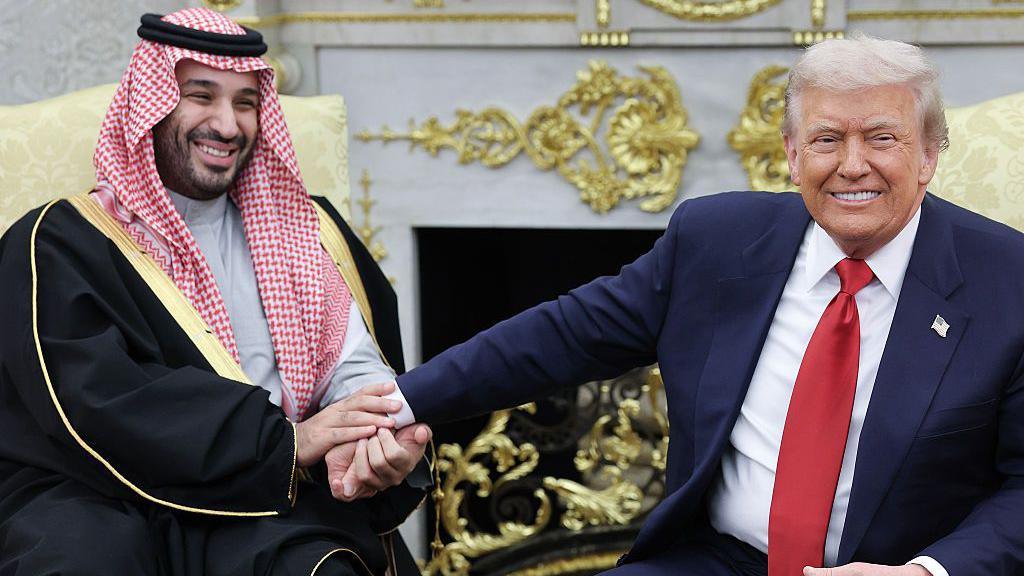
The US reveals a landmark deal permitting Saudi Arabia to develop a civilian nuclear program, raising concerns over possible nuclear proliferation.
The US and Saudi Arabia have signed a landmark deal that will reportedly allow the Gulf kingdom to develop a civilian nuclear programme.
This agreement, termed a “peaceful nuclear co-operation agreement,” is set to provide significant opportunities for American companies within the Saudi nuclear energy sector, according to statements made by the US Department of Energy.
Although the text of the deal has not been disclosed to the public, US media suggest that it could eventually permit Saudi Arabia to enrich uranium domestically. Enriched uranium can be utilized as fuel in power plants but could also be adapted for the production of nuclear weapons.
Experts warn that this potential enhances the risk of nuclear proliferation, especially in a region characterized by instability.
The Department of Energy also confirmed that a “bilateral safeguards agreement” was established alongside the co-operation deal. The Department’s statement indicated that these arrangements”lay the legal foundation for a decades-long, multi-billion-dollar partnership that advances several priority economic and strategic objectives, including nuclear nonproliferation.”
In a statement, the Saudi government emphasized that this agreement is an extension of the existing collaboration between the two nations in the energy domain. This announcement follows a visit by the Saudi leader to Washington last November.
The timing of this announcement is critical, coinciding with increasing hostilities between the US and Iran. Saudi Arabia, a longstanding US ally, is home to several American military bases, which have been targets of Iranian attacks. This news also arrives mere days after the Houthis, Iranian allies in Yemen, threatened a “maritime blockade” against Saudi Arabia.
Though specific details regarding the nuclear deal remain scant, previous reports indicated that following a joint study with the US, Saudi Arabia may gain permission to enrich uranium within its borders, utilizing a facility built by the US and thereby eliminating dependence on foreign fuel sources.
This venture could yield billions of dollars for the United States, as American companies might be involved in constructing the facility for enriched uranium production.
US Secretary of Energy Chris Wright reassured that the agreements would adhere to the “highest standards of nuclear safety and nonproliferation,” relying on leading-edge nuclear technology and science developed in the United States.
According to the Department of Energy, this deal will enhance both US and regional security while upholding high standards pertaining to nuclear safety and nonproliferation and bolstering America’s competitive edge in civilian nuclear technologies.
Nevertheless, nuclear experts and former officials in Israel, the US’s main ally in the Middle East, have expressed concerns that this agreement might enable Saudi Arabia to pursue nuclear weapon capabilities. However, many experts suggest that achieving such capabilities could take many years and would likely provoke opposition from the international community.
Rosemary Kelanic, director of the Middle East programme at the US-based Defense Priorities think tank, stated that permitting the US to assist Saudi Arabia in uranium enrichment would be “quite shocking.” She elaborated, remarking that the US has never allowed any other country to enrich uranium on their own territory, indicating that if a nation can produce its own nuclear fuel, it becomes a more significant risk for developing nuclear arms.
The agreement is now set to be reviewed by Congress, where some lawmakers from both political parties are expected to express dissent. Despite this, the Republican Party, led by Trump, holds control over both the House and Senate.
US Secretary of State Marco Rubio countered critics concerned about the potential for Saudi Arabia to develop a nuclear weapon in the future, stating, “The US is not going to reach any agreement with any country in the world that leads to the risk of proliferation.” Yet, several Democrats have criticized Rubio and Trump for what they see as hypocrisy, citing the “No Nuclear Weapons for Saudi Arabia Act,” which mandates Congressional approval for any nuclear agreement with the Saudis.
Massachusetts Democratic Senator Edward Markey condemned both Rubio and Trump, warning that they are enabling Saudi Arabia, which he described as a “belligerent and authoritarian nation,” to acquire nuclear weapons technology while also beginning a war with Iran purportedly to prevent Iran from developing a nuclear arsenal.
If the provision for uranium enrichment is included in the agreement, it would differentiate this accord from a similar deal forged by the US in 2009 with Saudi Arabia’s neighbor, the United Arab Emirates, which does not permit local fuel production and accepts several additional limitations.
This deal, which Saudi Arabia has pursued for years under various US administrations, reportedly happened after the US dropped conditions regarding the nation recognizing Israel and normalizing diplomatic relations with it.
During Trump’s presidency, there has been a concerted effort to strengthen ties with Saudi Arabia, marking a strategic and commercial win for the kingdom. Furthermore, the urgency surrounding this agreement may stem from reported discussions between Russia and China regarding a similar initiative, compelling the US to secure its interests in the region.
This agreement is a substantial accomplishment for Saudi Arabia and has the potential to redefine power dynamics in the Middle East, although its immediate impact may be unclear and likely unfolds over several years.
Keep in touch with our news & offers
Subscribe to Our Newsletter
Thank you for subscribing to the newsletter.
Oops. Something went wrong. Please try again later.