The Lebanese army begins troop deployment in a pilot zone following the Israeli withdrawal, as part of a US-brokered agreement.
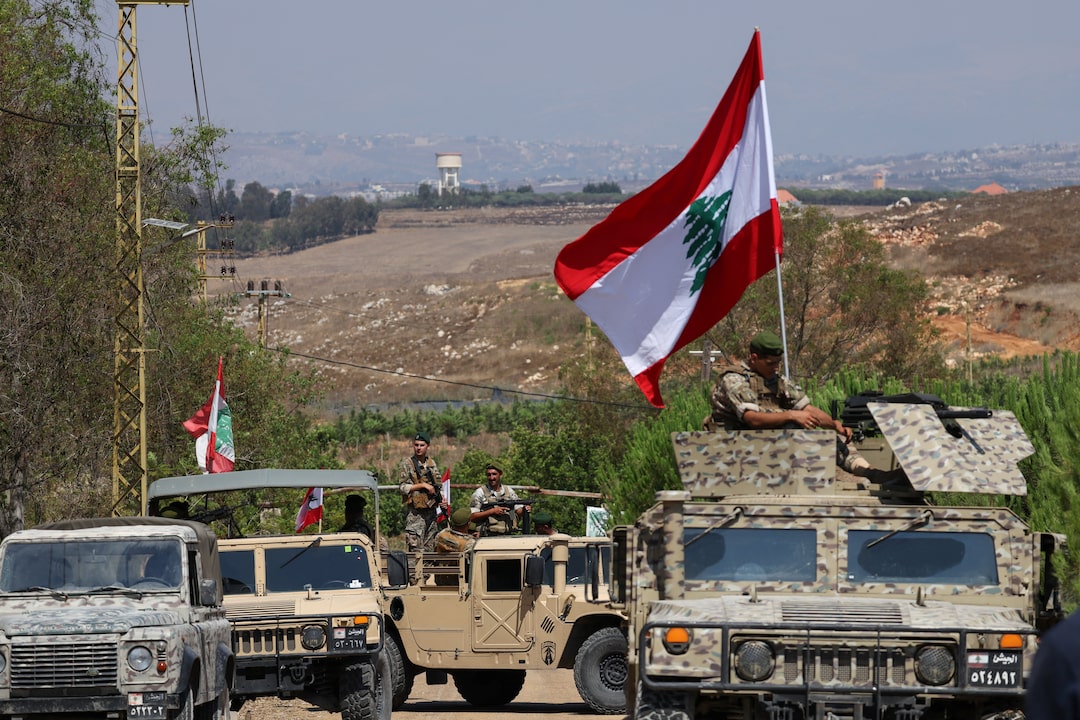
The Lebanese army begins troop deployment in a pilot zone following the Israeli withdrawal, as part of a US-brokered agreement.
Lebanon’s military has announced the deployment of its troops to a newly designated “pilot zone” in southern Lebanon, coinciding with the withdrawal of Israeli forces, which was initiated as part of a US-brokered agreement reached last month.
According to a statement released by the army command, units entered the village of Zawtar al-Gharbiyeh in the Nabatieh district early Tuesday morning.
On Monday evening, Israel’s military confirmed the commencement of this pilot zone initiative, which will facilitate the withdrawal of Israeli troops from a small area of territory occupied during their conflict with Hezbollah and includes plans for the disarmament of the Iran-backed group.
This development precedes an upcoming meeting in Washington between US President Donald Trump and Lebanese President Joseph Aoun, where Aoun is expected to push Trump to exert pressure on Israel for a full withdrawal from southern Lebanon and seek assistance for the Lebanese army to establish control in territories held by Hezbollah.
The US State Department stated that pilot zone operations had started in Zawtar al-Gharbiyeh along with two other villages in Lebanon, Froun and Srifa, in alignment with the Trilateral Framework agreement involving Israel, Lebanon, and the US. This significant step comes following discussions last week between representatives from Israel and Lebanon in Rome.
An Israeli military official indicated that the Israel Defense Forces (IDF) would modify its presence in one of the pilot areas to allow the Lebanese army to proceed with its operations while also ensuring the safety of IDF soldiers and retaining the right to self-defense and removal of threats.
The Israeli official emphasized that the main goal of this pilot and the corresponding agreement is the disarmament of Hezbollah and the elimination of its illegal weaponry. The IDF will continue to maintain a presence in the security zone—a 10-km (approximately six miles) deep strip of occupied Lebanese territory along the border—for as long as necessary to defend the northern communities of Israel.
On Tuesday, the Lebanese army’s command confirmed that its units had actually begun operations in nearby villages, Froun and Srifa, following the announcement from the US on Monday.
Furthermore, an Israeli source informed Haaretz that no Israeli troops remain stationed in these villages.
The historical context reveals that Lebanon became embroiled in the conflict between Israel, the US, and Iran on March 2, when Hezbollah retaliated against an attack that resulted in the death of Iran’s supreme leader by launching rockets into Israel.
Israel’s response was severe, involving a bombing campaign throughout Lebanon along with a significant military incursion into the southern region of the country.
The human toll has been catastrophic, with more than 4,300 fatalities reported in Lebanon, including nearly 800 children, women, and medical personnel, according to the Lebanese health ministry. In contrast, Israeli authorities reported the deaths of 37 soldiers and four civilians on both sides of the border amidst the ongoing conflict.
Among those who lost their lives was Firas al-Masri, along with his wife and four children, an incident for which the Israeli military claimed targeted a Hamas operative. A senior officer in the Hamas-run police force was also among the casualties from a strike Israel described as targeting “terrorists.” Additionally, in another case, a woman has been charged with explosives offenses related to multiple businesses.
In a separate incident, Khanna, aged 49, was detained while visiting the occupied West Bank and held for 90 minutes as per his account.
Keep in touch with our news & offers
Subscribe to Our Newsletter
Thank you for subscribing to the newsletter.
Oops. Something went wrong. Please try again later.