Nicaragua’s President Ortega declares an end to elections, solidifying his grip on power and sparking concerns over democratic erosion.
Nicaragua’s President Ortega declares an end to elections, solidifying his grip on power and sparking concerns over democratic erosion.
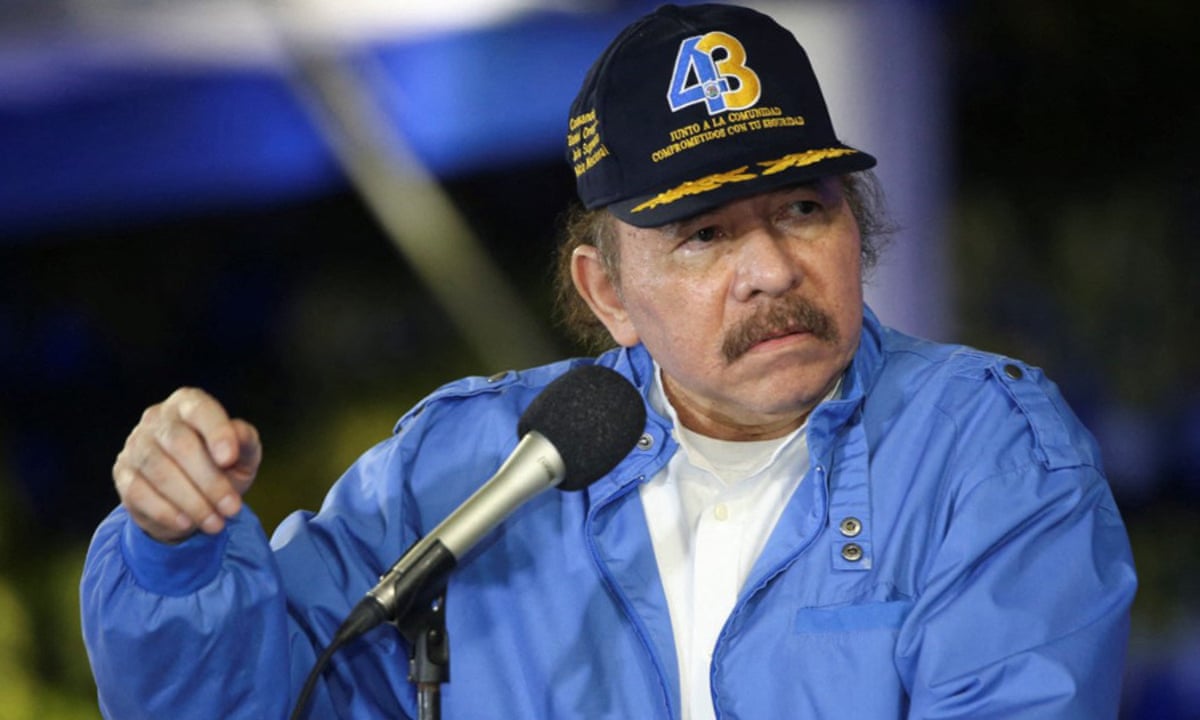
Nicaragua’s long-serving president, Daniel Ortega, has declared that the country will not hold any more elections, a move aimed at preventing the opposition from gaining power. During a speech marking the 47th anniversary of the Sandinista revolution, Ortega emphasized that this decision is necessary to build a barrier against what he termed ‘coup plotters.’
The 80-year-old leader, who has been in office since 2007, communicated his intentions to work with the congress he controls to enact new laws that would further entrench his administration’s power. “There will be no more elections here so that they can try to seize the government,” Ortega stated, directly targeting the opposition parties he accuses of seeking to destabilize his regime.
This announcement signifies a troubling escalation in Ortega’s increasingly authoritarian governance style, which already exhibits a notable erosion of democratic norms. Analysts suggest that this decision cements a shift toward a ‘full-fledged family dictatorship’ in Nicaragua.
Tiziano Breda, a senior analyst at the NGO Armed Conflict Location and Event Data, observed that Ortega and his wife, Rosario Murillo, are clearly frightened by the prospect of political dissent. ‘Instead of staging a rigged election, they have opted to eliminate electoral competition altogether,’ he noted.
The elections had been slated for next year, but details surrounding their cancellation remain ambiguous. Ortega has not clarified if opposition parties will be barred from participating formally, although this has effectively been the case since the last campaign. In the 2021 election cycle, the regime outlawed political parties and imprisoned several opposition presidential candidates.
In a speech delivered before thousands of state employees, many of whom were reportedly coerced into attendance, Ortega railed against foreign intervention, particularly criticizing the United States for its actions against Venezuelan dictator Nicolás Maduro. He painted this narrative as part of a broader campaign against alleged coup attempts aimed at his government.
Ortega justified his decision by claiming that it is crucial to protect Nicaragua from opposition threats, invoking past protests from 2018, during which over 350 people were killed amid a violent crackdown by his regime. His government has faced extensive scrutiny for human rights abuses, with reports indicating approximately 50 political prisoners currently held in the country. Human Rights Watch has pointed out that Ortega’s administration has stripped citizenship from over 546 individuals and shut down numerous NGOs, universities, and media outlets.
Ortega’s declaration continues to draw wide-ranging condemnation from global observers and local opposition leaders, raising alarming questions about the future of democracy in Nicaragua.
Keep in touch with our news & offers
Subscribe to Our Newsletter
Thank you for subscribing to the newsletter.
Oops. Something went wrong. Please try again later.