Cheyenne, Wyoming, identifies Meta’s data center as the source of wastewater contamination, leading to significant regulatory action.
Cheyenne, Wyoming, identifies Meta’s data center as the source of wastewater contamination, leading to significant regulatory action.
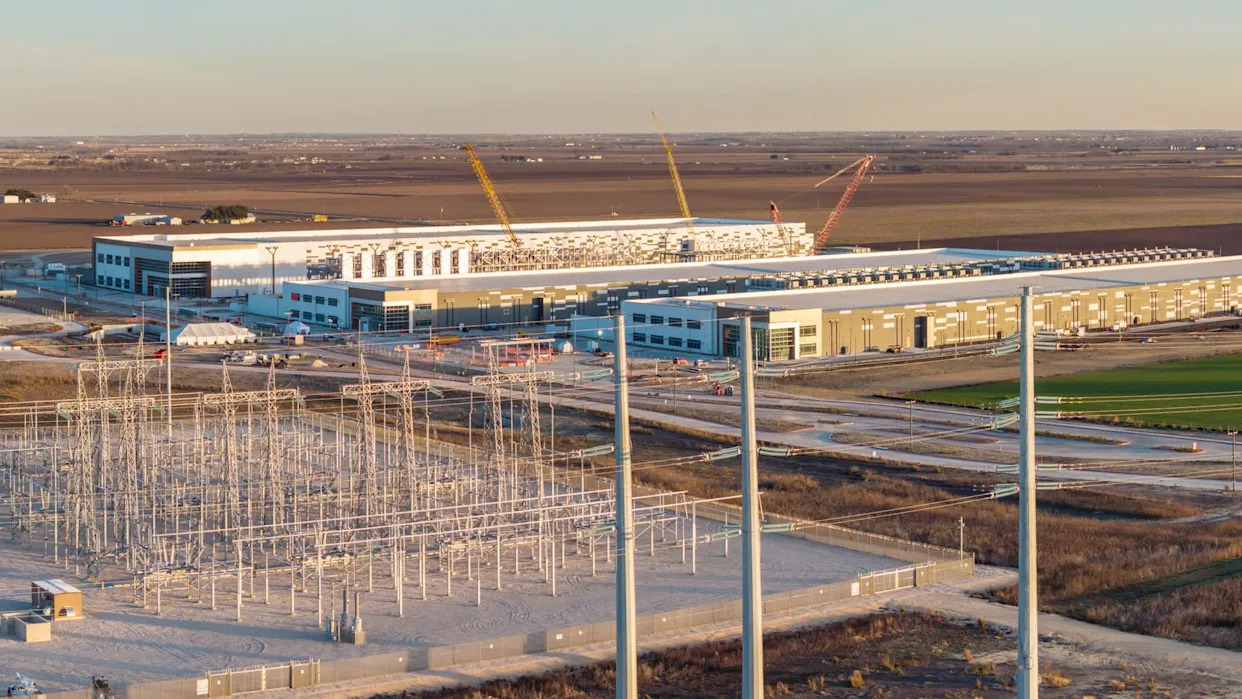
Officials in the city of Cheyenne, Wyoming, have reported that a large, under-construction Meta data center, situated just south of the city, is responsible for contaminating part of the area’s recycled water irrigation system.
According to Cheyenne’s Board of Public Utilities, a public notice revealed that water discharged by Goat Systems, a contractor for Meta working at the site, has contaminated the city’s wastewater treatment facility with a rare bacterium.
This facility includes Cheyenne’s reuse water system, which is designated strictly for irrigation purposes. The water, treated to recycle used water, is meant to be safely released back into nature or utilized for watering public spaces such as parks and golf courses. Cheyenne officials confirmed that the bacterium did not enter the drinking water supply.
“We were able to connect the Meta Data Center campus to this through sampling their site, and it was determined to be through their fill-and-flush discharge that the bacteria was introduced to the system,” stated Erin Lamb, a spokesperson for the Board of Public Utilities.
The fill-and-flush operation serves as a cooling system for data centers, whereby water is routinely flushed from pipes and replaced with new water. This method, however, has faced scrutiny, and some data centers are now opting for closed-loop systems, which recirculate the same water.
The board characterized this infraction as “significant noncompliance,” leading to the revocation of Goat Systems’ “industrial discharge privileges for fill and flush operations.” Notably, the board issued its notice on July 2, indicating that these operations had been halted since March 24.
After being notified of the contamination, Goat Systems ceased the discharge of wastewater immediately, although the company did not provide a comment for further clarification.
A spokesperson for Meta conveyed that the company is collaborating with its general contractor, Fortis, to resolve the situation. Fortis assured that the company is committed to its environmental responsibilities, stating, “We will continue to work constructively with BOPU and all relevant authorities as this matter is fully resolved.”
The Cheyenne Board of Public Utilities has declared a temporary halt on accepting any industrial water discharge from data centers, regardless of whether it employs a fill-and-flush or a closed-loop system.
The bacteria identified in the wastewater is Cupriavidus gilardii, which, while infections are infrequent, can pose a risk to older adults or those with weakened immune systems. Laboratory personnel discovered the bacterium during a sampling conducted in February.
“Over the past two months, BOPU staff have undertaken significant remediation efforts, including draining and disinfecting the entire reuse water system and Prairie View Pond to eliminate any remaining bacterial presence,” the notice said. Furthermore, affected irrigation systems have been temporarily switched to potable water supplies to avert potential contamination throughout the reuse distribution network.
Lamb mentioned that the Board of Public Utilities plans to hold a press conference regarding the matter in the coming week.
Meta first announced plans for the $800 million, 715,000-square-foot data center in 2024. Once operational, the company intends for it to operate sustainably, aiming to achieve a water-positive status by 2030, meaning it will restore more water than it consumes.
Meta emphasized that the Cheyenne Data Center will be tailored for AI workloads, enhancing connectivity while fostering community growth and business development.
The expansion of data centers has been met with mixed reactions. Although tech firms are investing heavily in these facilities for powering AI applications, they also face significant opposition from residents concerned about environmental impacts, such as water depletion, air quality degradation, noise pollution, and quality of life issues. Local planning meetings have seen protests, petitions, and even legal actions against proposed constructions.
Some legislators have responded with initiatives to regulate or prohibit data center developments, including a federal proposal by Senators Bernie Sanders and Alexandria Ocasio-Cortez for a moratorium on AI data centers.
Despite the pushback, the data center industry continues to expand rapidly. By the close of 2025, there were over 1,400 data centers either completed or approved across 45 states and Washington, D.C.
Keep in touch with our news & offers
Subscribe to Our Newsletter
Thank you for subscribing to the newsletter.
Oops. Something went wrong. Please try again later.